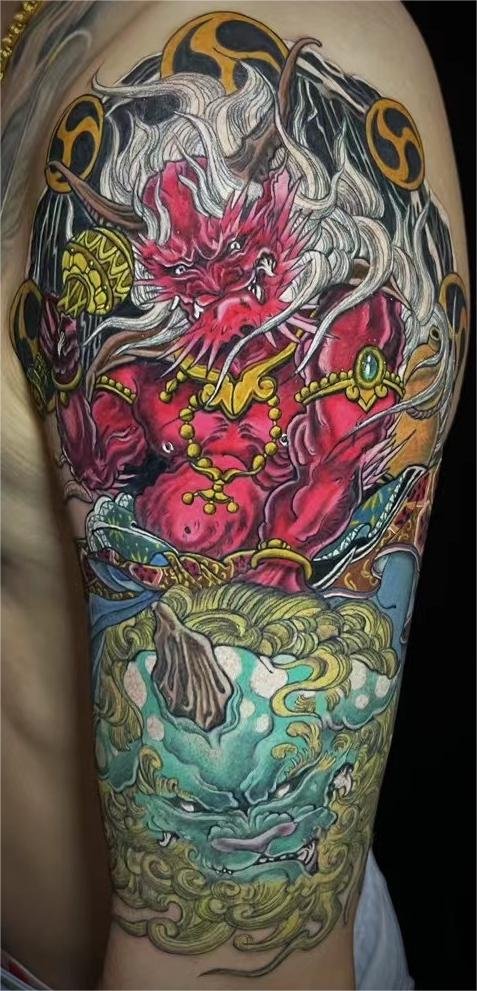
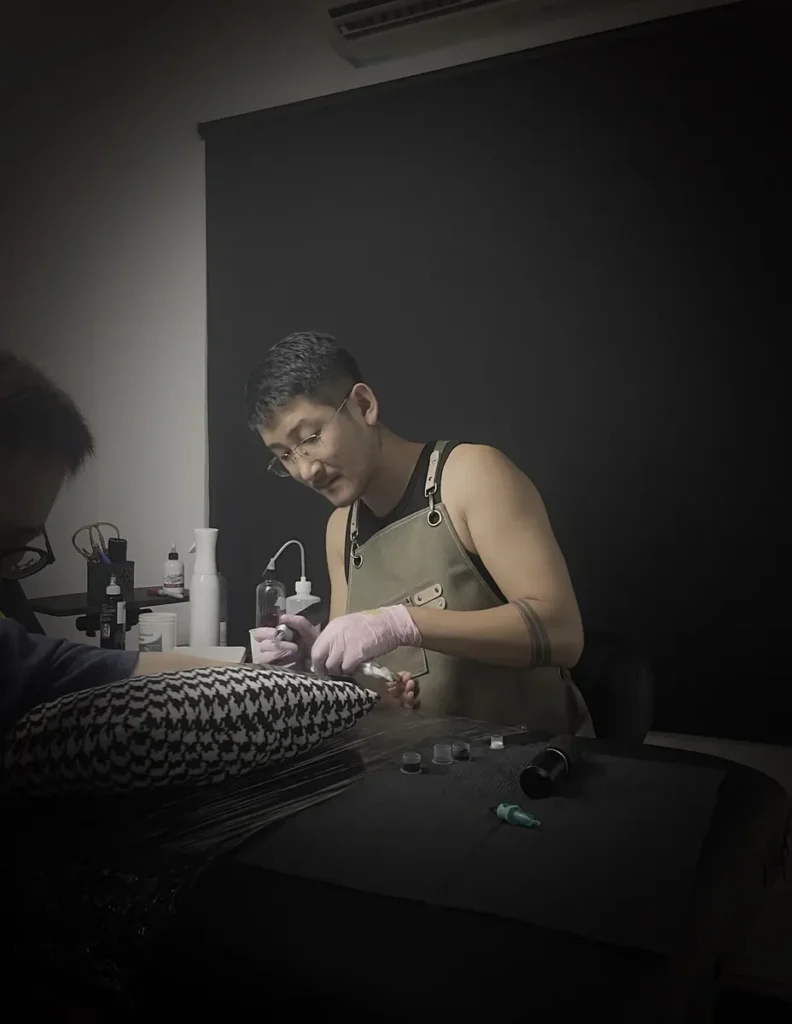
Your first tattoo does not need to begin with a finished drawing. Begin with four things: the subject, two or three useful references, the body placement and an approximate size. An artist can work with that. A folder of fifty unrelated screenshots usually makes the decision harder, not easier.
This guide is about the decisions you can make before the appointment. Price, availability and the final design still depend on the actual project.
Start with the part that must survive
Ask one plain question: what must still be recognisable when the design is on the body?
For a portrait, it may be the expression. For a guardian figure, it may be the face and silhouette. For a piece built around lettering, the exact wording matters before any styling begins. Write that non-negotiable part down. It stops the conversation drifting towards details you do not care about.
References are there to show direction, not to request a copy. One image might show the mood, another the composition and a third the amount of contrast you like. Label what you like in each image. “The lighting in this one” is more useful than “something like these.”
You can see Yuyi’s current work before sending the brief, then read about the artist behind the work.
Choose placement and size together
Placement is not an empty frame. A shoulder turns, a forearm rotates and a back moves with every breath. The same drawing can feel balanced on one area and cramped on another.
Send a clear photo of the body area when you enquire. Stand naturally, use good light and include enough of the surrounding area to show the shape. Add an approximate measurement in centimetres. “Palm-sized” means different things to different people.
Detail needs room. If a design depends on several faces, fine text or dense ornament, making it smaller can remove the very part that made it interesting. A useful consultation may therefore change the crop, simplify a background or recommend a larger scale. That is design work, not an automatic upsell.
Compare the work, not the adjectives
Words such as “realism,” “Japanese-inspired” and “fine line” are broad labels. Look for finished work that uses the same visual problem as your idea:
- faces and expressions for a portrait;
- value control for black-and-grey work;
- movement around an arm for a sleeve;
- a readable centre for a large back composition.
Zoom in, then step back. The close view shows line and texture. The distant view tells you whether the composition reads as one piece.
If you want to see the physical setting before deciding, review the Geylang studio and entrance and message before travelling.
What to send in the first message
A useful first message can fit on one screen:
- Subject: what the tattoo should show.
- References: two or three images, with a note about each.
- Placement: the body area and a clear photo if possible.
- Approximate size: width and height in centimetres.
- Direction: black and grey, colour or undecided.
- Timing: the dates you are considering, without assuming a slot is held.
That information is enough to begin. A project-specific quote and appointment time come after the brief is reviewed.
Prepare for the appointment without inventing rules
Confirm the current studio instructions in writing before the day. Ask what identification, payment or deposit terms apply to your booking rather than relying on an old post or somebody else’s experience.
Wear clothing that gives easy access to the placement without forcing you to hold an awkward position. Eat and rest normally unless a healthcare professional has given you different advice. Tell the artist about anything relevant to the skin or procedure, and ask a healthcare professional if a medical condition or medication makes you unsure about being tattooed.
Tattooing breaks the skin barrier, so reactions and infections are possible. The US Food and Drug Administration advises contacting a healthcare professional if a tattoo is not healing, or if a rash develops; fever and worsening redness or swelling need prompt medical attention. Follow the instructions you are given for your actual tattoo rather than mixing several online routines.
Questions worth asking before you book
Do I need to know the exact style name?
No. Show the visual direction and explain what you want the piece to feel like. The portfolio is more useful than forcing the idea into a label.
Can the final size change after the first message?
Yes. The subject, placement and level of detail have to work together. Confirm the final scale before the design and quote are agreed.
Does a WhatsApp message reserve a date?
No. Treat the date as confirmed only when the studio confirms it in writing.
Can I visit before deciding?
You can discuss a visit, but availability changes. Message first so the entrance and timing are clear.
Bring the idea, not a perfect brief
The first conversation is not an exam. Send the subject, references, placement and size. If the direction fits the work, the next step becomes much easier.
Start the tattoo conversation on WhatsApp or use the contact and directions page.
Sources and review notes
- FDA: Think Before You Ink — Tattoo Safety
- University College London Hospitals: Tattoos and cosmetic procedures
Medical and booking information can change. This article was reviewed on 25 July 2026; current studio terms are confirmed during the enquiry.