
Fine line is a way of drawing, not a promise that every image can be made tiny. Start with a clear silhouette and decide which details matter when the design is viewed at normal distance.
Five directions to discuss
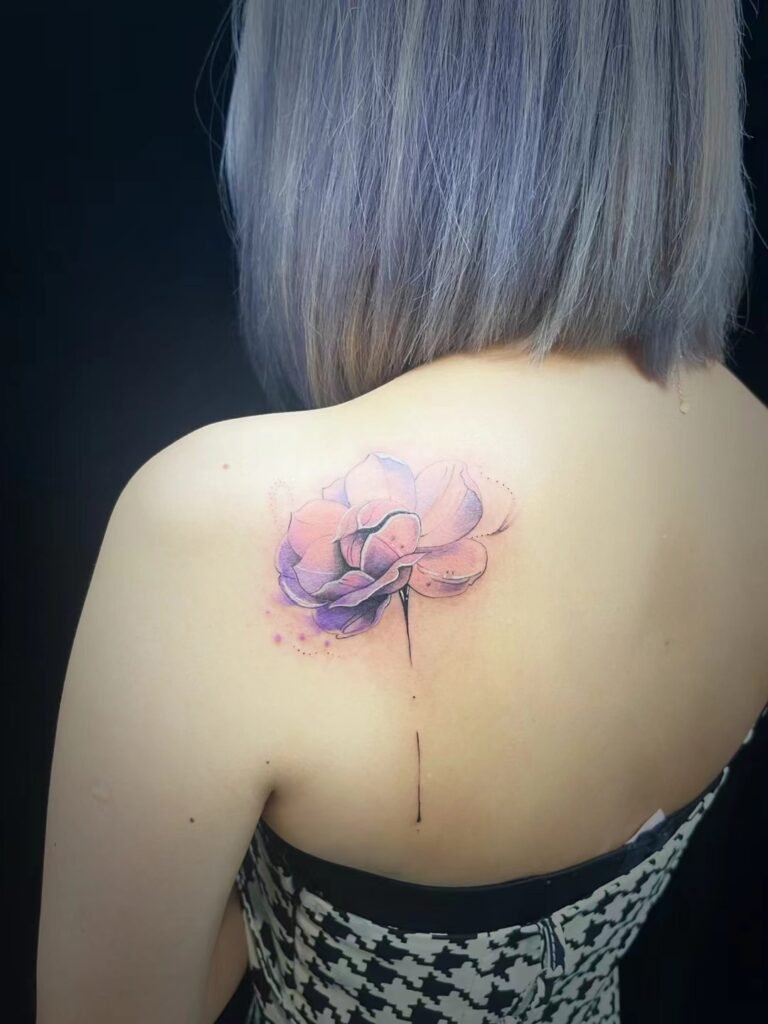
- A single botanical stem: use a few identifiable leaves rather than a miniature bouquet.
- A personal object: simplify a favourite cup, key or instrument into its recognisable outline.
- A short word: choose open letter shapes and avoid squeezed loops.
- A small animal silhouette: preserve posture; remove individual fur marks if they clutter the outline.
- A restrained abstract line: decide where the line starts and ends so it looks intentional on the body.
Test size before choosing delicacy
Ask to compare a simpler small version with a larger detailed one. Look at both from arm’s length, not only as enlarged phone images. Check whether adjacent strokes remain visibly separate.
Request examples relevant to the technique, and ask whether any later photographs are available with their timing identified. A fresh close-up cannot establish how the design will look years later.
When an idea needs a larger version
Take a leafy stem as an example. In the small version, the leaves may need to be separate shapes with few interior marks. In a larger version, the artist can consider overlapping leaves or more vein detail. If the overlap is the part you love, enlarging the drawing may be better than insisting on the original dimensions.
Ask the artist to show the exact simplification, not just say that a design is too small. You should understand what you are trading away. If a short word is the priority, keep the letterforms readable and reconsider optional flowers or stars around it rather than crowding both.
Explore custom design planning at Yuyi Tattoo to turn your references into a placement-specific brief.

