
Micro-realism asks a small tattoo to suggest a photograph. It works best when the artist can identify a strong focal point: an eye, a profile, a distinctive expression or the silhouette of a familiar object.
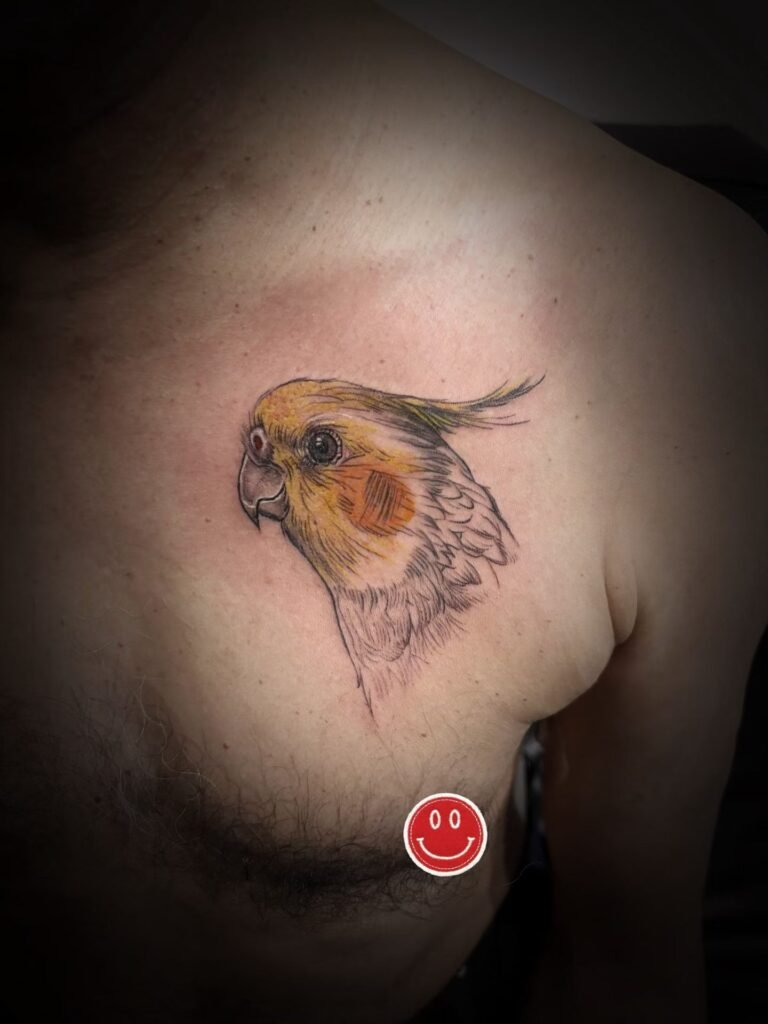
Decide what makes the subject recognisable
For a pet, that may be an ear shape or contrasting patch of fur. For a person, it might be the angle of the face rather than a background full of objects. Keep those features and let secondary detail go.
- Bring an original, sharply focused reference rather than a screenshot.
- Compare the proposed tattoo at actual size and at normal viewing distance.
- Ask which marks would be removed if you reduce the size.
- Consider one larger focal portrait instead of several tiny faces.
Evaluate the portfolio fairly
Look for clear separation between dark shapes and lighter areas. Ask whether photographs show fresh work or later results and whether the timing is known. Do not use a highly enlarged fresh photograph as a ten-year forecast.
Choose between recognition and miniature complexity
Suppose the reference shows a bird with a raised crest, a patterned chest and a leafy background. In a small portrait, the crest and head angle may carry recognition better than several rows of feather texture. Keeping those larger features while simplifying the chest can be a deliberate design choice, not a failure to reproduce the photograph.
Ask to compare the crop with a wider version before choosing. If the full body is important, the face may need to become a smaller part of the story. If expression matters most, removing the background is often worth discussing. The artist should be able to explain the priority in ordinary visual terms.
Compare portrait examples at Yuyi Tattoo and use the portrait and realism page to frame questions about the face, size and detail you want to preserve.

