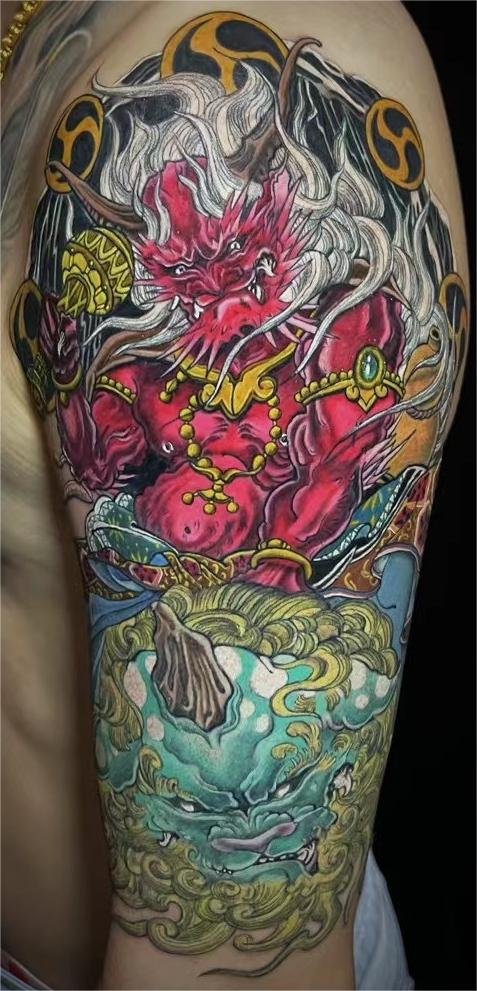
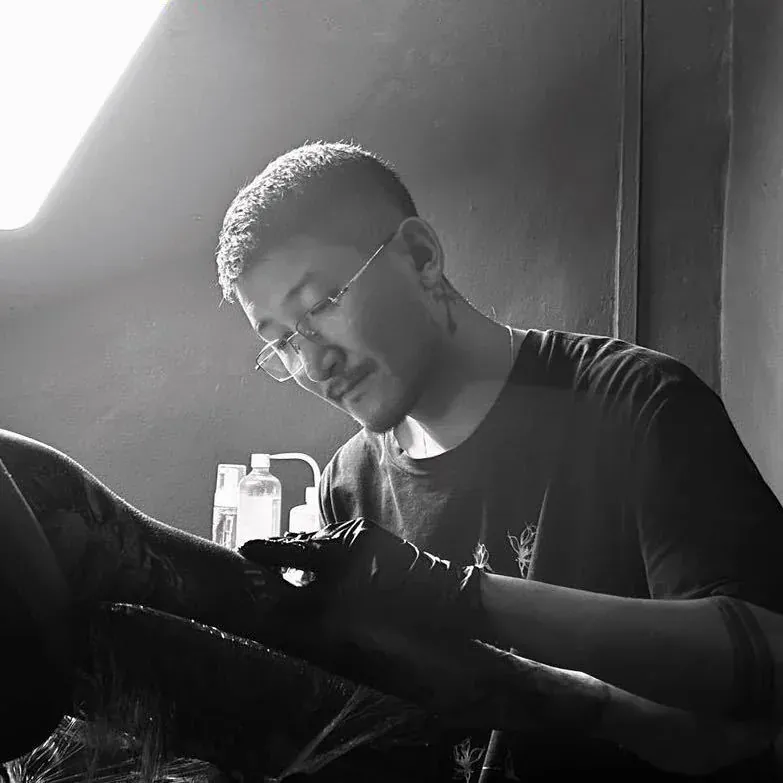
Reference folders often combine traditional imagery, realistic faces and highly graphic colour work. Those images may each look strong, yet they do not automatically belong in the same sleeve.
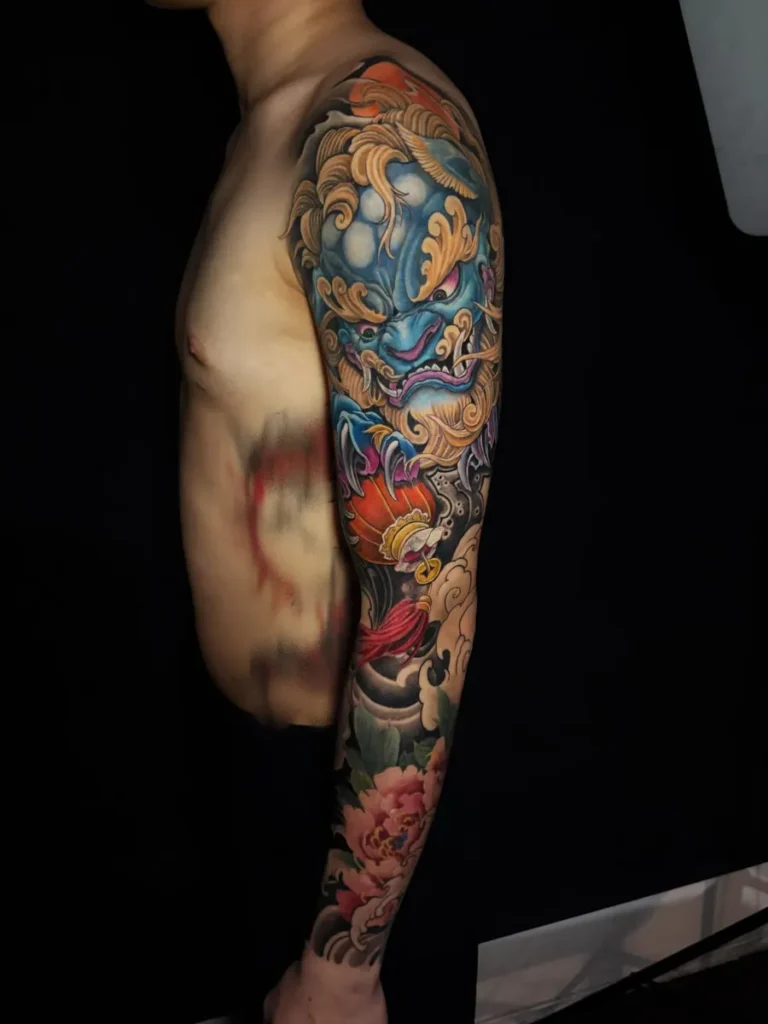
Agree on the visual language
- Contours: should the main subjects use bold boundaries or softer transitions?
- Depth: do you want flatter graphic forms or a more three-dimensional interpretation?
- Background: will waves, clouds or open skin connect the subjects?
- Palette: which colours repeat so that separate sections still feel related?
Ask the artist which references conflict and why. A single coherent interpretation is usually a better brief than a demand to preserve every feature of every screenshot.
Resolve the main subject before the extras
Choose the central creature, figure or flower first. Decide its scale and direction around the arm, then discuss the supporting imagery. If traditional context matters to you, identify the source tradition and ask about the specific pairing rather than treating all Asian motifs as interchangeable.
Reduce the reference folder to a design agreement
Choose one principal reference for the subject, one for the background and one for palette or line treatment. Label the purpose of each. If the subject reference is strongly realistic but the background is flat and graphic, ask to see how the artist would reconcile the difference instead of requesting both unchanged.
Write down the decisions that should remain consistent as the sleeve grows. A later flower or figure should not introduce a completely different contour system simply because you found a new image between sessions. You can change direction, but it should be a conscious revision of the wider plan.
Compare the Japanese-inspired work at Yuyi Tattoo using the Japanese tattoo page. Ask how the proposed subjects and background would share one composition rather than collecting unrelated motifs.