
A design under 5 cm has limited room. Treat that size as a constraint to discuss, not a challenge to squeeze a larger drawing into a smaller box.
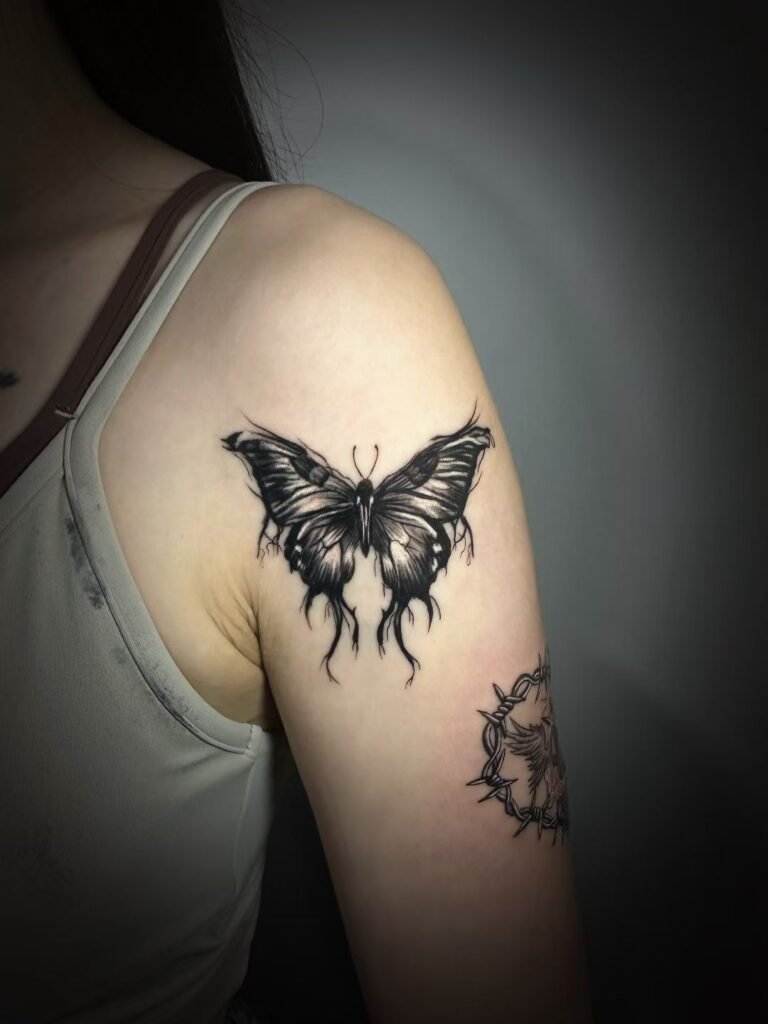
Six ideas that start with a simple shape
- A crescent with a deliberately open interior.
- A single leaf with a clear outer contour.
- A butterfly defined by its wing silhouette rather than tiny scales.
- A small object meaningful to you, reduced to its distinctive outline.
- A short initial or word with open counters.
- A simple abstract mark repeated or rotated to make a personal symbol.
Give each mark a job
Ask what the design loses when reduced. If an animal needs eyes, fur, a background and text to be recognisable, it may need more space or a different approach. A paw silhouette and a detailed pet portrait answer different design briefs.
Print the draft at actual size. View it at arm’s length, then check the placement in a mirror. Keep a larger version available for comparison before deciding.
Keep the smallest version honest
Ask the artist to redraw the idea for the small format rather than reduce a detailed illustration by percentage. A recognisable leaf may need one clear contour and a single interior gesture; it does not need every vein in the original photograph.
Then check whether the simplified version still carries your meaning. If not, a different symbol may be a better answer than asking for finer and finer marks. Keep optional text separate until the main shape works. A date underneath a tiny object can consume the space that made the object readable, even when each part looks acceptable on its own.
Prepare a small tattoo design brief for Yuyi Tattoo in Singapore around the symbol you want to recognise first. Discuss which details should be simplified before fixing the dimensions.

