
“Private studio” and “street-facing shop” describe a setting, not an artistic standard. A visible entrance can be easy to locate; an appointment-only space may offer a different visiting process. Neither label answers the questions that matter to your session.
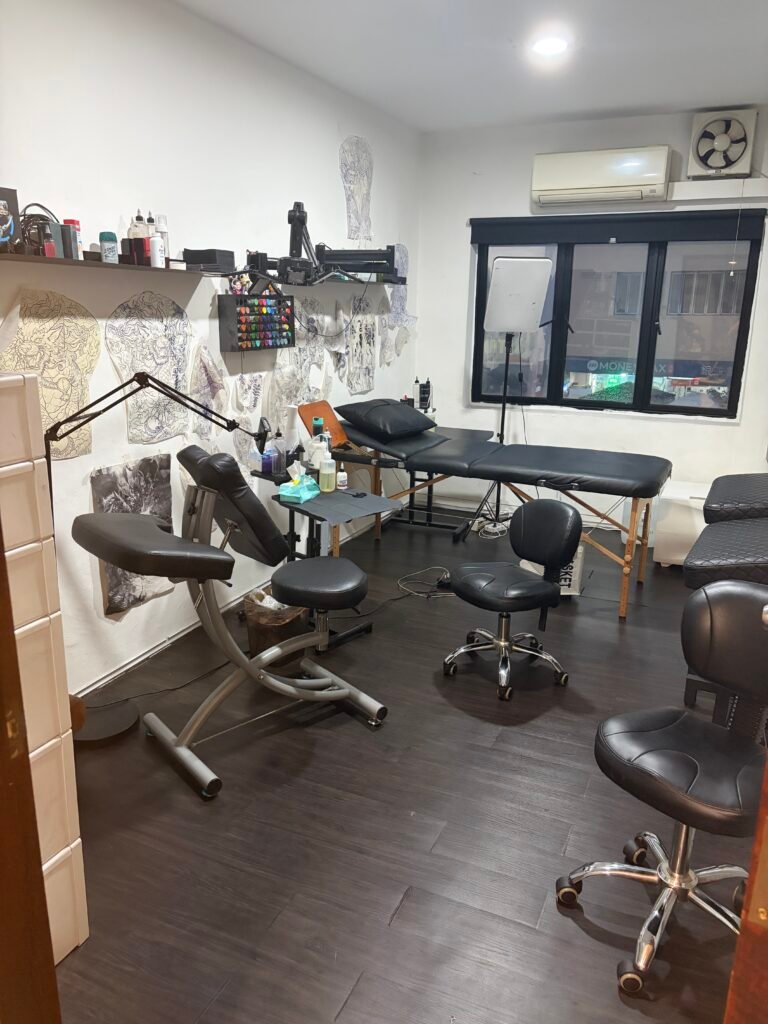
Compare the arrangements you need
For privacy, ask about sightlines from the waiting area, who can enter the working space and whether screens or a separate room are available. A closed front door does not necessarily mean private tattooing.
For convenience, ask whether even a preliminary discussion needs booking. A street entrance does not mean an artist can interrupt another appointment for an unscheduled consultation.
Use the same questions in both settings
- Will your selected artist handle the full project?
- Can you review placement in a mirror before starting?
- How are companions, photography and interruptions managed?
- Are there access details you should know before arrival?
Assess the portfolio and quote separately from the room. Expensive décor does not demonstrate stronger design, and a simple space does not establish poor work.
If two studios both meet your access needs, return to the artwork and consultation. The room type can decide whether a visit is practical, but it should not become a proxy for comparing two very different portfolios.
View Yuyi Tattoo’s studio setting, then ask about your particular requirements. The photographs do not promise a dedicated private-room booking or a specific level of access.

