An artist needs enough information to draw your tattoo, but that does not always mean telling the whole event behind it. Separate the visual instruction from the personal history you prefer not to share.
Translate a story into drawable information
Suppose a small boat represents a private change in someone’s life. The artist can work with the boat’s shape, its direction, the mood and the intended placement. A detailed account of the relationship or medical event behind it may add nothing to those decisions.
Write four short lines:
- Visible subject: a small open boat seen from the side.
- Mood: quiet and steady, not caught in a storm.
- Important detail: the bow points forward rather than back.
- Exclude: no names, dates or written explanation.
This is a hypothetical brief, not a client story or a design shown in the accompanying photograph. Your own object and visual priorities can be completely different.
Answer a design question without supplying a biography
If the artist asks what a symbol means, explain the part that affects the image: “It should feel like a deliberate beginning, not an escape.” If a question feels too personal, ask what visual decision the answer would help settle. You can clarify the drawing without giving details you do not want in the consultation.
Likewise, do not expect an artist to infer an exact private meaning from a familiar symbol. Point out the feature that matters and the readings you want to avoid. A boat can look adventurous, isolated or calm depending on the surrounding shapes.
Keep the submission focused
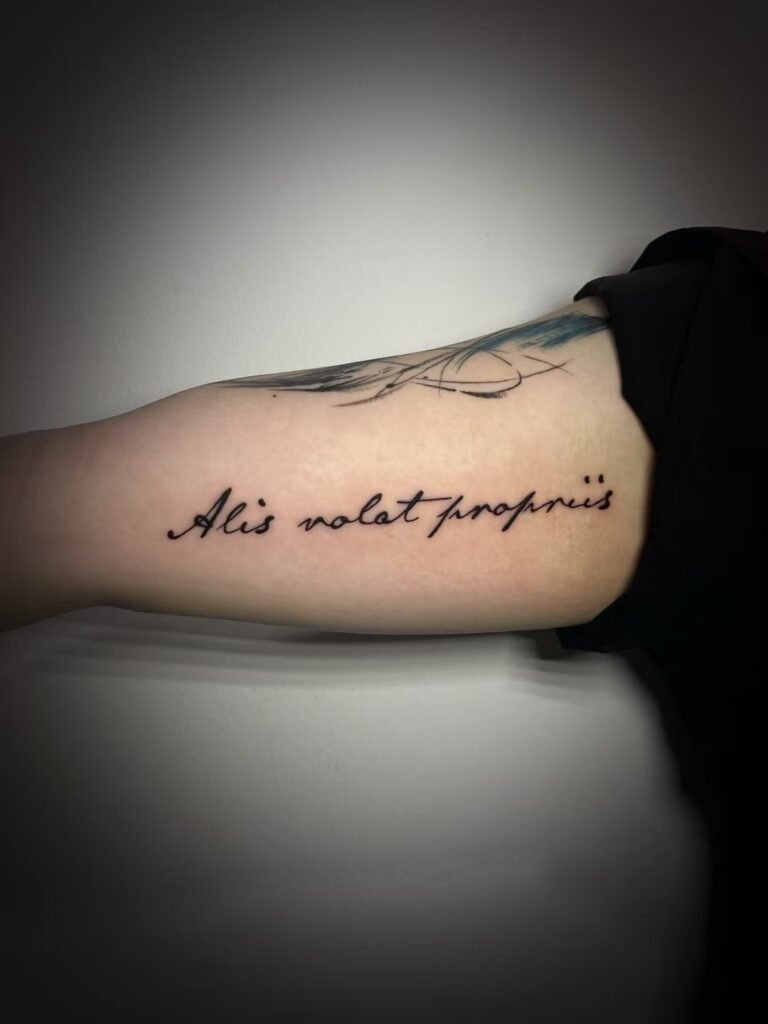
Send references for the visible object and mood, not unrelated private correspondence. Ask about the custom design discussion at Yuyi using that visual brief. The cursive portfolio image is a lettering reference, not documentation of the imagined boat or anyone’s private milestone.