
In a bilingual consultation, the difficult part is often nuance rather than vocabulary. “Soft,” “traditional” and “minimal” can describe different visual choices. Show what you mean and explain why a reference appeals to you.
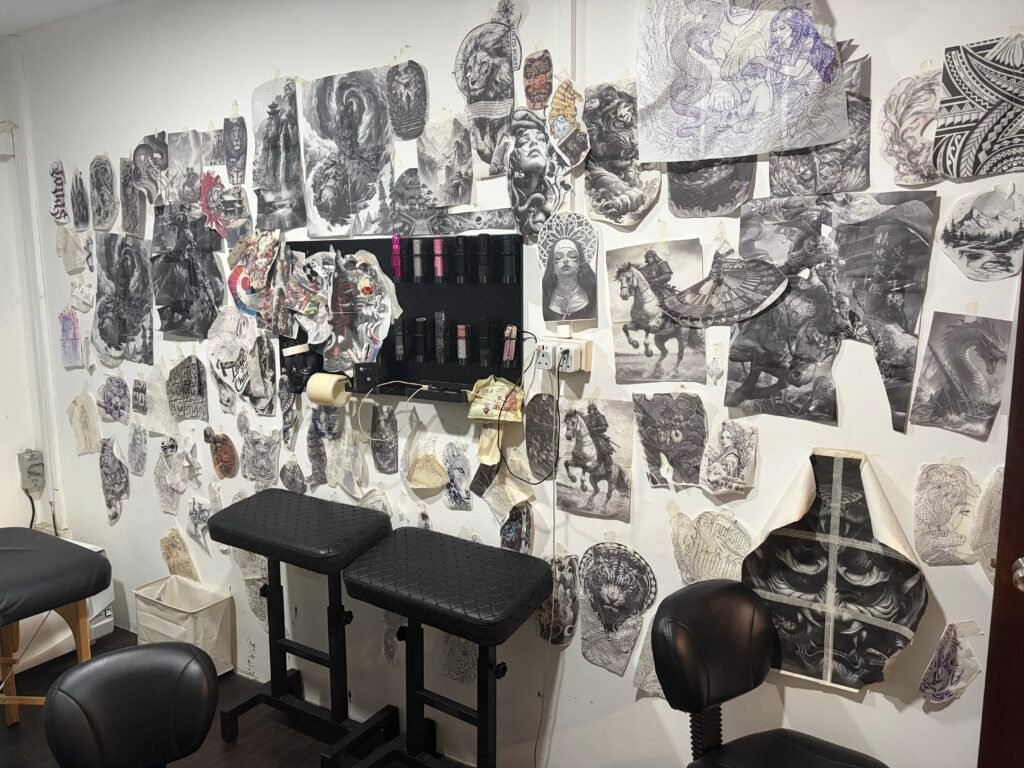
Create one shared brief
List the subject, dimensions, placement, colour and must-keep details in the language that expresses them clearly. Ask whether the assigned artist can discuss the project in your preferred language; team members may not have identical language skills.
For lettering, supply the final wording as selectable text, not only a photograph. Specify simplified or traditional Chinese where relevant, punctuation and reading direction. Have unfamiliar text checked by a competent reader before stencil approval.
Summarise decisions, not just translations
After the conversation, write down the agreed changes: for example, keep the bird facing inward, remove the date and use black and grey. A concrete design summary is easier to verify than a loose translation of a long discussion.
If a friend interprets, allow yourself time to review the result. The design decision remains yours, and an interpreter’s quick agreement should not replace your approval.
Ask Yuyi Tattoo about language arrangements and send a brief that makes the visual priorities clear. This article does not promise that every artist speaks both languages.

