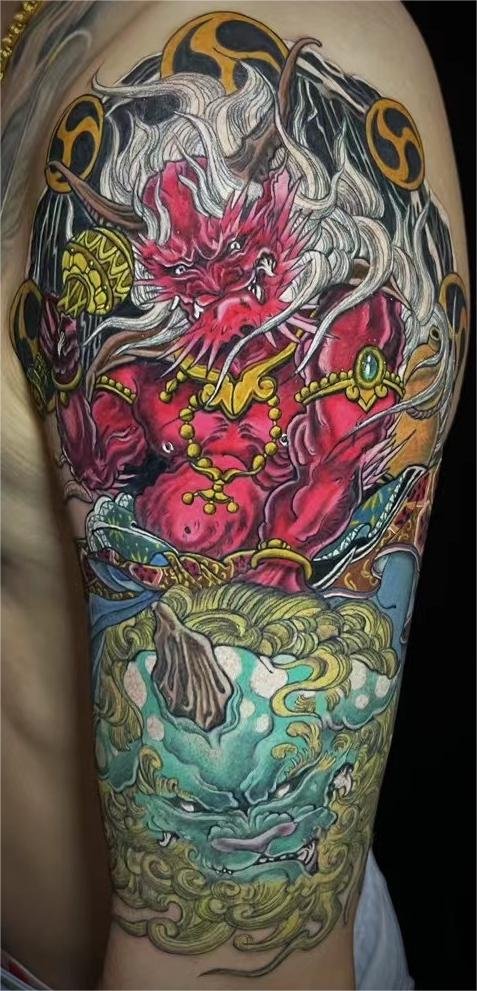
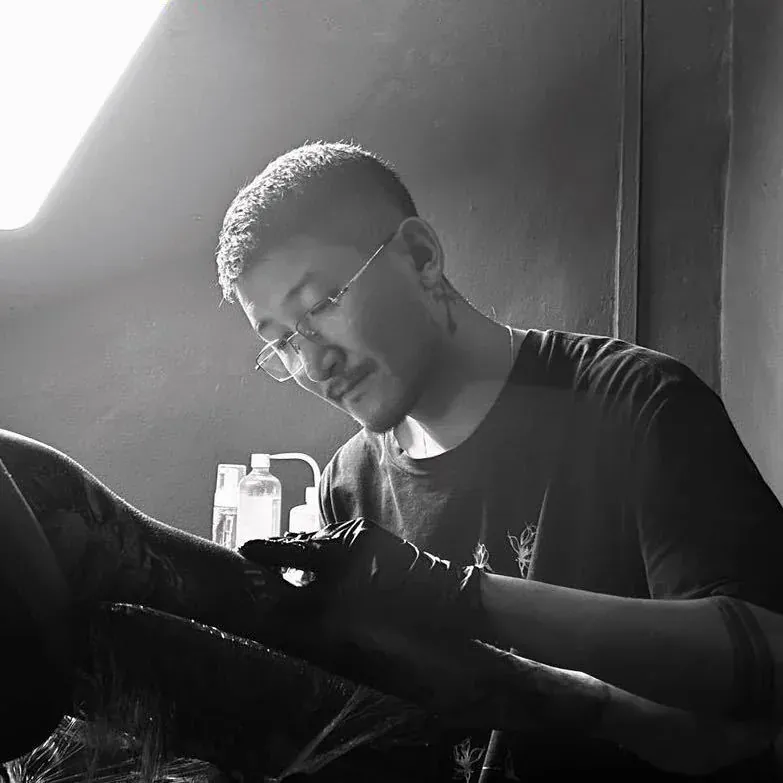
A tattoo convention award tells you a piece was judged well against other work entered at that specific event, on that specific day, under that event’s own rules. It does not tell you the artist is the best fit for your idea, your skin, or your budget. If you are researching artists through a singapore tattoo convention result, it helps to know what the judges were actually scoring before you read too much into the trophy.
Why convention categories are not standardised
Every tattoo convention runs its own award structure, and there is no single body that enforces uniform categories across events. This matters because two conventions can use the word “best” for completely different things.
A typical convention splits work by size (small, medium, large or “big” pattern), by style (realism, traditional, new traditional, black-and-grey, Japanese, colour, portrait, and so on), and sometimes by body placement (back piece, sleeve, leg piece). Some events also separate walk-in or flash work from pre-booked custom pieces. A “Best of Day” title usually means a piece stood out among everything entered and judged on that particular day of a multi-day event, not that it beat every category winner across the whole convention. That distinction is worth holding onto, because organisers sometimes phrase results loosely in marketing material, and it’s easy for a “Best of Day” to get inflated into something bigger than it was.
Category names also shift year to year and event to event. “Best Big Realism Pattern” at one show might be called “Best Large Realism” at another, and a new traditional back piece might compete in a general “back piece” category at a different convention. None of this is wrong—it’s just why you can’t compare a placement from one show directly against a placement from a different show without checking each event’s own rulebook.
How judging actually works: live, healed, and category fit
Convention judging generally falls into two broad formats, and neither one is universal across every event. Live competitions are judged on the day, based on work completed or substantially completed during the convention itself, often assessed for line work, shading, composition and how the piece reads on the body in person. Healed competitions, by contrast, judge pieces brought in by clients whose tattoos are already fully healed, which changes what the judges can see—healed saturation, skin ageing of the ink, and how the piece has settled, rather than fresh technique.
Judges typically look at technical execution (line consistency, shading gradients, colour saturation where relevant), design composition (how the piece fits the body’s natural lines and flow), and category fit (whether the piece genuinely matches the style or size class it was entered in). A judge might personally admire a piece but still score it lower if it was entered in the wrong category, or if the panel that day weighted technical precision over creative concept. Panels also change from convention to convention and even from year to year at the same event, so a judge’s individual taste is part of the result whether organisers say so directly or not.
None of this means judging is arbitrary. It means the same tattoo, judged by a different panel on a different day, could plausibly place differently. That’s a normal feature of subjective competitive judging, not a flaw specific to any one convention.
How to verify an award claim before you trust it
Award claims on a studio website or Instagram bio are easy to overstate, so it’s worth checking the specifics yourself before treating them as a strong signal.
- Confirm the exact convention name and year. “Tattoo Show Taipei 2017” is a specific, checkable event—vague phrasing like “an international convention” is not.
- Confirm the exact category name as it was actually awarded, not a paraphrased or upgraded version of it.
- Confirm the placement (1st, 2nd, Best of Day, and so on) rather than accepting a generic “award-winning” label.
- Check whether the claim matches convention archives, press coverage, or the organiser’s own social media from that year, where available.
- Note what the category covered—style, size, live or healed—so you understand what was actually being judged.
If an artist or studio can’t produce the specific event name, year and category on request, treat the claim as unverifiable rather than assuming it’s false or true.
Yuyi’s documented convention results
Yuyi’s record, as documented, consists of three specific results from two conventions:
| Convention | Year | Category | Result |
|---|---|---|---|
| The Lion’s Gate Singapore Tattoo Convention | 2024 | Best of Day (Saturday) | Best of Day |
| Tattoo Show Taipei | 2017 | Best Big Realism Pattern | 1st Place |
| Tattoo Show Taipei | 2017 | Best Big New Traditional Back Pattern | 2nd Place |
These are stated exactly as recorded, with no broader title implied. The 2024 Singapore result was a Best of Day (Saturday) award and should be read only as that specific category, not as an event-wide result.
What this record supports
Taken together, these three results support a reasonable inference: Yuyi has produced large-scale realism and new traditional work that judging panels, at two different conventions seven years apart, scored competitively against other entries in those specific categories. The 2017 Taipei results both concern large (“big”) pattern work—one in realism, one in new traditional back piece composition—which lines up with a background that includes large-scale back pieces and sleeves. The 2024 Singapore result adds a more recent data point, at a convention held in the same city Yuyi works in.
If you want to see the kind of work behind these categories rather than just the award names, you can view Yuyi’s tattoo work directly, including pieces that reflect the black-and-grey realism and large-scale composition style associated with the Taipei results. For readers specifically interested in the black-and-grey realism angle, it’s also worth exploring black-and-grey tattoo work in Singapore to see recent examples rather than relying on the award record alone.
What the record does not guarantee
An award from 2017 or 2024 does not set a price for your project, confirm a specific session count, or guarantee a particular outcome for your own skin and design. Judging criteria at a convention reward a finished piece against other entries on a given day—they say nothing about how a consultation for your idea will go, how your skin will take ink, or how a design will heal for you specifically. Convention wins also don’t confirm availability, turnaround time, or that a particular style is the right fit for what you’re picturing.
It’s also worth being clear-eyed about scope. Two results are large-pattern realism and new traditional categories from a single 2017 event, and one is a single-day award from a 2024 event. That’s a real, specific track record—it isn’t a claim to be the best tattoo artist in Singapore or anywhere else, and it shouldn’t be read as one.
A short checklist for evaluating award claims
Before an award influences your decision, it helps to run through a few quick checks:
- Ask for the exact convention name, year and category rather than accepting “award-winning” as a standalone claim.
- Check whether the category matches the style and size of tattoo you actually want.
- Look at recent portfolio work in that style, not just the award year’s work.
- Confirm current details—consultation process, studio location, availability—directly with the studio rather than assuming they’re unchanged since the award year.
- Treat an award as one data point among several, alongside portfolio depth, communication during consultation, and how comfortable you feel with the artist’s approach to your specific idea.
If you’d like to look closer at the person behind these results, you can meet Yuyi, a Singapore tattoo artist trained at the LuXun Academy of Fine Arts and tattooing since 2010, and judge the fit for yourself against your own project rather than the award list alone.
Continue planning with Yuyi Tattoo
Continue with meet Yuyi, a Singapore tattoo artist, view Yuyi’s tattoo work, and explore black-and-grey tattoo work in Singapore.
Frequently asked questions
Does a “Best of Day” award mean an artist won the whole convention?
No. Best of Day recognises a piece judged as standout among work entered on one specific day of a multi-day convention. It is a distinct category and should not be broadened into a result covering the entire event, all categories or all days.
Why do different tattoo conventions use different category names?
There’s no single governing body standardising tattoo convention categories, so each event sets its own rules on style, size and placement groupings. This is why comparing a result from one convention directly against another isn’t always straightforward.
Can I verify a tattoo artist’s convention award myself?
Yes. Ask for the exact event name, year and category, then check convention archives, organiser social media or press coverage from that year. If those specifics can’t be confirmed, treat the claim cautiously.
Does winning a tattoo award guarantee a good result for my own tattoo?
No. An award reflects how a specific finished piece was judged against other entries on a given day. It doesn’t guarantee pricing, timeline, style fit for your idea, or how your own skin will take and heal a tattoo.
What styles does Yuyi’s award record relate to?
The two 2017 Taipei results were in large-pattern realism and new traditional back piece categories. The 2024 Singapore result was a Best of Day (Saturday) award. These sit alongside a broader portfolio that includes black-and-grey realism, portrait work and large-scale back pieces and sleeves.
How do I get started if I want to discuss a project with Yuyi?
The most direct way is to message on WhatsApp with your idea, size and placement in mind. This lets you ask about style fit and next steps directly, without assuming a set price or timeline in advance.
If an award record has caught your interest, the next useful step is a direct conversation about your own idea rather than the trophy list. Message Yuyi on WhatsApp to talk through your project and see whether the style is right for you.