
Two older tattoos in the same area do not have to receive the same treatment. You may want one concealed and the other kept recognisable. Say that before an artist treats the whole area as one cover-up brief.
Give each existing piece its own label
Use a whole-area photograph and call the pieces A and B. Keep the original image unchanged; put your labels in a separate copy or an accompanying note. For each piece, state what you want to retain, change or hide.
| Area in a hypothetical brief | Goal | Question for the artist |
|---|---|---|
| A: an old word | Conceal it within a new composition. | What subject and dark areas could work with those marks? |
| B: a small bird | Keep its identity and outer shape. | Can the new background stop short of its important edges? |
| The space between them | Connect only if the two goals remain clear. | Would leaving a gap be better than forcing a dark bridge? |
Look for a conflict between the goals
A background that helps conceal the word might also overwhelm the bird. A wider composition could offer another arrangement, but that introduces a separate decision about coverage. Ask the artist to explain both effects rather than approving the concealment of A and discovering the change to B afterwards.
If the goals cannot work together, decide which one has priority. Keeping the pieces separate, changing the new subject or leaving one area alone may be preferable to a connection you do not actually like.
Approve the relationship, not just the replacement
Review the complete area with both old pieces visible in the discussion. Confirm that “keep B” means the feature you intended, not merely keeping a small fragment of it.
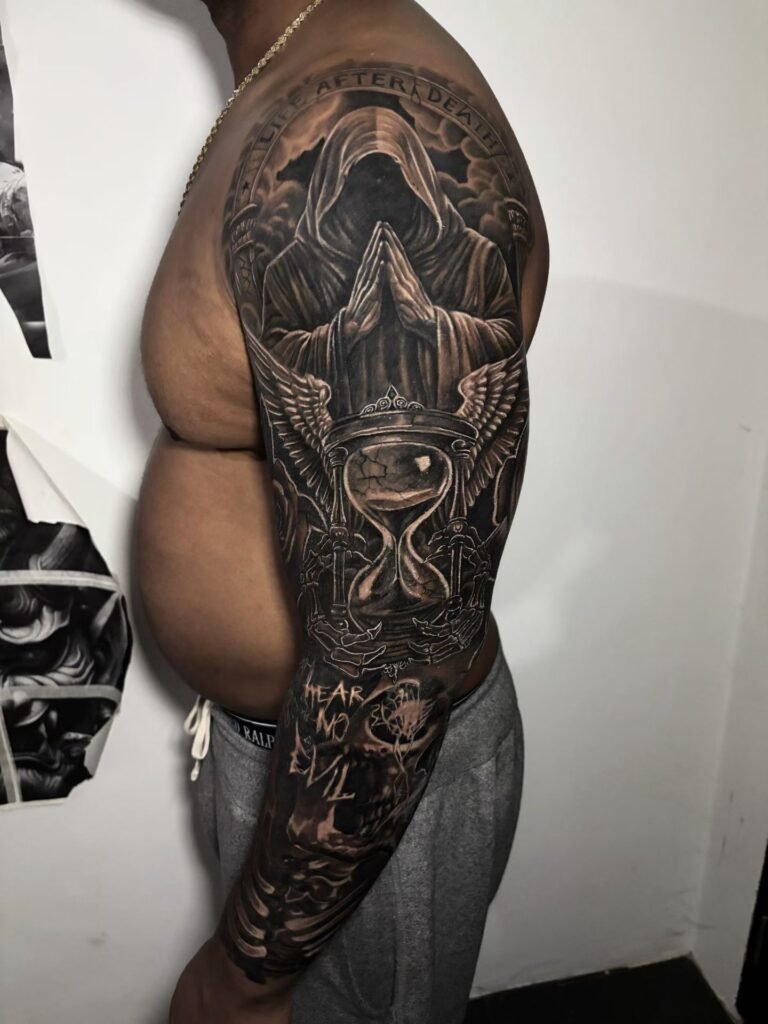
Bring the labelled comparison to a custom design enquiry with Yuyi. The sleeve photograph is composition context, not a documented two-piece cover-up or a promise that every pair of goals is feasible.

