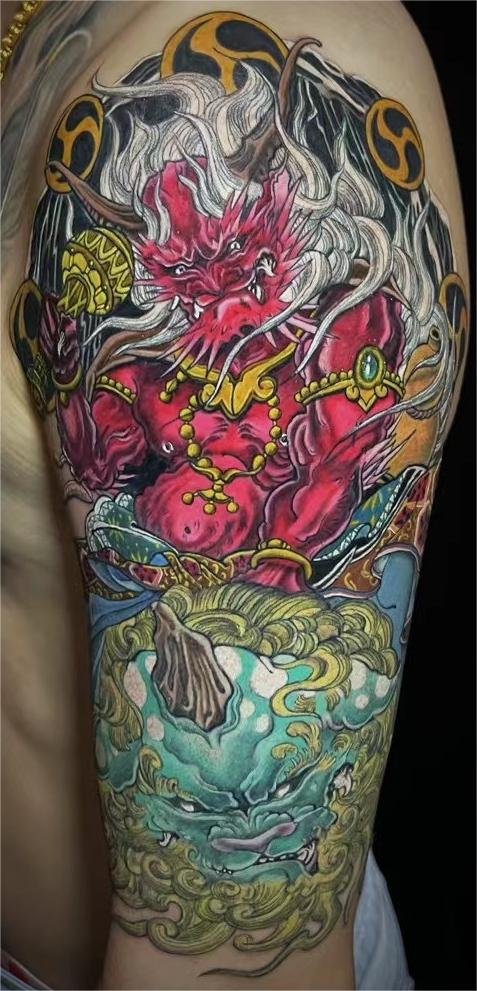
A shadow tattoo can mean several things. Clarifying which one you want is more useful than sending an artist the phrase alone: a floating butterfly and a shaded portrait require very different drawings.
Three meanings to separate
- Cast-shadow illusion: a recognisable object appears to hover above the skin because a second, softer shape sits beside it.
- Silhouette: a dark outline carries the subject, such as a wolf profile or a person with an unexpected shadow.
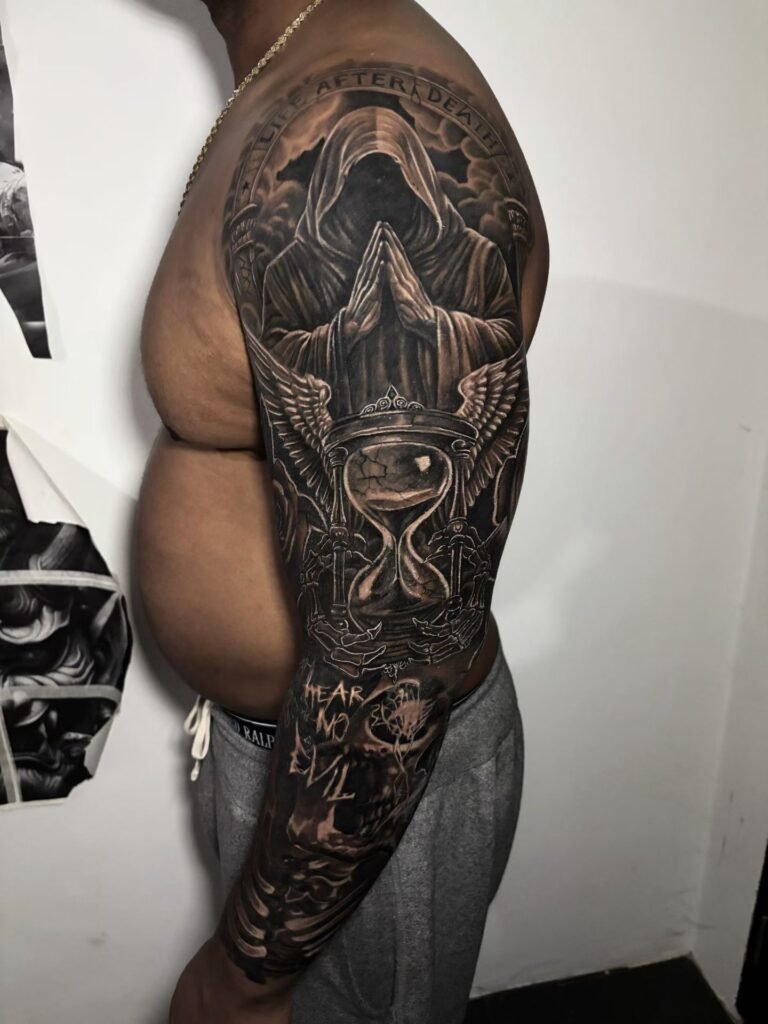
- Form shading: lighter and darker areas describe the volume of a face, flower or piece of armour.
Choose the effect before the subject details
For a floating effect, leave room around both object and shadow. For a silhouette, test whether the outer shape is recognisable without internal detail. For realism, bring a reference with readable light and dark areas rather than a heavily filtered photograph.
What if you want a hybrid?
Name the main system first. A realistic butterfly with a cast shadow is primarily a floating-object design; a wolf silhouette filled with trees is primarily a boundary-and-landscape composition. That distinction tells the artist where the design cannot afford to lose clarity. Add a second effect only if the first still reads.
Look through Yuyi’s black-and-grey tattoo work for tonal handling, then explain which of these effects interests you. Portfolio shading is a useful reference, but it is not proof that every optical illusion will work at every size.