
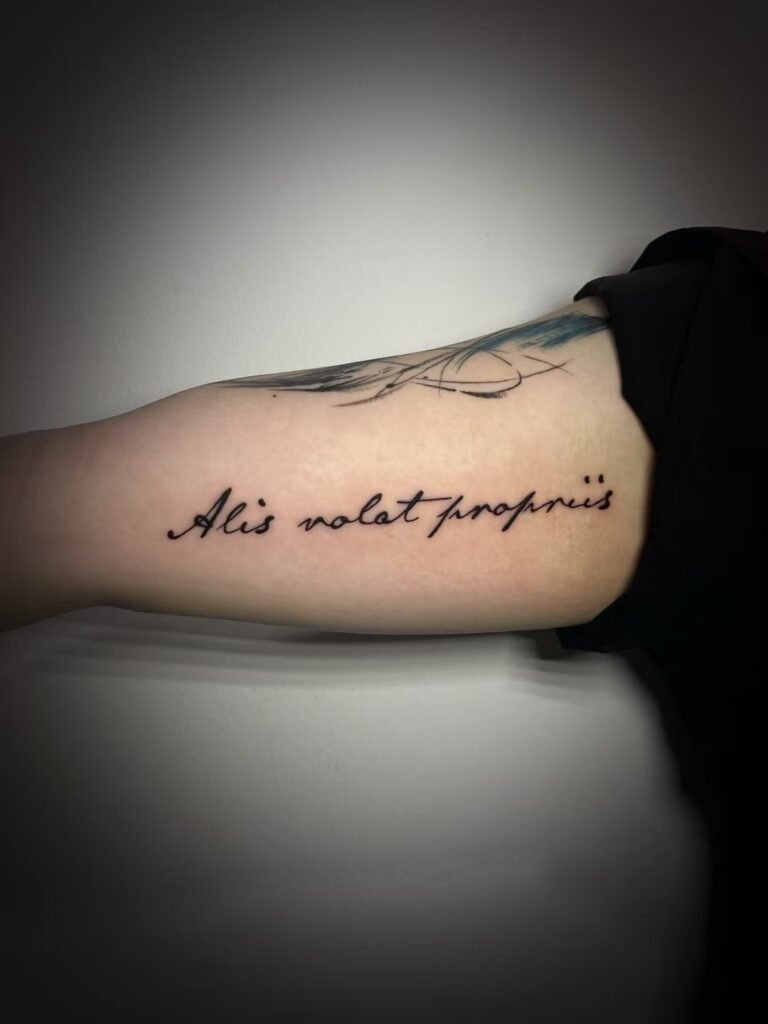
There is no universal answer to whether visible tattoos at work in Singapore are acceptable. One employer may allow them, another may require coverage, and a third may apply different grooming standards to uniforms, client sites or public-facing duties. Check the written policy and ask HR, recruitment or your manager about the exact role before choosing a visible placement.
If your career may move across offices, banks, hospitality, healthcare, education, government, security or other customer-facing work, plan around the strictest realistic clothing requirement you may face. A tattoo on the upper arm, torso or thigh is generally easier to keep under ordinary work clothing than one on the hand, neck, face or lower forearm, but no placement comes with a workplace guarantee.
Start with policy, not workplace folklore
Comments such as “Singapore offices do not mind tattoos now” or “government jobs never allow them” are too broad to guide a permanent placement. They combine different employers, occupations, uniforms and stages of employment into one claim. A software team without client contact is not the same setting as a hotel front desk, clinical ward, school, secure site or uniformed public-service role.
Ask for the current document that applies to you. It may be called a dress code, grooming standard, employee handbook, uniform policy, professional appearance guide, client-site rule or code of conduct. Search for terms including tattoo, body art, visible marks, appearance, uniform, sleeves and customer contact. If the wording is unclear, ask for an interpretation in writing.
The Ministry of Manpower states that fair employment practices should be merit-based and non-discriminatory. That broad principle does not answer whether a particular tattoo can remain visible in a particular role. In a 2020 parliamentary answer about religious wear, MOM said dress-code requirements should be suited to the nature of the work or operational and safety reasons, and should be clearly communicated. The answer concerned religious wear, not tattoos, so it is useful as a communication principle rather than a tattoo rule.
Six questions that reveal the real restriction
A yes-or-no question can produce a misleadingly simple reply. Ask:
- Which document applies to my role? A group policy may differ from a local office, department, client site or uniformed function.
- What counts as visible? Check the exact uniform and normal working movement, not a posed photograph in one outfit.
- Does the rule change by duty? Recruitment, training, customer contact, site visits, ceremonies and overseas assignments may have different expectations.
- Is coverage accepted? Ask whether ordinary clothing, a uniform layer or another approved method is permitted. Do not assume makeup or a sleeve is acceptable.
- Are there safety or hygiene limits? Some roles restrict loose sleeves, jewellery, products on skin or non-uniform garments for reasons unrelated to tattoo content.
- Who can confirm the answer? A colleague’s experience is not the same as an HR, manager, recruiter or authorised unit response.
Save the reply with the date. Policies and roles can change. A written answer is better evidence than a memory of what someone said at lunch, though it still cannot guarantee the rule will remain unchanged for an entire career.
Build a visibility map from your actual work clothes
Before choosing placement, put on the clothes you genuinely wear for work. Include short-sleeved uniforms, formal shirts, skirts or trousers, personal protective equipment, event clothing and anything required at a client site. Move normally: reach overhead, bend the elbow, sit, lift an object and turn your wrist.
A cuff can move several centimetres during ordinary tasks. A tattoo that appears covered while standing still may show when you reach for a shelf or extend a hand. Mark the reliable clothing boundary on a photograph rather than guessing from anatomy words.
Then divide possible placements into three practical groups:
- Normally covered by required clothing. The tattoo stays within an area covered by the shortest or most open version of the uniform you are expected to wear.
- Sometimes visible. Clothing can cover it, but movement, hot-weather dress, rolled sleeves or uniform changes may expose it.
- Reliably visible. Hands, fingers, neck, face and some wrist or lower-forearm placements remain exposed in many common work outfits.
This is a clothing test, not a promise. Body proportions, garment cut and employer rules differ. The guide to describing tattoo placement shows how to photograph boundaries and movement so an artist can understand the area you are considering.
Office, bank and finance roles
“Office job” covers everything from internal technical work to board meetings and regulated client contact. Ask whether the company has a general appearance policy, whether your department adds a client-facing standard and whether employees must follow a host company’s rules when working at another site.
For a bank or finance role, do not assume that one branch, trading floor, operations team or advisory function represents the whole sector. Questions worth asking include:
- Does the policy distinguish internal and client-facing duties?
- What is expected at interviews, induction, formal events and customer meetings?
- Are short sleeves normal or required?
- If a tattoo must be covered, which clothing is approved in Singapore’s climate?
- Does the rule change when visiting a client, court, regulator or overseas office?
If you expect to change employers, a placement above a normal short sleeve may preserve more options than a wrist or hand tattoo. That is a flexibility choice, not a statement that visible tattoos are prohibited in finance.
Hospitality, retail and customer service
Hotels, restaurants, airlines, retail stores and service counters often use branded uniforms and detailed grooming manuals, but each employer writes its own requirements. Front-of-house and back-of-house roles can also differ.
Ask to see the exact uniform before deciding. Check sleeve length, collar, skirt or trouser line, footwear and seasonal or event variations. For airline and transport work, ask the specific carrier or operator about the role and uniform. Cabin crew, ground operations, engineering, office staff and contractors should not be treated as one category.
If coverage is required, find out whether adding a layer is allowed. A personal arm sleeve may conflict with a uniform standard. Long sleeves may be impractical or prohibited in some tasks. Makeup may be disallowed, may transfer to fabric and should not be placed over a fresh tattoo without appropriate aftercare guidance.
Healthcare roles
Healthcare includes clinical, laboratory, administrative, facilities and support work across many employers. Do not infer one tattoo policy from the sector name. Ask both the employer and, where relevant, the clinical department.
Useful questions include:
- Does the uniform leave the planned area visible?
- Is coverage required for professional appearance, and if so, what method is approved?
- Would an added sleeve interfere with hand hygiene, protective equipment or infection-control procedures?
- Are there different requirements in theatres, wards, clinics, laboratories or patient-facing areas?
- Who decides if an image or wording is considered inappropriate?
Do not plan to cover a healing tattoo with an unapproved product or tight garment simply to meet a shift. Discuss appointment timing, clothing and aftercare separately. Workplace policy does not replace medical or aftercare advice.
Education and childcare
Schools, universities, enrichment providers and childcare organisations can have different standards for teachers, administrative staff, coaches, contractors and visitors. Ask about daily clothing, events, sport, excursions and any policy concerning images or text that students can see.
A broad answer from one institution does not apply to the Ministry of Education, private schools and every training provider. If you work across sites, check the strictest host policy you must follow. For a future teaching career, consider whether you want the option to cover the tattoo without relying on a jacket in warm weather.
Government, public service, security and National Service settings
“Government employee” is not one job description. Ministries, statutory boards, public-facing counters, operations roles, uniformed services and contractors can have different instructions. Ask the recruiting agency or authorised HR contact about the exact scheme of service and duties.
Security work may add a client-site uniform or code on top of the employer’s policy. Ask whether the contract site has its own appearance rule, whether arms must remain uncovered for safety reasons and whether any approved coverage forms part of the uniform.
National Service and uniformed service questions should go to the relevant unit or official recruitment channel. Do not rely on an office article to interpret military, police, civil defence or operational instructions. A rule for a serving person, applicant, full-time national serviceman or reservist may not be the same.
What Singapore workplace fairness rules do and do not answer
MOM’s fair employment practices guidance says employers should recruit and select based on merit and treat employees fairly. The Workplace Fairness Act passed in 2025, and MOM stated in February 2026 that implementation is planned for the end of 2027. Its listed protected characteristics include age, nationality, sex and related family statuses, race, religion, language ability, disability and mental-health conditions.
That framework is not a public list of approved tattoo placements. It should not be used to promise that an employer must allow a visible tattoo, nor to claim that every appearance rule is lawful. Employment questions depend on the facts, policy and current law. For a dispute or legal interpretation, use MOM, TAFEP, a union where applicable or qualified legal advice rather than a tattoo studio.
The practical conclusion is narrow: ask for job-related requirements to be stated clearly, and keep the response. Do not turn a general fairness statement into permission for a permanent placement.
Covering a tattoo: test the full workday
Once a tattoo is healed and if the employer permits coverage, test the approved clothing through a normal day. Check heat, movement, handwashing, protective equipment, commuting and formal events. A solution that works for a short interview may be uncomfortable or non-compliant during an eight-hour shift.
For a fresh tattoo, follow the artist’s written aftercare instructions and healthcare advice. Do not apply concealer, adhesive film, compression wear or a tight uniform layer merely because it hides the image. If you cannot meet both aftercare needs and work requirements, discuss a different appointment date or placement before booking.
Content also matters. An employer that allows visible body art may still restrict images or words it considers offensive, political, discriminatory, frightening or inconsistent with customer duties. Ask how the standard is assessed instead of assuming that all tattoos receive the same answer.
Choose placement for career flexibility
The first tattoo placement guide compares visibility with pain, clothing friction, aftercare access and future expansion. For workplace planning, focus on one question: how many realistic clothing options remain if the strictest role you may take requires coverage?
Upper-arm, shoulder, torso and upper-thigh placements often give clothing more room to cover the design. Lower forearms, wrists, lower legs, hands, neck and face offer progressively fewer ordinary coverage options, depending on uniform. A large design may also cross the exact boundary you hoped to preserve, so show the artist the clothing line in placement photos.
Do not make the tattoo too small simply to tuck it under a cuff if the subject will lose readability. It may be better to move the design to a larger covered area. The first tattoo guide for Singapore can help you consider scale, daily life and artist fit together.
When you have checked the policy and photographed the reliable boundary, send the subject, references, side, surface and approximate size through the Yuyi Tattoo contact page. Explain which clothing line must remain clear. Yuyi can discuss composition and placement, while the employer remains the authority on workplace rules.
Sources and review date
- Ministry of Manpower, Singapore — Fair employment practices — reviewed 24 August 2026.
- Ministry of Manpower, Singapore — Written answer on religious wear and workplace dress codes — reviewed 24 August 2026.
- Ministry of Manpower, Singapore — Written answer on workplace fairness implementation — reviewed 24 August 2026.
Frequently asked questions
Can office workers have visible tattoos in Singapore?
It depends on the employer, role, client duties and dress code. Ask for the current written policy and test the proposed placement against the clothes and movement required in your actual job.
Can government employees have visible tattoos in Singapore?
There is no useful universal answer across all government roles. Ministries, statutory boards, uniformed services, contractors and operational jobs can apply different instructions. Ask the recruiting agency or authorised HR contact about the exact position.
How can office workers hide tattoos?
First ask which coverage methods the employer allows. Ordinary clothing may work for a healed tattoo, but sleeves, makeup or extra uniform layers may be restricted or impractical. Do not put unapproved products or tight coverings over a fresh tattoo.
Is the forearm a safe placement for a professional job?
No placement is guaranteed safe for every employer. A forearm tattoo may show below short sleeves or when cuffs move. Photograph your shortest required sleeve in several working positions before deciding.
Should I disclose a tattoo during a job interview?
Check the application instructions and ask the recruiter or HR contact how the appearance policy applies to the role. This article cannot set a disclosure rule for every employer or regulated position.
What if my workplace policy changes after I get tattooed?
Ask for the revised policy and how it applies to existing employees, transfers, uniforms and client sites. Keeping a tattoo within an area covered by ordinary work clothing can preserve options, but it cannot prevent future policy changes.

