
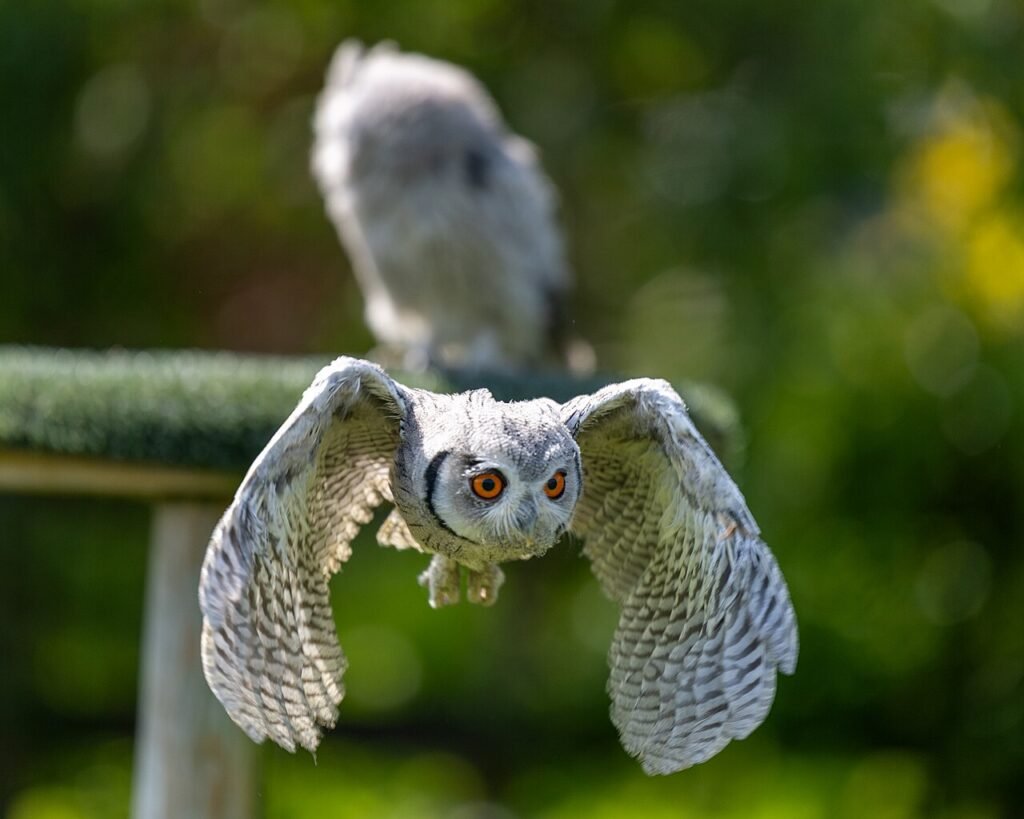
Owl tattoo meaning is shaped by context rather than fixed by the bird alone. A front-facing owl with an unbroken stare can feel watchful or confrontational; a perched profile may feel quiet and observant; an owl crossing a moonlit scene reads as movement. Culture, species, posture and the wearer’s own reason for choosing the image all affect the interpretation.
For design planning, decide first whether the owl is a face, a perched bird or a bird in flight. That choice controls the gaze, wing span, feather hierarchy, background and placement. It also prevents an owl tattoo from becoming a collection of attractive details with no clear viewing order.
Meaning starts with a specific reference
Owls have appeared in art made in different places and periods, but those appearances do not support one global definition. A Classical Greek bronze in The Metropolitan Museum of Art shows Athena preparing to release an owl; the museum records the association between owls, Athena and Athenian coinage. A nineteenth-century Japanese owl netsuke in the same collection presents the bird in a different object type and cultural setting without giving it the same narrative.
Those examples are useful because they show why “owl means wisdom” is too broad as a design brief. It may describe a personal association or a specific classical reference, but it does not explain what the tattoo should look like. A better brief identifies the source and intended feeling:
- a little owl associated with an Athenian coin or Athena;
- a barn owl chosen for its pale heart-shaped face;
- a horned owl built around ear tufts and a heavier silhouette;
- a personally significant owl linked to a place, memory or night routine;
- a fictional or ornamental owl that is intentionally not tied to a tradition.
If cultural history matters, bring the museum object, text or artwork you actually used. Do not combine a Greek association, a Japanese print and a modern fantasy symbol and describe the result as one old tradition.
The gaze sets the emotional distance
The eyes usually become the first focal point in a close owl composition. Owls have large eyes and a facial disc that creates a strong front-facing structure. Smithsonian natural-history material explains that this facial disc helps direct sound, while the eyes are adapted for low-light activity. In a tattoo, those real anatomical features also give the artist a clear visual hierarchy: eyes, disc, beak, outer head shape, then feather texture.
A direct gaze makes the viewer feel addressed. Small changes matter. Level eyes and a centred beak produce a stable, mask-like face. A slight head turn reveals more beak profile and breaks the symmetry. A downward gaze can make the owl appear focused on something below, while an upward angle adds more throat and changes the apparent width of the head.
Do not enlarge the eyes independently of the rest of the face unless the design is intentionally stylised. The facial disc, brow line, beak position and space between the eyes work together. If the eyes are copied from one bird and the head from another, the result may lose species identity even when every component is sharply drawn.
For a portrait-like head, start with one primary photograph that has clear focus across both eyes and the beak. The animal portrait reference photo guide explains how focus, lighting and crop affect likeness. Supporting images can clarify feather markings or side profile, but they should not compete with the main head angle.
Face, perch or flight: choose the main grammar
Three owl formats solve different design problems.
A portrait-like owl face
This is the most concentrated option. It gives the eyes and facial disc enough space to carry the design and can work in a roughly oval field. The danger is filling every ring around the eyes with equal contrast. If the beak, eye rims, disc edge and all feather marks are equally dark, the face becomes busy rather than intense.
Choose where the strongest darks sit. The pupils may anchor the image while the outer disc softens into feathers or background. Alternatively, a pale-faced owl can be framed by a darker night field. Either approach needs a clear edge between the head and what sits behind it.
A perched full body
A perched owl introduces feet, branch, tail and body mass. It can look still without looking stiff if the head direction and shoulder line are considered separately. A front-facing head on a slightly angled body creates a natural twist. A complete side profile makes the beak and breast curve more important than bilateral symmetry.
The branch should carry weight, not merely fill a gap under the feet. Decide whether it runs across the body, rises diagonally or disappears into foliage. Its direction can guide the eye into the owl or pull attention away from it.
An owl in flight
Flight turns the tattoo from a centred portrait into a directional composition. The wings may rise above the body, open laterally or sweep down. Each position changes the outer silhouette and the amount of space required. A front view can show both wings but risks becoming emblematic. A three-quarter view reveals depth and makes one wing larger than the other. A side view gives the clearest route through the image but reduces the direct gaze.
Decide what the owl is doing before choosing the body area. “Flying owl” is not enough. Is it gliding across the field, descending with feet forward, lifting from a branch or passing behind an element? The answer determines wing angle, leg visibility and background flow.
Feather pattern needs levels, not a line for every feather
Owl plumage is patterned, soft-edged and structurally layered. Smithsonian and Cornell Lab sources describe species-specific bars, spots, facial discs and specialised flight feathers. A tattoo does not need to reproduce each strand to communicate those features. It needs several scales of information.
First, preserve the large groups: facial disc, crown, mantle, breast, wing coverts, primary feathers and tail. Second, select the markings that identify the chosen species. Third, reserve small texture for focal areas rather than distributing it evenly.
This hierarchy matters because a row of identical leaf-shaped feathers can make an owl look decorative but flat. Flight feathers overlap in a direction and change length across the wing. Breast markings usually behave differently from the firm outer wing. Soft transitions around the face help separate an owl from a hawk or eagle without outlining every boundary.
Ask these questions while reviewing the design:
- Can the face still be read when the image is reduced to phone-thumbnail size?
- Do the wings have a clear outer contour before internal texture is added?
- Are barred or spotted markings grouped according to the selected species?
- Is there enough quiet skin or light tone between dense feather passages?
- Which feather details can disappear without changing the pose?
The broader principles in tattoo design readability help with scale, contrast and negative space.
Night imagery should change the light, not merely label the owl
A moon, stars, cloud and bare branches immediately suggest night, but adding all of them can reduce the owl’s authority. Pick one environmental idea and let it affect the light.
A moon behind the head can create a pale disc around a darker silhouette. Offset to one side, it becomes a secondary focal point and gives the gaze somewhere to travel. A crescent leaves more open background but should not be forced around the owl like a bracket. The Japanese and Asian-inspired tattoo planning can help separate lunar phase, orientation and composition from the owl itself.
The British Museum records a Hiroshige print of a horned owl on a maple branch against a full moon. It is a useful composition reference because the moon, branch and perched bird are plainly related. It should be treated as a specific Japanese artwork, not proof that every owl-and-moon design has a fixed Japanese meaning.
Branches can create a floor, frame or diagonal route. Mist can separate a wing from a dark background. Sparse leaves may identify season or habitat. Stars are most useful when their spacing supports the negative space; a uniform scatter often looks like surface decoration.
Plan contrast around the owl’s silhouette
An owl contains many mid-tone textures. The background therefore has to do more than add atmosphere. It must keep the head, wing or body boundary visible.
For a pale face, a darker halo or shadowed forest field can hold the outer edge. For a dark owl, a moon, mist or open skin may provide separation. If the owl and background share the same values, adding more fine lines will not restore the main shape.
Match the composition to the body field
Owl tattoo placement follows the pose.
- Upper arm or thigh: A portrait-like head or compact perched owl can use the rounded field. Check how the eyes look from the normal front viewing angle rather than only when the limb is rotated for a photograph.
- Forearm or calf: A vertical perched bird, descending owl or narrow night scene can follow the length. A very wide horizontal wingspan may need to fold or wrap, which changes how both wings are seen.
- Chest or upper back: These broader areas can hold open wings, bilateral structures or a large face with surrounding night imagery. Decide whether the design is meant to read straight-on or across movement.
- Shoulder and upper arm: A turning owl can use the shoulder cap, but important eye and beak landmarks should not be split unpredictably across the deepest curve.
- Rib or side torso: A vertical flight path or branch can follow the body, while a strict symmetrical face may distort more across breathing and posture.
Placement should be discussed at approximate real size. Print or display a simple outline against a body photograph. This reveals whether the wings are too wide, the face too small or the moon is occupying the best focal area.
Keep owl and raven concepts separate
Both birds can inhabit dark scenes, but their strongest design signals differ. The owl is often recognised through the facial disc, large forward-oriented eyes, compact head and soft patterned plumage. A raven depends more on beak profile, body gesture, tail and the separation of black feather masses.
If you are choosing between them, compare the composition question rather than selecting a meaning from a list. The raven tattoo meaning and placement guide focuses on silhouette, flight and storytelling choices.
Prepare an owl tattoo brief
Before contacting Yuyi, reduce the idea to a short working brief:
- Name the owl species, or state that the bird is intentionally stylised.
- Choose face, perched body or flight as the main format.
- Describe the head direction and gaze.
- Select one main environmental element, such as moon, branch or mist.
- State whether you prefer black and grey or colour without assuming either is required.
- Give the body area and approximate size in centimetres.
- Attach one primary bird reference and a small group of supporting references.
- Explain any cultural or personal source in one or two sentences.
Use the Yuyi Tattoo contact page to send the brief. Reference images guide the discussion; they do not guarantee that every feather, background object or facial detail will fit at the requested size. Final scope, availability and project arrangements are confirmed directly.
Sources and review date
- Smithsonian National Museum of Natural History: Animal Adaptations, Barred Owl — reviewed 24 August 2026.
- Cornell Lab of Ornithology: Long-eared Owl Overview — reviewed 24 August 2026.
- The Metropolitan Museum of Art: Bronze Statuette of Athena Flying Her Owl — reviewed 24 August 2026.
- British Museum: Horned Owl on Maple Branch Against Full Moon — reviewed 24 August 2026.
Frequently asked questions
What does an owl tattoo mean?
There is no universal owl tattoo meaning. A documented classical Greek reference may connect an owl with Athena, while another design may concern night, observation, a particular species or a personal memory. Identify the source and intended feeling instead of relying on a generic symbol list.
Should an owl tattoo show the face or the full body?
Choose the face when the eyes and facial disc are the main subject. Choose a perched full body when the branch, posture and species shape matter. Choose flight when direction and wingspan should lead the composition. The available body area may rule out detail that needs more width or height.
Where is a good placement for an owl tattoo?
Compact owl faces suit rounded or broad fields such as the upper arm, thigh, chest or upper back. Perched and descending poses can suit the forearm, calf or side torso. Open wings need enough width or an intentional plan for wrapping around the body.
Does an owl tattoo need a moon?
No. A moon can set the light direction, create contrast or establish a night scene, but it should have a compositional job. A branch, open skin, mist or a simple dark-to-light field may frame the owl more clearly.
What references should I send for an owl tattoo in Singapore?
Send one clear primary image showing the preferred species and pose, plus a few supporting images for feather markings, gaze or background. Include placement, approximate size, colour preference and a short explanation of any cultural or personal reference.


