
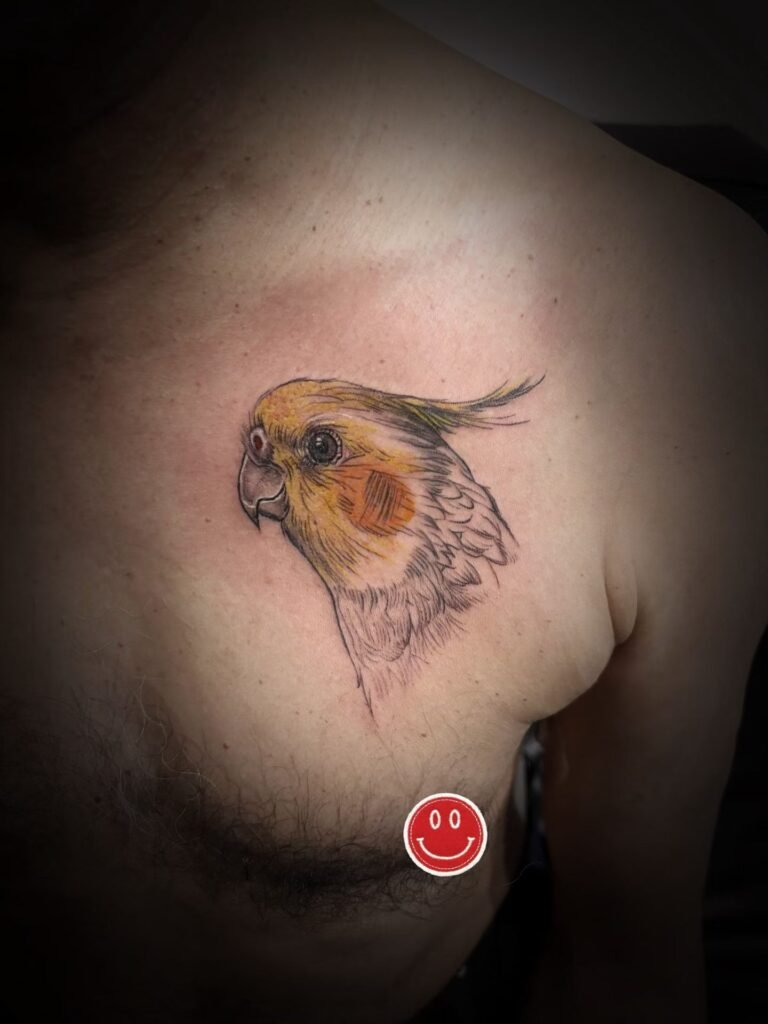
A strong animal portrait tattoo reference photo is sharp around the eyes, evenly lit, not heavily filtered, and wide enough for the artist to choose the crop. The best file shows the animal’s expression, head shape, muzzle, ears and fur direction without forcing the tattoo to repair missing information.
For a pet portrait, dog portrait or wildlife-inspired animal tattoo, the reference sets the ceiling for likeness. An artist can simplify, redraw and improve composition, but cannot reliably invent every feature from a weak photo. Send the original file, not a screenshot, and include placement and approximate size so the artist can assess whether the image will translate.
What carries animal likeness
People often think likeness comes from detail alone. With animals, it comes from a few relationships working together: eye position, head silhouette, muzzle length, ear shape, coat pattern and posture. If those cues are clear, the tattoo can still feel specific even after some texture is simplified. If those cues are missing, adding more fur lines will not solve the problem.
The eyes matter most because they create expression. A dog with relaxed eyes reads differently from the same dog with alert eyes. A cat’s eye shape, pupil direction and brow area can change the whole mood. For birds, reptiles or other animals, the focal point may shift, but the same principle remains: the feature that gives life to the animal must be visible.
Silhouette comes next. The outside shape of the ears, cheek, nose, neck and chest helps viewers recognise the animal before they study the detail. A tight crop that cuts off both ears or the top of the head may remove the very thing that makes the subject recognisable.
Focus: check the eyes before anything else
Zoom into the original photo and look at the eyes. If the edge of the iris, eyelids and catchlight are soft, the portrait will likely need to be larger or simplified. A photo can be high resolution and still be unusable if the camera focused on the nose, collar or background instead of the face.
Motion blur is common in pet photos. It is not always obvious on a phone screen, but it becomes obvious when enlarged. Fur may look acceptable at thumbnail size while the eyes and muzzle become smeared at tattoo scale. A blurry photo can be useful for mood or pose, but it should not be the main reference if you have a sharper option.
Avoid screenshots from social media when possible. Uploading, downloading and forwarding can compress the file. The safest version is the original image from the camera roll, cloud album or photographer, sent without resizing.
Lighting: choose clear form over dramatic effects
Soft, directional light is usually better than harsh flash. Window light from the side can show the skull, cheek, muzzle and fur direction without burning out highlights. Direct flash can flatten the face and create shiny eyes or white patches. Backlighting can make a beautiful silhouette, but it often hides the detail needed for a portrait.
Watch for blocked shadows. A black dog photographed in deep shade may lose the separation between eyes, muzzle and ears. A white cat in bright sun may lose edges where the fur blends into the background. The tattoo does not need a perfect studio image, but it needs enough tonal information to separate the features.
If you have several photos, choose the one where the animal looks most recognisable, not necessarily the most dramatic. A calm, clear head angle often tattoos better than an action shot with stronger emotion but weaker detail.
Fur direction and coat pattern
Animal portraits depend on texture, but texture has to follow form. Fur around the eyes may move one way, fur on the muzzle another, and longer coat on the chest another. A usable reference lets the artist see those directions. If the photo is blurred, over-smoothed by a phone filter or cropped too tight, the tattoo may lose the structure that makes fur believable.
Coat markings also need planning. Spots, stripes, masks and patches should support the face rather than cover it. If a marking crosses the eye or muzzle, the artist needs a clear reference to decide which edge is important. On black-and-grey work, coloured markings must be translated into values, so a red-brown patch and a dark grey patch may need different handling even if they look similar in monochrome.
This is where black-and-grey tattoo work can help as a reference point. Value, not colour, carries the separation, so the photo must contain enough light and dark information for the artist to rebuild the animal in greyscale.
Crop: leave more room than you think
Do not send only a tight face crop. Send the uncropped original and explain what you want to keep. The artist may need room above the ears, below the chest or around the neck to make the animal sit naturally on the body. A crop that looks strong on Instagram can feel cramped on skin.
The crop also depends on placement. A vertical forearm piece may suit a head-and-chest crop. A shoulder or thigh may allow more surrounding fur, collar or background shape. A small wrist or ankle area may force the design toward a simple silhouette rather than a realistic portrait.
If the animal’s ears, whiskers, mane, feathers or horns matter to the likeness, they need space. Cropping them off can make the tattoo more compact, but it may also make the subject less specific.
One main image, supporting images only when useful
A single strong reference is usually better than six inconsistent photos. If one image shows the dog from the front, one from below, one in shadow and one as a puppy, the artist has to choose between conflicting information. That can make the final portrait feel generic.
Supporting images help when they answer a specific question. One main photo can carry expression; a second can show the ear shape; a third can show the coat pattern. The key is to label which photo is primary. Without that, the artist cannot know which version of the animal you want preserved.
For memorial pet portraits, this is especially important. Choose the image that feels most like the animal to you, then let the others support it rather than compete with it.
Permission and image ownership
A photo of your pet is not automatically yours to reproduce if someone else took it. In Singapore, the photographer is generally the default copyright owner of a photograph unless an exception or agreement applies. A professional pet portrait, show photo or rescue-organisation image may require permission from the photographer or organisation.
There is also a practical respect issue. If the animal belonged to a family member, rescue group or previous owner, make sure you are comfortable using the image and that there is no conflict over the reference. This is not about creating a legal lecture for every tattoo. It is about avoiding preventable problems before design work begins.
The safest references are photos you took yourself, photos sent with clear permission, or images licensed for the specific use. Search-engine images should be treated as protected unless the source clearly says otherwise.
What to send in your animal portrait brief
Use this checklist before you contact Yuyi Tattoo.
- Primary reference. One original file, not a screenshot.
- Clear eyes. Eyes, eyelids and catchlights remain sharp when enlarged.
- Usable lighting. No heavy flash, blown highlights or deep blocked shadows.
- Full crop. Include ears, muzzle, head shape and enough surrounding space.
- Fur direction. The coat texture is visible enough to guide the drawing.
- Supporting images. Add only if they clarify markings, ears or posture.
- Placement and size. Name the body area and rough dimension.
- Permission. Confirm that you took the photo or have approval to use it.
You can also browse Yuyi Tattoo’s works to understand how faces, animals and character subjects depend on contrast and crop, even when the final tattoo is not a direct copy of the reference.
Sources and review date
- Intellectual Property Office of Singapore — Introduction to Copyright — reviewed 24 August 2026.
- Singapore Statutes Online — Copyright Act 2021 — reviewed 24 August 2026.
- University of Arkansas Print, Mail, Copy Solutions — image file and resolution FAQ — reviewed 24 August 2026.
- U.S. Copyright Office — What photographers should know about copyright — reviewed 24 August 2026.
Frequently asked questions
Can a blurry pet photo still work for a tattoo?
It can sometimes guide pose or feeling, but it may not be strong enough as the main reference. If the eyes and muzzle are blurred, the artist may need a larger design, a simpler interpretation or a different photo. A weak photo should not be treated as something the tattoo can fully repair.
Should I send a colour or black-and-white photo?
Send the original colour file if you have it. The artist can convert it to black and grey while controlling the values. A phone-made black-and-white filter may remove information that helps the artist understand coat colour, markings and light direction.
What is the best dog portrait tattoo reference?
A strong dog portrait reference shows the eyes, muzzle, ears and head shape clearly, with soft light and minimal blur. It should be the expression you want remembered, not just the highest-resolution file in your album.
Can I include a collar, toy or name tag?
Sometimes, but each extra object uses space. If the collar or toy is meaningful, tell the artist. The design may need to simplify fur or background so the object does not crowd the face.
Do I need permission for a professional pet photo?
Usually, yes. If a photographer, studio, shelter or event organiser took the image, they may own the copyright. Ask for permission or choose a photo you took yourself. Credit alone is not the same as permission.
Planning an animal portrait with Yuyi Tattoo
Send the original photo, placement and approximate size to Yuyi Tattoo contact or WhatsApp +65 9128 0501. The studio is in Geylang, Singapore; message first so availability is confirmed before visiting.

