
A floating tattoo needs two readable shapes: the subject and its cast shadow. More detail is not automatically better. These five concept directions use the effect in different ways; choose the relationship that suits your subject.
Five useful starting points
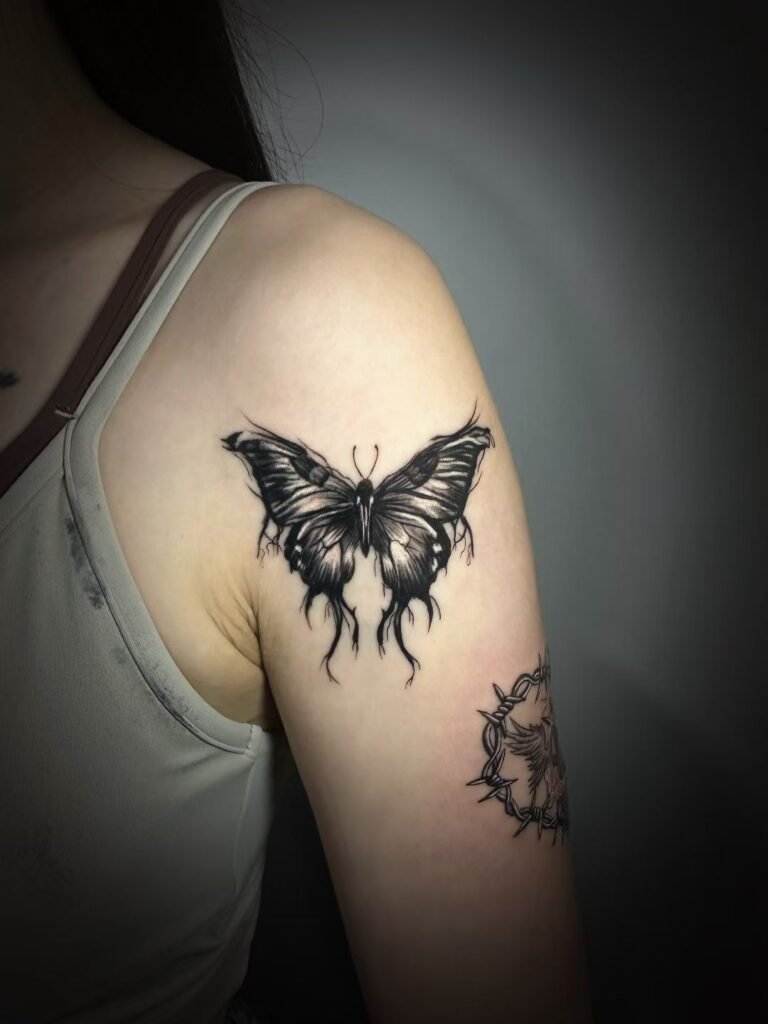
- Butterfly: lifted wings create an obvious reason for a separate shadow. Keep the wing outline distinct from the grey shape beneath it.
- Single leaf: a curled edge can suggest a small lift without a complicated background.
- Short word: offset shading can add dimension, provided the letters remain easy to read.
- Simple geometric form: a triangle or folded square makes inconsistent shadow direction easy to spot.
- Small personal object: a key or paper plane can carry meaning while keeping a clear silhouette.
Match the shadow to the object
A flat key and a butterfly with lifted wings should not cast identical grey blobs. The object’s pose needs to explain the projected shape. Bring a reference with the relationship visible, rather than a photo of an object and an unrelated shadow pasted beside it.
Allow room for the second shape
The shadow increases the total footprint. Ask to see the whole composition at intended size and from a normal viewing distance, not just a close-up mockup. Curved placement can also change how the illusion reads.
Use these as custom design references for Yuyi. The accompanying butterfly photograph is a subject reference, not a finished floating-effect tattoo.

