A small cat casting a lion’s shadow tells its story through contrast: modest appearance beside a larger inner presence. It can suggest courage, aspiration or quiet confidence, but the meaning is yours to define.
Keep both animals recognisable
The cat needs a readable posture, ears and tail. The lion shadow needs a convincing mane or profile rather than a second generic cat shape. If both figures are highly detailed, the central visual joke can disappear.
Try one of three approaches: a seated cat with an upright lion profile; a walking cat with an elongated shadow; or two simplified silhouettes connected at the paws. These are design directions, not claims about completed Yuyi projects.
Try a playful version and a serious version
A compact seated cat with an oversized mane shape can feel like a visual joke. A walking cat with a long, directional lion shadow can feel more solemn. If you ask for courage, explain which mood you mean; more aggressive facial detail is not the only way to communicate it.
Placement depends on the whole footprint
A long shadow may suit a forearm or calf composition better than a very short area. A more compact pairing can be explored for an upper arm. Test the drawing with the limb relaxed so neither animal falls awkwardly around an edge.
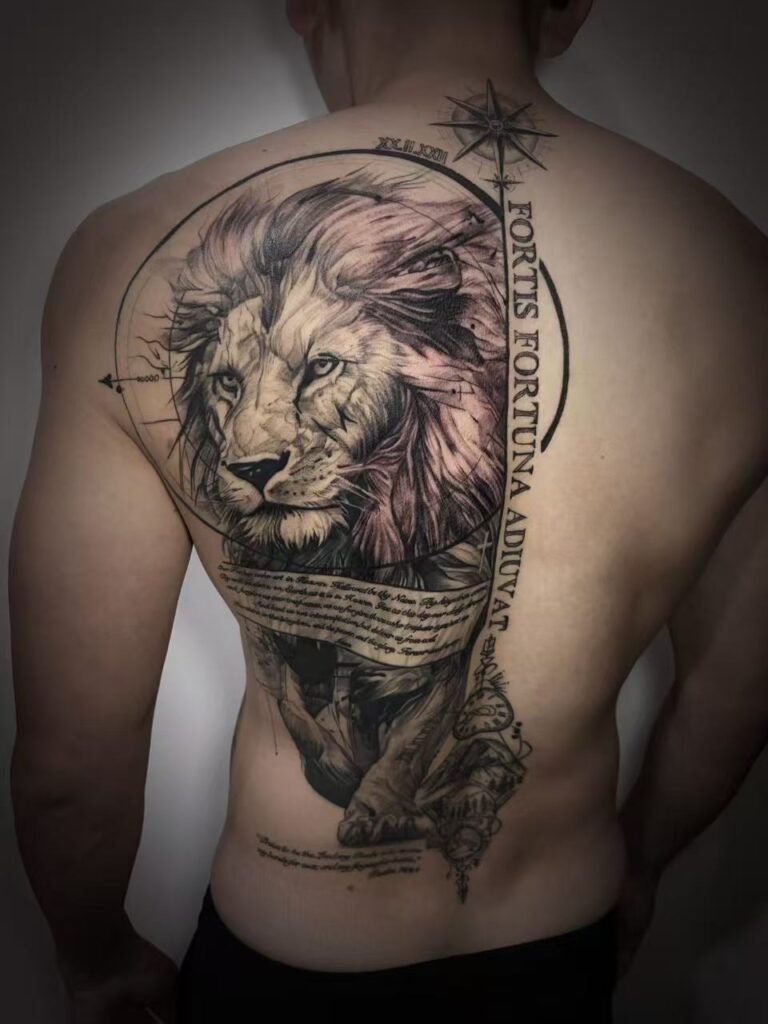
For a custom cat-and-lion concept, tell Yuyi which animal should dominate and whether the mood is playful or serious. The portfolio photograph here shows a detailed lion back tattoo, not this two-part silhouette.