
Negative space is an area deliberately left outside the inked shapes. In a shadow-heavy tattoo, it can do more than lighten the design: it can create the edge of a face, separate petals or lead the eye through a large composition.
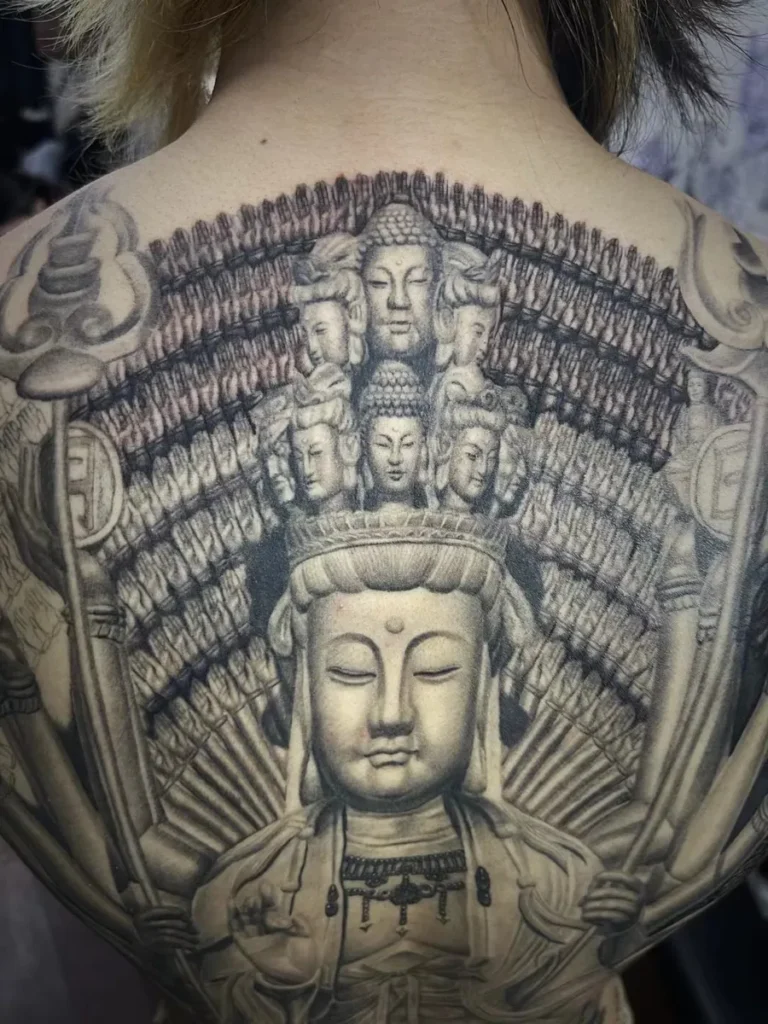
Give the empty area a job
A slim gap between two dark forms can keep them distinct. A wider opening can become the focal point. Around a figure, open skin can prevent a dark background from swallowing the outline. These choices should be planned rather than treated as leftovers to fill later.
What to check in the mockup
- Can you recognise the main subject when the design is viewed small?
- Do narrow gaps matter to the image, or are they decorative?
- Will the composition still read around the curve of the chosen body area?
- Would adding more background improve the design or merely make it darker?
Do not fill useful gaps just to connect a sleeve
A gap that separates two subjects is doing compositional work. Before adding clouds, smoke or ornament, compare the current open version with the proposed connection. The new background should create a clearer overall shape, not merely make every neighbouring tattoo touch.
Negative space is not white ink, and it will reflect the appearance of your own skin. A bright white digital background should not be mistaken for the exact result on the body.
Browse Yuyi’s black-and-grey compositions for the relationship between dark areas, focal subjects and open space.

