
A butterfly gives a drop-shadow design a clear subject, but its wings and shadow both need room. Compare the full drawing on the body rather than choosing placement from the butterfly alone.
Three placements, different compromises
- Collarbone: an angled butterfly can follow the upper chest, but the composition needs to be checked from the front and with the shoulders relaxed.
- Wrist: visibility is high and space is limited. A simple wing pattern may read more clearly than a miniature version packed with markings.
- Ankle: consider how the drawing turns around the leg and where footwear meets the proposed area.
Keep the shadow attached to the idea
If the grey shape sits too close to dark wing edges, the two can merge visually. If it is too far away, it can look like a separate mark. Ask to compare different offsets on the design before deciding.
One butterfly or a group?
Several butterflies multiply the number of wings and shadows competing for space. If one convincing floating effect is the priority, start with one subject. A group may be better handled as a flatter arrangement with a clear direction, rather than making every butterfly appear to hover at a different angle.
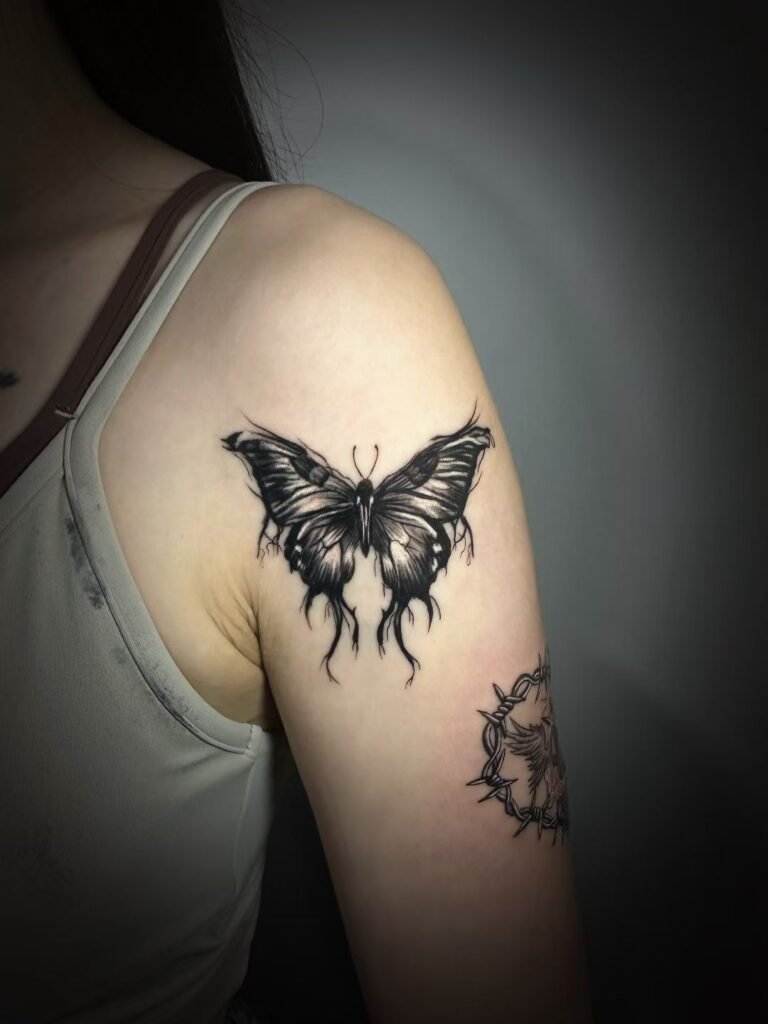
The butterfly photo accompanying this article is a real Yuyi portfolio image, not an example of a completed cast-shadow illusion. For a custom butterfly design enquiry, send a placement photo and explain whether you prefer a graphic silhouette or more natural wing detail.

