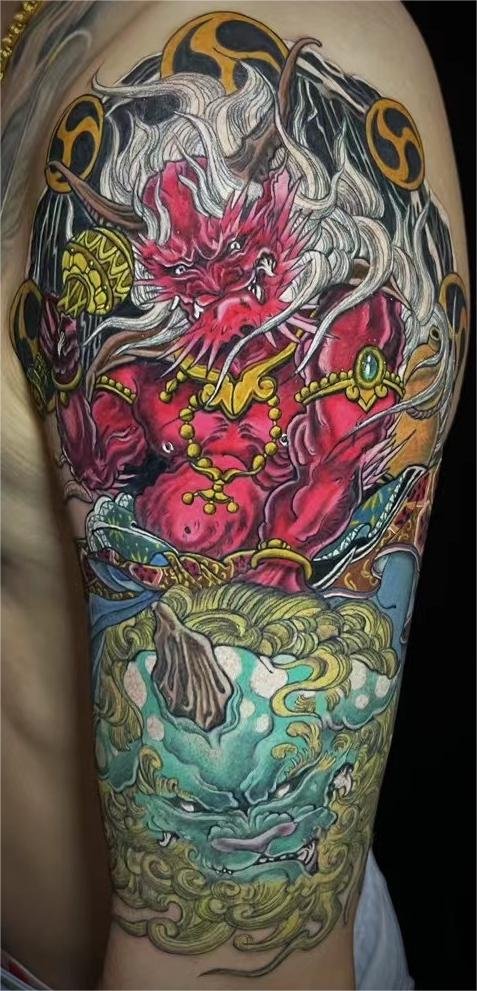
Choosing between a forearm vs upper arm tattoo comes down to how your artwork interacts with anatomical movement, daily visibility preferences, and long-term sun exposure. Neither location is universally superior. The upper arm provides a broader, flatter surface that resists rotational warping, while the forearm offers immediate personal visibility and natural vertical framing for elongated compositions.
Understanding how each muscle group shifts, how clothing conceals ink in professional environments, and how daily friction impacts healing will ensure your design retains its structural integrity for years.
Comparison table: forearm vs upper arm tattoo
| Dimension | Forearm Placement | Upper Arm Placement |
|---|---|---|
| Canvas Shape | Tapered, cylindrical, elongated | Broad, rounded, cylindrical |
| Movement Distortion | High (radial rotation twists skin up to 180°) | Low to moderate (expands with flexion) |
| Daily Visibility | High (difficult to conceal in warm climates) | Moderate to low (easily hidden under short sleeves) |
| Pain Sensitivity Range | Variable (bony wrists and inner tendons feel sharp) | Variable (inner arm and armpit area feel intense) |
| Sun Exposure Risk | High (constant ambient UV on outer skin) | Lower (shaded by standard T-shirt sleeves) |
| Friction Points | Desk edges, keyboards, watch straps | Shirt seams, bra straps, tight armholes |
| Aging Resistance | Stable skin tightness, higher UV exposure | Lower UV exposure, potential skin laxity over decades |
| Best Design Types | Vertical linework, daggers, script, botanical stems | Portraits, circular seals, broad realism, wrap motifs |
Canvas shape and anatomical movement
The forearm and upper arm present fundamentally different biomechanical environments for tattoo ink. The forearm is an active, twisting segment driven by the radius rotating around the ulna during pronation and supination. When you turn your palm from facing upward to facing downward, the surface skin shifts significantly across the forearm plane.
Linear, rigid geometric shapes or symmetrical faces placed across the flat of the forearm will twist noticeably whenever your hand moves. Conversely, natural biological forms such as serpents, botanicals, and illustrative Japanese elements flex dynamically with this rotation. If you wish to explore black-and-grey tattoo work in Singapore, studying how continuous tone realism flows along the forearm musculature reveals how shading can mask natural twisting.
In contrast, the upper arm—encompassing the deltoid, biceps, and triceps—acts more like a curved shield. The outer deltoid and lateral bicep maintain relatively consistent spatial relationships whether your arm is resting or bent. This makes the outer upper arm an exceptional zone for realistic portraiture, geometric mandalas, and wide-format compositions where facial proportions or circular symmetry must remain undistorted.
The primary distortion on the upper arm occurs through muscle contraction rather than rotational twisting. When flexing the bicep, the skin expands horizontally, which slightly widens the artwork temporarily before settling back into its resting state.
Daily visibility and lifestyle considerations
Visibility is often the deciding factor when choosing between these two placements. In Singapore’s tropical climate, short-sleeved shirts, polos, and activewear are standard daily attire. An upper arm tattoo remains completely concealed beneath a standard sleeve hem, allowing you to maintain full discretion in conservative corporate or formal settings without adjusting your wardrobe.
A forearm tattoo, by contrast, is on display almost constantly unless you commit to wearing lightweight long-sleeved linen or UV-blocking collared shirts. This makes the forearm ideal for collectors who want to enjoy their ink daily without looking into a mirror. It also serves as an outward statement piece that integrates into your visible personal style.
If your lifestyle involves frequent outdoor commuting, water sports, or active manual work, forearm tattoos will require vigilant lifestyle adjustments during both the initial healing window and long-term maintenance.
Sensation and pain variability across zones
Predicting discomfort based purely on a binary choice between upper arm and forearm oversimplifies human anatomy. Both segments contain areas that feel relatively manageable alongside localized sensory hotspots packed with nerve endings and thin skin.
“`
Upper Arm Sensations:
– Outer Deltoid / Lateral Bicep: Low to moderate dull vibration
– Inner Bicep (near brachial artery): Intense pinching sensation
– Triceps / Back of Arm: Moderate burn, sensitive near armpit fold
Forearm Sensations:
– Outer Forearm / Radial Edge: Manageable dull ache
– Inner Forearm (mid-belly): Moderate scratching sensation
– Inner Wrist & Tendons: Sharp, high-vibration nerve response
“`
On the forearm, the outer muscle belly typically feels like a steady scratching sensation. As the needle approaches the radial bone near the wrist, the inner tendon bundles, or the inner elbow crease (the ditch), the sensation sharpens considerably due to dense superficial innervation.
On the upper arm, the fleshy outer deltoid is widely regarded as one of the most accessible areas for prolonged tattoo sessions. However, moving toward the inner bicep or up into the axillary region near the armpit introduces significant stinging, as the skin thins and lies close to major neurovascular pathways. To understand these localized micro-zones in detail, clients often use the tattoo pain chart to compare specific nerve maps before committing to large-scale sessions.
Healing environment, friction, and long-term aging
Singapore’s year-round ambient temperature and high relative humidity create unique healing considerations for both placements. A fresh forearm tattoo faces constant contact with daily work environments. Resting your forearms on laptop edges, office desks, or counter surfaces introduces mechanical friction and bacterial risks that require dedicated barrier care during the initial epithelialisation phase.
Upper arm tattoos encounter different friction dynamics. The inner sleeve hem of fitted shirts and tight armholes can rub against fresh flakes, causing premature scab detachment if loose cotton clothing is not worn. However, the upper arm is far easier to keep isolated from foreign surfaces during sedentary office hours.
When evaluating tattoo placement for aging, sun exposure is the single largest extrinsic factor influencing pigment degradation. According to dermatological guidance from the National Skin Centre Singapore, ultraviolet radiation contributes up to 80% of premature skin aging and pigment alterations. Forearms receive chronic, incidental UV exposure while driving, walking outdoors, or working near windows. Without routine broad-spectrum SPF 30+ sunscreen application once fully healed, fine gradients and soft grey wash on the forearm will soften faster over decades than protected upper arm ink.
Matching your design shape to the placement
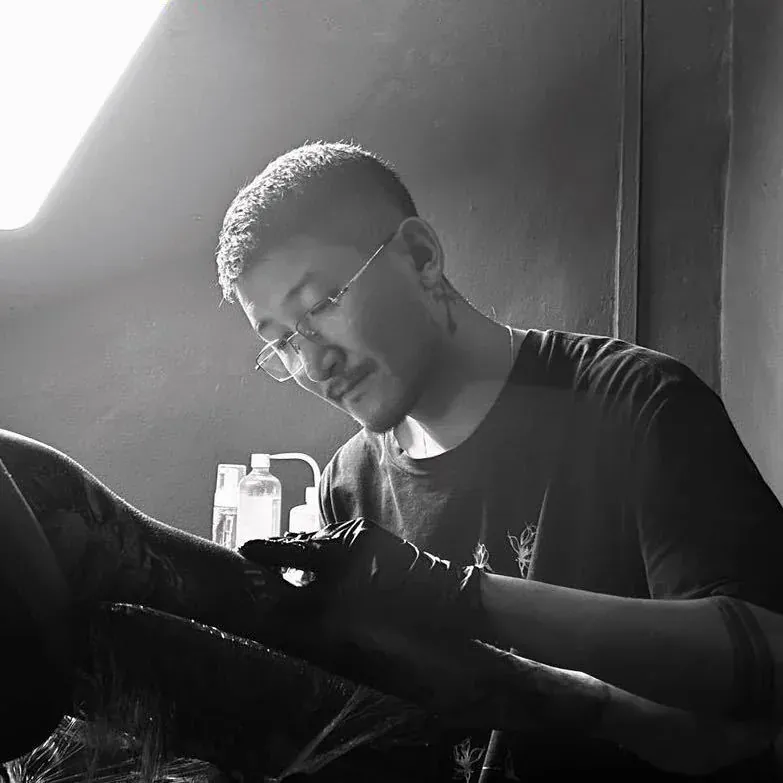
Harmonising the silhouette of your reference artwork with your natural muscle contours ensures the finished piece looks intentional rather than stamped onto the limb. You can view Yuyi’s tattoo work to observe how custom compositions are tailored around anatomical taper lines.
“`
Design Match Guide:
Elongated & Vertical Forms (Best for Forearm):
– Daggers, straight swords, and architectural pillars
– Vertical calligraphy, script, and column typography
– Botanical stems, serpents, and ascending dragons
– Micro-realism panels and single-column illustrative frames
Broad, Round & Planar Forms (Best for Upper Arm):
– Classical human portraits and animal head studies
– Circular mandalas, sacred geometry, and compass roses
– Large mythological scenes requiring atmospheric background
– Half-sleeve caps wrapping cleanly over the shoulder ball
“`
The forearm naturally tapers from the wide flexor muscle mass near the elbow down to a narrow circumference at the wrist joint. Artwork that embraces a top-heavy or vertically fluid structure naturally flatters this narrowing canvas.
The upper arm provides a spherical cap at the deltoid that transitions into a sturdy cylinder over the biceps and triceps. This wide landscape easily accommodates expansive horizontal elements, deep background shading, and high-contrast focal points without compressing essential details.
Placement-photo consultation checklist
Before finalizing your booking or stencil sizing, preparing accurate reference photographs helps your artist evaluate skin elasticity, tone, and muscle flow. Use this checklist when submitting images via messaging:
- Take photos in natural daylight: Stand near a window without direct sunlight glare or harsh indoor overhead shadows to capture true skin tone.
- Photograph at a relaxed resting angle: Let your arm hang naturally at your side. Do not flex or contort your shoulder, as forced postures distort true muscle alignment.
- Capture multiple rotational views: For forearm placement, photograph the arm with the palm facing forward, backward, and neutral against your hip.
- Include adjacent joints for scale: Ensure your shoulder joint and elbow are visible for upper arm shots, or your elbow and wrist for forearm shots.
- Keep your camera at eye level: Have a friend take the photo from 1.5 metres away rather than taking an angled, wide-lens selfie that warps limb proportions.
Frequently asked questions
Does an inner forearm tattoo hurt more than an outer upper arm tattoo?
Yes, most people experience sharper sensitivity on the inner forearm compared to the outer upper arm. The outer deltoid features thicker skin and fewer superficial sensory nerves, whereas the inner forearm contains dense tendon clusters, thinner dermis, and sensitive nerve branches running close to the surface near the wrist joint.
Will a forearm tattoo warp if I gain muscle or lose weight?
Moderate muscle gain or fat loss generally causes minimal visual distortion on the forearm because the skin stretches evenly across the limb. Significant muscle hypertrophy will expand the muscle belly slightly, but dramatic rotational warping is primarily caused by natural wrist pronation rather than ordinary weight fluctuations.
How do I protect a forearm tattoo from fading in Singapore’s climate?
Once your forearm tattoo is completely healed, apply a broad-spectrum sunscreen with SPF 30 or higher at least 20 minutes before outdoor exposure. Because forearms receive constant incidental UV radiation during daily commutes, reapply sunscreen every two hours when outdoors, or wear breathable UPF 50+ long-sleeved clothing.
Can an upper arm tattoo be easily connected into a full sleeve later?
Yes, the upper arm serves as an ideal foundation for future full-sleeve projects. A skilled artist can design the bottom edges of an upper arm piece with soft, open background transitions, allowing forearm elements or elbow filler to connect seamlessly without harsh dividing lines.
Discuss your placement with Yuyi Tattoo
If you are deciding between a forearm or upper arm placement for an upcoming project, evaluating your design against your muscle flow is the best starting step.
Take clear photos of both arm placements using the checklist above, and message Yuyi on WhatsApp along with your reference artwork to review design flow, composition scale, and stencil alignment before your session.