Choose the original tradition first, then find a reliable visual source from that tradition, and finally select one story moment or recognised set of attributes. Those three decisions should guide a mythology tattoo before references are combined. If the idea draws from more than one tradition, label where every figure, creature and object comes from and decide which tradition controls the main image.
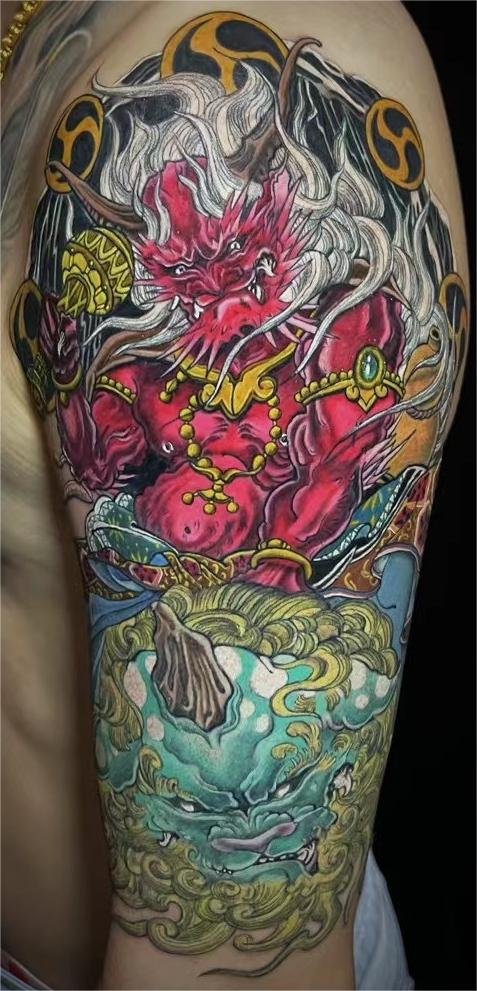
A useful brief can fit on one page: the figure’s name and spelling, culture and period, museum object or scholarly text, exact scene, essential attributes, placement, approximate size, and details that must not be added. Keep contemporary film, game and comic art in a separate inspiration folder. Japanese folklore is outside this guide and belongs with Yuyi Tattoo’s Japanese and Asian-inspired tattoo work.
Begin with a tradition, not a general theme
“Mythology” is too broad to function as a source. Greek and Roman names can lead to different literary and visual settings. Norse evidence includes Viking Age objects and texts written down later. Ancient Egyptian forms depend on the object and scene. Mesoamerican imagery also needs a named culture and period rather than a loose label such as “Aztec or Mayan”.
Write the narrowest description that the evidence supports. “Athena in Classical Greek art” gives you a research path. “Norse Thor based on a Viking Age hammer amulet” is clearer than “Viking god”. “Anubis in the judgement scene from the Papyrus of Ani” identifies a figure, object and action. A precise starting point makes later design choices easier because it limits accidental substitutions.
Versions matter as much as names. A myth may survive in several poems, regional traditions, ritual objects and later retellings. The Swedish History Museum explains that surviving Norse written accounts began as oral stories and were recorded after the Viking Age, while archaeology and place names provide different kinds of evidence. That does not make the texts unusable. It means the brief should say which source it follows instead of presenting one version as the only version.
Build a three-part evidence trail
Good mythology tattoo ideas usually need three kinds of evidence. They answer different questions and should not be collapsed into one mood board.
1. A name, tradition and period
Record the figure’s original name, common English name, tradition, region and approximate period. Include variant spellings that will help a museum catalogue search. If a source uses a modern label for an older object, keep both terms in your notes and identify which one appears in the catalogue.
This first step prevents silent changes of identity. A search platform may place a Greek Gorgon, a modern fantasy serpent and a Mesoamerican feathered serpent beside one another because all three contain snakes. Similar shapes do not establish a shared story or meaning.
2. A visual source with a catalogue record
Choose at least one object that shows how the figure or symbol was represented within the named tradition. A museum record can provide the culture, date, material, findspot or original setting, and often a curatorial explanation. Save the page title and object number, not only the image. Cropped reposts remove exactly the information needed to judge what the image is.
An object is evidence for its own time and context, not proof that every version looked the same. Use two objects when an attribute changes across periods or regions. Keep uncertainty visible in the brief. “Possibly,” “associated with” and “identified by the museum as” are useful research labels when the catalogue itself is cautious.
3. One exact story moment
Choose an action rather than trying to fit a whole mythology into one composition. A god can stand with identifying attributes, confront another figure, protect a threshold or take part in a named episode. A creature can be shown arriving, attacking, transforming, guarding or being defeated. The moment determines pose, direction, expression and supporting objects.
Write the scene as one sentence: “Anubis steadies the balance during Ani’s judgement” is a usable moment. “Egyptian afterlife sleeve” is a category. A one-sentence scene also exposes contradictions early. If two references show different episodes, decide which one leads before the drawing begins.
Research gods through attributes, not personality labels
Words such as wisdom, power and protection are too general to identify a deity. Attributes do that work. The Metropolitan Museum of Art’s overview of Greek gods and religious practices explains that established attributes identify Greek gods in art. Athena, for example, can appear with armour, an aegis, helmet and spear, while the owl and olive tree are sacred to her.
For a tattoo brief, separate essential identifiers from optional atmosphere. If Athena is the subject, decide whether the aegis, helmet, spear or owl must remain visible. Then select a story moment. Do not add a random laurel, winged helmet or modern fantasy weapon merely because it looks classical. Each addition should come from the chosen source or be clearly labelled as a contemporary compositional choice.
The same discipline matters for deities from living religious traditions. Gesture, posture, held objects and number of arms may identify a specific form. Use relevant curatorial sources and seek informed cultural or religious review where appropriate. Visual similarity is not enough.
Research creatures through anatomy and setting
Mythical creatures are often composites, so every horn, wing, tail and limb can change their identity. Start with a documented body plan. Record the head, torso, limbs, surface, scale and movement shown in the source, then note which details are uncertain or vary.
The Met’s Teotihuacan feathered serpent head, dated 100–500 CE, is catalogued specifically as Teotihuacan. Its feathers are carved around the snout and eyes, and its architectural setting formed part of how the creature was encountered. That source supports a block-like head, bared teeth, feather treatment and frontal presence. It does not justify replacing the body with an unrelated European dragon or naming every feathered serpent image Quetzalcoatl without further evidence.
Setting can carry as much information as anatomy. A temple carving, manuscript painting and funerary object place the creature in different relationships to architecture and surrounding figures. Decide whether the tattoo will preserve, quote or remove that setting, and record the choice.
Research symbols as objects with a use
A symbol is rarely just a free-floating shape. Ask what the object was, who used it, where it was found and how securely scholars connect it to the figure or story.
The Swedish History Museum’s page on Thor’s hammer rings describes hammer-shaped amulets from graves and settlement sites and is candid about the limits of interpretation. This is stronger evidence for a Mjölnir brief than a newly drawn “Viking symbol chart.” It provides material, date, archaeological context and a relationship to Thor, while leaving room for uncertainty about exact ritual use.
Symbols also change when removed from their original object. A pendant designed to hang vertically may need a different visual balance when enlarged across a chest or forearm. Preserve the features that establish its identity before adding knots, runes or decorative borders. Those extras need their own sources.
Let a scene control the composition
Narrative subjects need a main action, not a crowd of famous characters. The British Museum’s catalogue record for Ani’s judgement in the Papyrus of Ani identifies the balance, Ani’s heart, the feather representing Maat, Anubis steadying the balance and Thoth recording the result. Choosing that moment gives each figure and object a role.
A design may focus on Anubis and the balance rather than reproduce the complete register. If so, record what has been omitted and make sure the remaining action still reads accurately. This is different from attaching a generic pyramid, eye and scarab to an Anubis portrait and calling the combination one historical scene.
Combine traditions only when the boundary is deliberate
A cross-tradition tattoo can work, but the relationship should be stated in plain language. Choose one of these structures before collecting more images:
- one lead tradition supplies the main figure and visual grammar, while a second contributes a clearly labelled object;
- separate panels or zones hold different traditions without pretending they share one historical scene;
- a personal theme connects two documented figures, while their original attributes remain distinct;
- a contemporary composition places traditions in dialogue and openly describes itself as modern.
Create an origin list for every major element. If Athena, Mjölnir and an Egyptian balance appear together, write down why each is present and which source controls its form. Do not invent an ancient relationship among them. A personal connection can be honest without being recast as universal mythology.
Before approving the concept, run a conflict check. Look for mixed names, swapped weapons, invented alphabets, incompatible story moments and attributes taken from modern entertainment. Removing one unsupported element usually improves both accuracy and visual hierarchy.
Separate ancient subject matter from modern character art
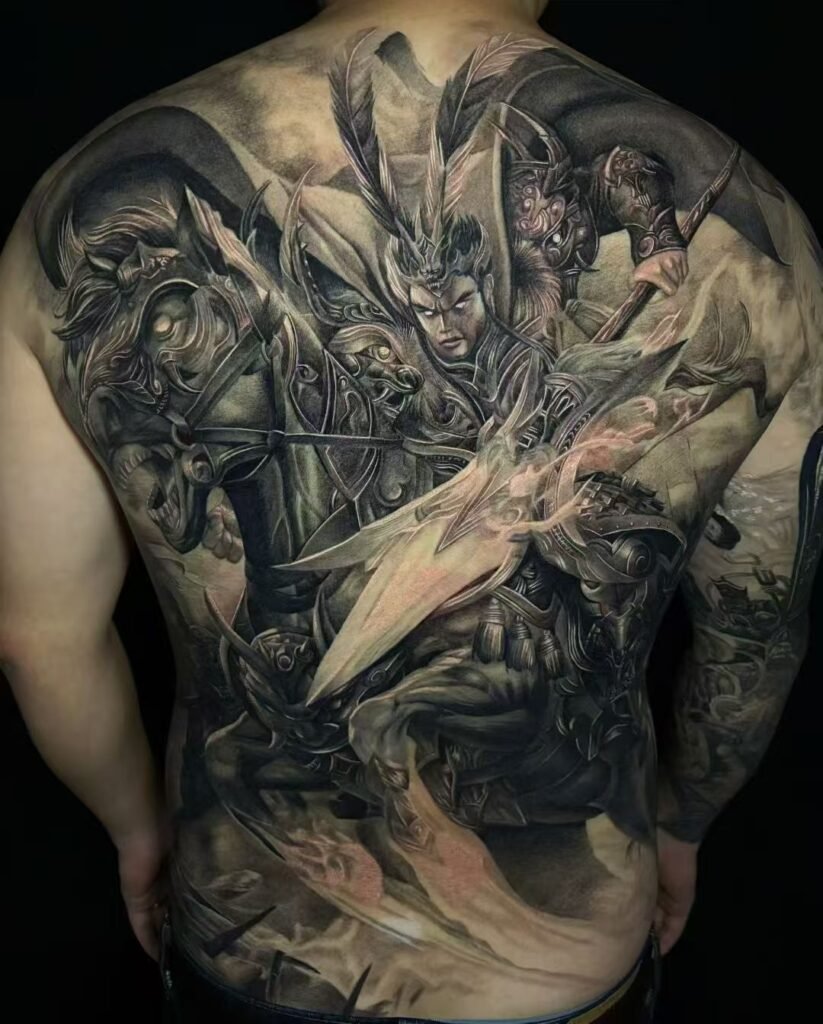
An old myth and a new depiction of that myth are different source layers. A deity may come from ancient literature, while a particular costume, face, weapon design or lighting scheme belongs to a recent film, game, comic or illustrator. The age of the myth does not make that modern artwork public-domain reference material.
The Intellectual Property Office of Singapore advises users not to assume that internet material is available for copying and recommends checking the site’s terms or contacting the owner when permission is needed. Use modern character art to explain a limited preference such as mood or camera angle, not as the master image for a replica. Museum pages may also state separate image-use terms, even when the underlying object is ancient.
Choose mythology tattoo placement after the evidence is fixed
Mythology tattoo placement should protect the details that identify the subject and the action. Start by circling the features that cannot disappear. A deity may need a face, hand gesture and held object. A creature may need its complete head, wings or tail. A scene may need two figures facing one another and enough space between them for the action to read.
Then match the composition to the body area. A compact attribute or single object can use a contained field. A portrait with several identifiers needs room around the head and hands. A long creature needs a path that can turn without hiding its anatomy at a joint. A multi-figure episode needs a broader area and a clear viewing direction. These are discussion points, not fixed placement rules.
Do not shrink a narrative scene simply to fit a preferred spot. If the available area cannot hold the identifying attributes, simplify the moment, choose one figure, or move the design. Send relaxed photos of the area and an approximate measurement so the artist can assess the shape. The tattoo enquiry guide explains how to organise placement, size and reference information for the first message.
Keep Japanese folklore on its own research track
Kitsune, Tengu, Kirin and Baku have their own Japanese and East Asian source questions, regional forms and design conventions. They are not examples to fold into a general cross-tradition creature list. Use the Japanese section linked above for that direction, then identify the particular figure and source rather than mixing it into a Greek, Norse or Egyptian brief by default.
Send a focused mythology tattoo enquiry
For a mythology tattoo in Singapore, send a short evidence-led brief rather than a large unlabelled image folder. Include:
- the figure, creature or symbol and its original tradition;
- the specific version, period or region you want to follow;
- one museum object or scholarly source link;
- the story moment in one sentence;
- essential attributes and anything that must be excluded;
- your preferred body area and approximate dimensions;
- whether the piece is standalone or may connect to existing tattoos;
- any modern artwork used only for mood, clearly labelled as such.
You do not need to solve the final composition first. Decide what the subject is, where the evidence comes from and which moment matters. Then contact Yuyi Tattoo with the source links, placement photos and concise brief.
Sources and review date
- The Metropolitan Museum of Art, Greek Gods and Religious Practices, reviewed 24 August 2026.
- British Museum, Papyrus of Ani: Ani’s Judgement, reviewed 24 August 2026.
- Swedish History Museum, Sources for Norse Mythology, reviewed 24 August 2026.
- Swedish History Museum, Thor’s Hammer Rings, reviewed 24 August 2026.
- The Metropolitan Museum of Art, Feathered Serpent Head, reviewed 24 August 2026.
- Intellectual Property Office of Singapore, Ownership and Commercialisation, reviewed 24 August 2026.
Frequently asked questions
Which mythology should I choose if I like several traditions?
Choose the story or figure you would still want without the style images, then identify its tradition and a reliable source. If several remain important, assign separate roles and choose which controls the main figure.
Can Greek, Norse and Egyptian mythology appear in one tattoo?
Yes, as an openly contemporary composition. Keep every figure and attribute traceable to its own source, use separate panels or a clear hierarchy, and do not present the combination as traditional.
Is a museum image automatically free to copy?
No. Museum image-use terms differ, so check the page’s rights statement. An ancient subject and a recent photograph, reconstruction or character design can have different rights.
What mythology tattoo placement works best for a detailed scene?
Allow enough room for the decisive action and identifying attributes. A multi-figure episode usually needs more uninterrupted space than a single object. Adjust the scene or scale instead of compressing every detail.
What should I send for a mythology tattoo consultation?
Send the tradition, figure, version, source, one-sentence story moment, essential attributes, exclusions, placement photos and approximate size. Label film, game or comic images as mood references only.