
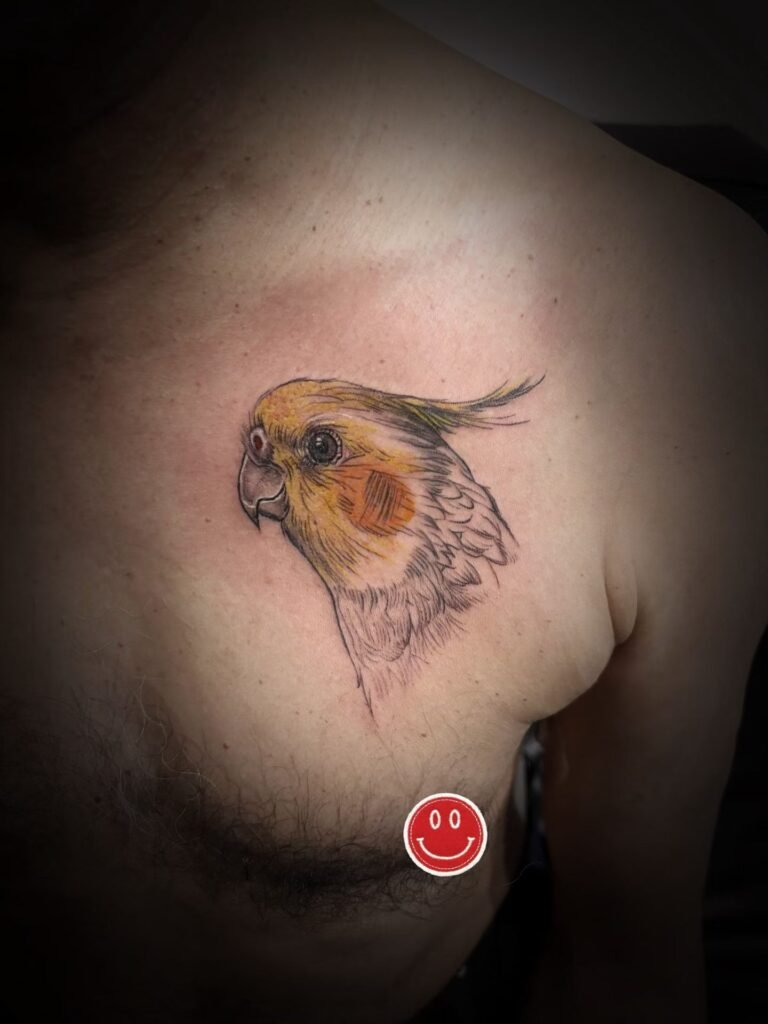
The most suitable pet memorial tattoo ideas start with one decision: what should another person recognise first? Choose a portrait if the animal’s face and expression matter most, a paw print if you have a reliable original mark, a name or date when exact wording carries the memory, or a symbol when you prefer the meaning to remain private.
Scale and reference quality should decide what is practical. A realistic portrait needs clear photographic information and more visual room than a small name or simple outline. A paw, toy, collar tag, plant or familiar silhouette can still refer to one particular animal without asking a small tattoo to hold portrait-level detail.
Compare the five main formats
These formats do different jobs. There is no ranking in which a portrait is more meaningful than a symbol, or text is less personal than an image.
| Format | What it preserves | Reference needed | Main design question |
|---|---|---|---|
| Portrait | Face, expression and recognisable features | One clear primary photo, plus limited supporting views | Is there enough space for the face to read? |
| Paw or nose impression | A physical mark associated with the pet | An original print, scan or evenly photographed mark | Which irregularities are genuine and which are smudges? |
| Name or date | Exact identity or time reference | Verified spelling, punctuation and date format | How much lettering can the placement hold clearly? |
| Silhouette | Ears, tail, posture or breed-specific outline | A side view or other clear body outline | Is the shape specific enough without internal detail? |
| Personal symbol | Toy, tag, plant, food bowl, sound cue or shared object | A photo or simple description of the actual object | Will the connection stay private or be readable to others? |
You can choose one format or combine two, but decide which carries the design. A portrait with a small name beneath it has a clear hierarchy. A face, paw, full name, two dates, quotation, collar, flowers and landscape all competing at the same size usually do not.
For broader remembrance decisions involving people, handwriting or several family references, the separate guide to memorial tattoo planning covers privacy and source handling beyond the pet-specific choices here.
When a portrait is the right answer
A portrait is useful when you want the animal to be recognisable from its face rather than from an accompanying label. It asks the most from the reference. Eye position, muzzle length, ear shape, coat pattern and the outside shape of the head all contribute to likeness. A high pixel count cannot recover features hidden by blur, shadow or a tight crop.
Start with one primary image. It should show the expression you associate with the pet and remain sharp around the eyes when enlarged. Send the original file if it still exists. Keep a second or third image only when it answers a specific question, such as the shape of an ear or a marking hidden in the main view. Mixing photographs from very different ages, angles and lighting can leave the artist without a clear version to follow.
The full animal portrait tattoo reference photo guide explains focus, coat direction, crop room and permission in more detail. If the image is an old print, a flat scan is usually more useful than a phone photograph taken at an angle. The Library of Congress notes that digitising decisions depend on both the original material and its intended use, rather than on one universal resolution number. US federal digitisation guidance likewise treats equipment, image quality management and metadata as separate parts of the process.
A weak photograph does not automatically end the idea. It may change the format. The same image might support a simplified head shape, a recognisable ear silhouette or a collar tag even when it cannot support a detailed portrait. This is a design change, not an attempt to invent missing facial information.
Paw prints: literal mark or designed shape
“Paw tattoo” can describe two quite different things. One is a reproduction of a particular impression already kept by the family. The other is a clean paw icon chosen to stand for the pet. Both can work, but they should not be presented as the same kind of reference.
For a literal impression, send the whole page or card before cropping it. Include a ruler in a separate reference photo if the original size matters. Tell the artist which gaps, uneven edges and pressure marks belong to the impression. Dust, a fold in the paper, a camera shadow or a dark scan edge should not be mistaken for part of the paw.
If there is no original print, do not label a stock paw graphic as the animal’s exact mark. A designed paw symbol is still a valid memorial choice. It is simply symbolic rather than documentary. Shape, spacing and line weight can be adjusted for the chosen body area without claiming that every contour came from the pet.
A nose impression requires the same distinction. A clear existing image can guide a textured design; a generic pattern should remain a stylised interpretation. No claim about identification or uniqueness is needed for the tattoo to be personal.
Names, dates and lettering
Name tattoo lettering is visually quieter than a portrait, but it is less forgiving of factual errors. Type the name exactly as it should appear. Check capital letters, accents, spaces, hyphens and any nickname punctuation. If a date is included, write out what the numbers mean and confirm the order rather than sending digits alone.
Letterform choice changes tone. Plain capitals may feel direct. Handwriting can feel more intimate when there is a genuine sample, although the sample must remain legible at the intended size. A script typeface can create movement but may add loops and joins that need more room. Choose for clarity and personal fit, not because one lettering category is automatically more suitable for remembrance.
Do an actual-size check before final approval. A name that looks open on a large phone display may become cramped on a narrow wrist or ankle. The portrait tattoo reference photo guide also explains why original files and uncropped source material matter when text is being paired with a photographic subject.
For wording in a language you do not read confidently, obtain a native-speaker or qualified language review. Separate the factual text check from the visual lettering decision. Attractive calligraphy cannot correct the wrong name or character.
Subtle symbols can be more specific than generic memorial imagery
A symbol does not need a published meaning. It can come from the pet’s actual routine: the shape of a worn tag, a favourite toy, a plant beside a familiar sleeping place, a distinctive ear outline or the curve of a tail. The viewer may see an ordinary object while the wearer knows the connection.
This route suits someone who does not want a name, date or literal likeness visible. It also works when available photographs are too weak for realism. Specificity comes from the source. A generic tennis ball says “dog”; the shape, seam or damage pattern of one photographed toy can point to a particular memory without requiring a face.
Keep the object readable. A tiny tag containing a full name, telephone number and decorative border may turn into a block of miniature text. If the tag shape matters more than the inscription, enlarge the silhouette and omit information that has no visual room. If the words matter, treat it as lettering first and an object second.
Pair two elements without building a scrapbook
Two elements are often enough to make the idea specific. The combinations below are design structures, not client examples:
- a head portrait with a small name as secondary text;
- a real paw impression with one verified date;
- an ear silhouette containing a simple patch of coat pattern;
- a collar tag beside one line taken from an existing handwritten note;
- a familiar object with negative space shaped around the pet’s outline.
Choose a reading order. At normal viewing distance, one element should appear first and the other should reward a closer look. Equal visual weight can make a compact design feel divided. This is especially noticeable when a dark portrait sits beside equally bold lettering.
If three or more elements feel essential, list them in priority order and ask what can be implied rather than shown. A circular tag may already suggest a collar. A date may fit on the reverse side of a pendant in the source image but become unreadable if reproduced literally. The composition is allowed to edit the object while keeping the detail that matters.
Let placement follow the shape
Pet memorial tattoo placement is easier to discuss once the format is chosen. A portrait needs width for the head and enough surrounding skin to avoid a cramped crop. A vertical name, elongated silhouette or narrow object can fit a different kind of space. A round paw mark or tag can sit as a contained shape, while a full animal silhouette needs length for the body and tail.
Consider how the area is seen when the body is relaxed. An image that crosses a sharp bend may change shape with movement. A face needs particular care because small changes to the eyes or muzzle can affect recognition. A symbolic design has more tolerance for movement, but text still needs an orientation that the wearer has deliberately approved.
Do not pick an exact size before deciding what information must survive. Instead, send an approximate range and identify the fixed limit. If the placement cannot hold the desired detail, the choices are straightforward: use more space, simplify the image or move to a less detailed format.
Keep source permission separate from design permission
A family album may contain a photograph taken by a professional, shelter, breeder, friend or previous owner. Holding a copy does not necessarily answer who controls its reuse. IPOS advises checking ownership and obtaining permission before using third-party copyright material, including material found online.
Tell the artist who made the image and whether permission has been obtained. If that cannot be resolved, use the photo only to explain general direction and build the design from material you can use. Also state whether the finished tattoo, the original pet photo, the name or the story may be photographed or shared. Permission to design from a file and permission to publish personal material are separate conversations.
Prepare a useful consultation folder
Send a compact set rather than an unlabelled photo dump:
- the chosen format: portrait, impression, text, silhouette or symbol;
- one primary source file at the best available quality;
- supporting images labelled with the single detail each clarifies;
- the pet’s name and any date typed exactly as intended;
- preferred body area, side and approximate scale;
- what must remain recognisable and what may be simplified;
- the photographer or source, plus permission status;
- privacy preferences for the reference, tattoo and accompanying story.
When these items are ready, use the Yuyi Tattoo contact page to send the pet photos, verified text, placement and approximate dimensions. The first discussion can then focus on whether the chosen format suits the available reference and space. Availability, project acceptance and appointment timing still require confirmation.
Sources and review date
- Library of Congress — Reformatting, digitising and digital preservation FAQ — reviewed 24 August 2026.
- Federal Agencies Digital Guidelines Initiative — Technical Guidelines for Digitising Cultural Heritage Materials — reviewed 24 August 2026.
- Intellectual Property Office of Singapore — Ownership and commercialisation — reviewed 24 August 2026.
Frequently asked questions
Is a portrait always the best pet memorial tattoo?
No. A portrait is useful when facial likeness is the priority and a suitable photograph is available. A real paw impression, name, silhouette or familiar object may be clearer at a small scale or more appropriate when you prefer a private reference.
Can several pet photos be combined into one portrait?
Supporting photos can clarify an ear, marking or coat pattern, but one image should control the expression and head angle. Photos from different ages and viewpoints may conflict. Label the primary file and explain the limited job of each supporting image.
What if I do not have an actual paw print?
Use a designed paw shape and describe it accurately as symbolic. It does not need to reproduce the pet’s exact impression to carry personal meaning. A silhouette, tag or toy based on a real photo may offer a more specific alternative.
Should a pet memorial tattoo include a name and date?
Only if you want that information visible. A name can identify the subject, while a date adds another factual element that must be checked. Neither is required. A symbol or portrait can remain unlabelled if that better fits your privacy preference.
What should I send for a custom pet memorial tattoo consultation?
Send the primary photo or impression, exact name and date if used, preferred placement, approximate scale, must-keep details, source permission status and any privacy limits. Say which format you prefer and what may be simplified if the space is tight.

