
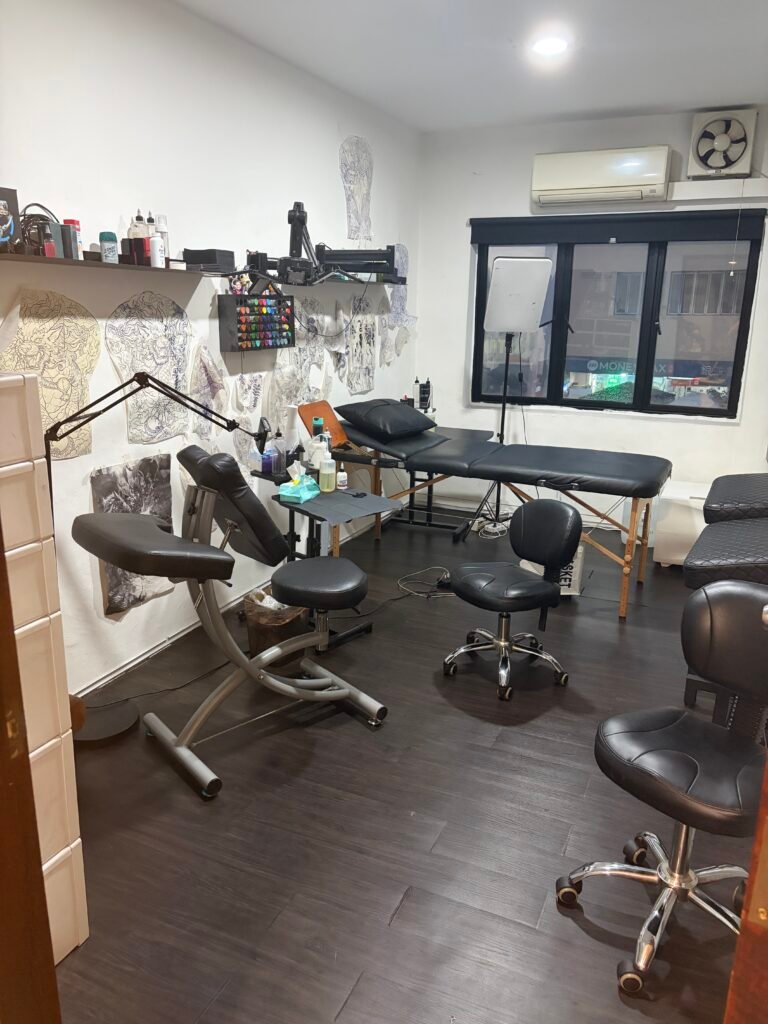
A tattoo studio hygiene checklist should focus on what you can see and ask before the machine starts: sealed needles or cartridges, single-use ink caps, clean surfaces, fresh gloves, hand hygiene, covered equipment, safe sharps disposal and clear aftercare instructions. If a studio cannot explain these basics calmly, pause before you sit down.
For Yuyi Tattoo, use the checklist below to ask about current practice instead of assuming a certificate or private process. The guidance stays with public health sources and evidence a client can see or confirm before the session.
Hygiene is not the same as décor
A studio can look stylish and still handle equipment poorly. A studio can look plain and still reset a workstation carefully. Judge the process, not the sofa, wall art or lighting.
Tattooing breaks the skin. That means the hygiene question is not cosmetic. Public health guidance from multiple health agencies focuses on reducing infection risk through sterile needles, single-use items, clean working areas, proper hand hygiene and safe handling of ink. The client does not need to become a technician. You only need to know which steps should be visible and which answers should be specific.
For a first visit, you can look at the Geylang studio space before deciding whether to message. The published location is Geylang, Singapore. A location page helps you understand the room, but it does not replace a hygiene conversation at the appointment.
What to check before you sit down
Use this checklist in the room, after your design and placement have been discussed but before tattooing begins.
1. The workstation is reset for you
The area should look prepared for one client, not left over from the previous job. You want to see a clear work surface, fresh barriers where equipment will be handled, clean bottles or covers, and no used ink caps or wipes on the station.
A busy desk is not automatically unsafe, but used disposables should not be mixed with clean setup items. If you arrive while the artist is still resetting, let them finish rather than sitting down early.
2. Needles or cartridges come from sealed packaging
Ask whether the needle or cartridge will be opened for your session. Single-use tattoo needles and cartridges should not be reused. A sealed pack opened in front of you is a straightforward signal. If reusable equipment is involved, ask how it is sterilised and how the sterilised pack is identified.
Do not accept vague language such as “all clean” if you are asking a precise question. The useful answer names the item and the method.
3. Ink goes into fresh single-use caps
Ink should be dispensed into clean caps for your session. The artist should not dip directly into the bottle with contaminated equipment, and leftover ink should not be returned to the bottle. If grey wash or dilution is mixed, ask what liquid is used. Public health guidance warns that nonsterile water can create infection risk.
This is one of the easiest questions to ask without sounding dramatic: “Are these ink caps single-use for my session?”
4. Gloves change when the clean field is broken
Fresh gloves matter, but glove changes matter more. Gloves are not magic. If an artist touches a phone, door handle, payment device, face mask, hair, chair lever or non-clean surface, the clean field has changed. Gloves should be changed before returning to your skin or the sterile setup.
Watch the sequence. Hand hygiene, fresh gloves, clean setup, then tattooing. If something interrupts the sequence, the answer should be a glove change, not pretending the interruption did not happen.
5. Skin preparation uses clean, single-use items
Razors, wipes, stencil materials and paper towels should be handled as single-use or kept clean according to their purpose. A razor used on one person should not be used on another. The skin should be cleaned before tattooing, and the artist should avoid dragging contaminated items back across the cleaned area.
If you are sensitive to adhesives, soaps or antiseptics, say so before the setup starts. That is a practical safety question, not a demand for medical advice.
6. Sharps have a safe disposal route
Needles should go into a proper sharps container after use. You do not need to inspect the container. You should be able to see that used sharp items are not placed casually in a general bin or left on the table.
A professional studio treats disposal as part of the procedure, not as cleanup someone will remember later.
7. Aftercare is explained before you leave
Aftercare is part of hygiene. You should receive clear instructions on washing, drying, clothing, sun, sweat, soaking and when to ask for help. The wording can vary by artist and bandage type, but it should not be improvised in a hurry as you walk out.
If this is your first tattoo, read the first tattoo guide for Singapore before your appointment so you know which practical questions to bring.
Tattoo hygiene Singapore: what regulation can and cannot tell you
Regulatory context is useful, but it is not a substitute for what happens at the chair. Singapore government sources should be read narrowly. Public replies from the Ministry of Health and Ministry of Home Affairs discuss tattooing as a public policy topic, including regulation and minors, but they are not a studio-by-studio hygiene certificate and they do not publish a consumer checklist for a specific shop.
That matters because clients sometimes ask, “Is the studio licensed?” The better question is more precise: “What licence, certification, training or inspection are you referring to, and what does it cover?” If the answer is about business registration, that is not the same as a documented infection-control process. If the answer is about a course, ask what course and whether it applies to the person tattooing you.
Ask Yuyi Tattoo directly about the current hygiene process rather than inferring a special certification, named sterilisation protocol or private-room setup. Clients can ask questions and observe visible preparation steps. Terms such as “medical-grade” or “hospital-grade” should only be relied on when the studio can document exactly what they mean.
Questions to ask without making the room awkward
Direct questions are normal. Ask them before the stencil is final and before the machine starts.
Use these:
- Will the needle or cartridge be opened from a sealed pack for my session?
- Are the ink caps single-use, and will leftover ink be discarded?
- If anything is diluted, what sterile liquid is used?
- Which items on the station are disposable, and which are reusable?
- If reusable grips or tubes are used, how are they sterilised between clients?
- Will gloves be changed if a phone, door, payment device or non-clean surface is touched?
- What aftercare instructions should I follow for this exact tattoo and bandage type?
A professional answer can be short. It does not need theatre. What you are listening for is specificity, not a speech.
Red flags worth pausing for
A pause is not an accusation. It is a chance to clarify before a permanent procedure begins.
Pause if you see any of the following:
- A needle or cartridge already lying open with no explanation.
- Used caps, wipes or razors mixed with clean setup items.
- Ink poured back into a bottle after use.
- Gloves used to handle phones, cash or doors, then returned to your skin.
- No clear place for used sharps.
- Pressure to stop asking questions.
- A refusal to explain aftercare.
One unclear moment can be fixed by asking. A defensive pattern is different. If the answer stays vague, reschedule or leave before the tattoo starts.
Hygiene and health signs after the appointment
Most aftercare questions are ordinary: washing, drying, reducing friction and avoiding soaking while the skin closes. Some symptoms need medical attention. Health agencies commonly flag spreading redness, increasing pain or heat, pus, fever, chills or red streaks as signs that should not wait.
Do not ask a tattoo artist to diagnose an infection. Contact the artist for tattoo-specific context, and seek medical care for symptoms that are worsening, spreading or systemic. A tattoo artist can explain what was done in the room and what aftercare was given. A clinician can assess your skin and treat infection or allergic reaction if needed.
Keep simple records: appointment date, studio, artist, body area, aftercare product, bandage type and any symptoms. If you later need medical care, those details can help a clinician understand the timing, materials and changes you have observed.
How this fits a Yuyi Tattoo visit
Yuyi Tattoo’s public contact number is +65 9128 0501, and the studio is listed as open 24 hours. That does not guarantee walk-in availability, a same-day appointment, or that Yuyi is present when you arrive. Use contact Yuyi Tattoo to confirm the artist, timing, address and what to send before you come in.
For hygiene, keep the request practical: “Before we start, can you show me the sealed needle or cartridge, ink caps and aftercare instructions?” A clear studio should be able to handle that question without turning it into a sales pitch.
Sources and review date
- Singapore Ministry of Health — Regulate Tattooing — reviewed 24 August 2026.
- Singapore Ministry of Home Affairs — Written reply on minors getting tattoos — reviewed 24 August 2026.
- HealthEd New Zealand — Body piercing and tattooing: protecting your health — reviewed 24 August 2026.
- NSW Health — Tattooing — reviewed 24 August 2026.
- U.S. FDA — Tattoos and permanent makeup fact sheet — reviewed 24 August 2026.
Frequently asked questions
What should I check first in a tattoo studio hygiene checklist?
Start with the items that touch skin or ink: sealed needles or cartridges, single-use ink caps, fresh gloves, clean skin preparation and a reset workstation. These are easier to verify than vague claims about being clean.
Is a clean-looking studio enough?
No. Décor and tidiness are not the same as infection-control practice. Watch the setup sequence and ask how needles, ink, gloves, reusable items and sharps are handled.
Can I ask the artist to open the needle in front of me?
Yes. It is a normal hygiene question. You can ask whether the needle or cartridge will be opened from a sealed pack for your session. The answer should be direct and calm.
Does Yuyi Tattoo publish a special hygiene certification?
Ask Yuyi Tattoo which hygiene protocols and certifications, if any, apply to your appointment, then use the visible setup questions above before tattooing starts.
What symptoms after a tattoo need medical care?
Seek medical care for spreading redness, increasing pain or heat, pus, fever, chills, red streaks or a worsening rash. Contact the artist for tattoo-specific context, but do not wait for a studio reply if symptoms are urgent.

