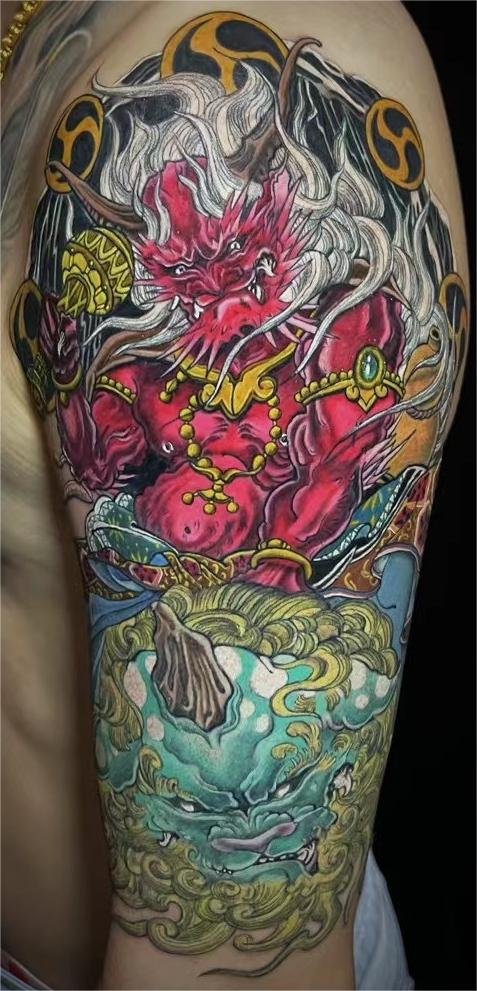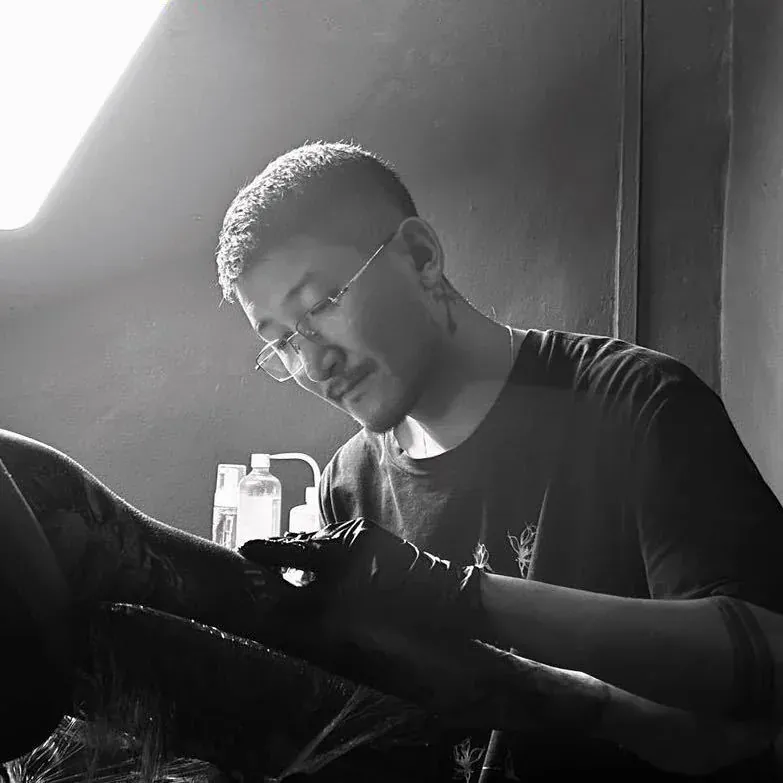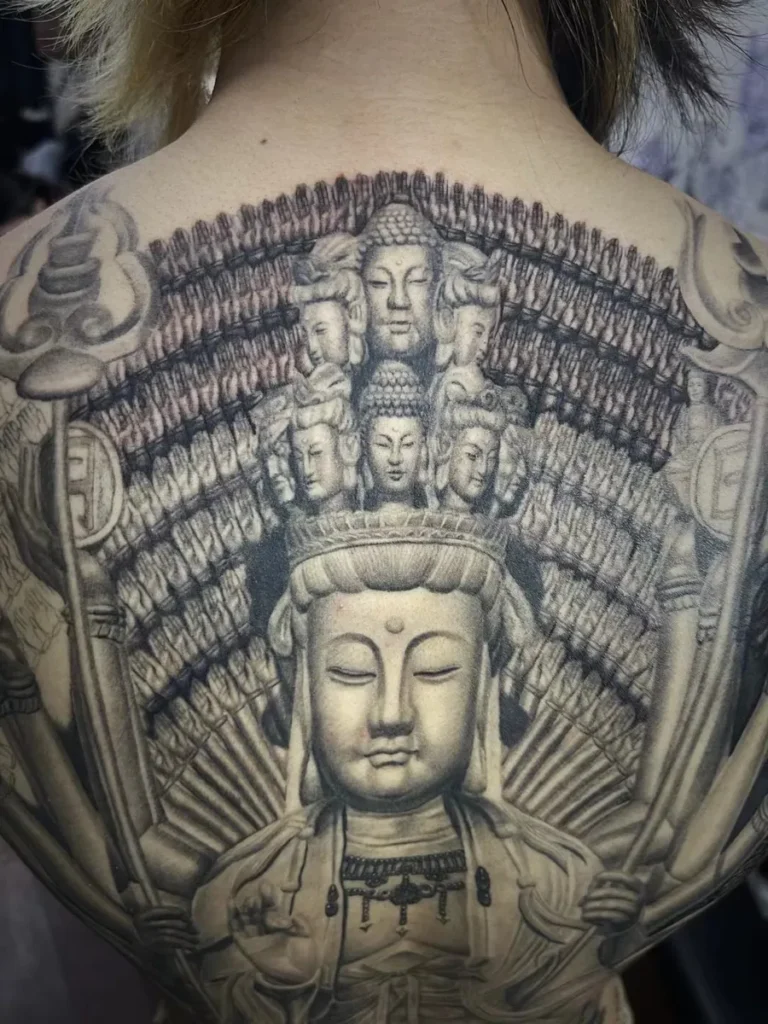
Tattoo portfolio consistency means the artist can repeat sound decisions across more than one piece: clear composition, controlled contrast, stable edges, suitable scale and a finished result that fits the body. One strong tattoo is encouraging. A pattern of strong work is better evidence.
Do not judge an artist by the single image that travels best on Instagram. Look for the same quality across different subjects, body parts, photo angles and sizes. A consistent portfolio does not mean every tattoo looks the same. It means the artist keeps solving the important problems cleanly.
Why one standout photo is not enough
Every portfolio has a hero image. It may be the largest back piece, the sharpest portrait, the best-lit dragon, or the piece that won a convention prize. That image matters. It shows the top end of the artist’s work. It just cannot carry the whole decision.
A tattoo is not a poster. It is placed into skin, over muscle, around joints and into a life where the person moves, sweats, heals, works and goes into the sun. An artist may produce one excellent piece under ideal conditions and still be uneven across smaller work, darker skin, awkward placements or subjects outside their real focus.
Consistency protects you from the highlight-reel problem. It asks whether the artist has repeated evidence in the direction you want. If the portfolio gives you only one comparable tattoo, you are not judging consistency. You are judging possibility.
Build a small evidence set before you decide
Start by saving six to ten pieces from the same artist. Do not mix every style in the studio. Choose tattoos that relate to your project by subject, scale or body area. If you want a black-and-grey sleeve, small lettering and colour flash do not answer the right question.
When you view Yuyi Tattoo portfolio work, sort the images in your own mind instead of treating the gallery as one mass. Which pieces are black and grey? Which are large compositions? Which use Asian or Japanese-inspired movement? Which are portraits or figure studies? A portfolio becomes easier to read when you group the work by problem.
Then compare the group, not the image you like most. Ask whether the same strengths appear again. Does the artist keep the main subject readable? Do backgrounds support rather than choke the piece? Are small facial features handled with enough restraint? Do large areas stay organised, or do they become busy once the camera pulls back?
Consistency across style
Style consistency does not mean a fixed template. It means the artist’s choices belong to the style being attempted.
In black-and-grey realism, look for value control. The darkest areas should be placed with intention, mid-tones should describe form, and untouched skin should help the image breathe. If one portrait has believable depth but the next three faces are muddy, the hero image may not be representative. For this direction, compare several pieces with the black-and-grey tattoo work and look for repeated handling of skin texture, shadow and focal points.
In Japanese or Asian-inspired compositions, consistency sits in flow. A sleeve or back piece should not be a pile of symbols. The main figure, background elements and empty space need a reading order. Water, wind, clouds, flowers and armour should move around the body rather than sit as disconnected stickers. If you are looking in that direction, study the Japanese and Asian-inspired tattoo work and ask whether the larger shapes hold together before you inspect detail.
Portraits need another test. Likeness is fragile. A portfolio that contains one strong face and many weaker faces asks for caution. Look at eyes, mouth corners, nose structure, cheek planes and hair edges. The artist does not need to repeat the same face. They need to repeat believable structure.
Consistency across scale
Scale changes the job. A palm-size piece, an upper-arm portrait and a full back piece do not reward the same amount of detail.
Small tattoos need restraint. If an artist packs too many fine details into a tiny area, the photo may look clever on day one but become hard to read later. Medium pieces need balance: enough detail to feel finished, enough negative space to avoid congestion. Large work needs a strong silhouette first. If the design cannot be understood from a few metres away, no close-up detail will save it.
A consistent artist adjusts detail to the available size. They do not force the same reference into every placement. Check whether the portfolio shows this adjustment. Do small pieces look cleaner and simpler? Do large pieces have a readable main structure? Do sleeve and back-piece photos include the whole body area, not only a cropped detail?
The strongest evidence is not “this artist can do big work” or “this artist can do small work.” It is “this artist changes the drawing when the size changes.”
Consistency across placement and body movement
Placement exposes weak planning. A flat forearm is easier to photograph than ribs, shoulders, elbows, knees or the side of the torso. Large work also needs to survive movement. The design should not fall apart when the arm hangs naturally or the shoulder rolls forward.
Look for multiple angles. A portfolio filled with flat, cropped close-ups may hide body flow. Ask whether the design wraps cleanly. Does a dragon or figure disappear into an elbow crease? Does a portrait distort when the bicep turns? Does a back piece still have a clear centre when the person stands normally?
This matters for artist consistency because some portfolios look strong only in the easiest positions. A broader portfolio shows the artist adjusting composition around anatomy. The tattoo still belongs to the body after the camera changes angle.
Consistency in finish
Finish is the quiet part of a portfolio. It is less dramatic than subject matter, but it often tells you more.
Check the edges first. Are outlines confident without being heavy where they should be light? Are soft-shaded transitions smooth enough to read as form? Are black areas packed evenly, or do they look patchy? In colour work, are areas separated clearly, or does everything compete?
Then check the least glamorous sections. Background filler, hair, clothing folds, scales, waves and smoke often reveal whether the artist stayed focused after the main subject was established. A portfolio can look impressive at the focal point and careless around the edges. That is not consistency.
Finally, look for signs that the artist knows when to stop. Overworked skin, overly dense backgrounds and decorative noise can make a tattoo look heavier than the body can carry. A good finish can be quiet. The tattoo does not need to shout in every square centimetre.
How to avoid false consistency
Some portfolios look consistent because every photo is edited the same way. Same black background, same ring light, same contrast boost, same close crop. That is a photographic system, not necessarily tattoo consistency.
To separate the two, ask for different kinds of evidence:
- A fresh photo and, if available, a healed photo of comparable work.
- A wider shot that shows the body area.
- A close-up only after you have seen the whole tattoo.
- Several pieces from different dates, not one recent cluster.
- Work in the same style on more than one client or placement.
Also watch for portfolios that mix studio work, drawings, convention entries and unfinished sessions without labels. Drawings are useful for taste. Competition work is useful context. Unfinished work shows process. None of those should be counted as the same type of evidence as a finished tattoo on healed skin.
Awards, years and identity: useful, but secondary
Awards and years in tattooing can help you understand an artist’s background, but they do not replace portfolio consistency. A named award describes a specific piece judged in a specific context. Years of experience tell you time in practice. Neither tells you whether your subject, size and placement are a fit.
Yuyi’s public profile gives specific background: fine-art training at LuXun Academy of Fine Arts, tattooing since 2010, a focus on black-and-grey realism, large-scale back pieces, portrait realism and Japanese or Asian-inspired compositions, plus named convention results. The Singapore tattoo artist profile provides that context. Use it alongside the portfolio rather than in place of the work.
A careful portfolio review sounds less exciting than a claim of being the best. It is also more honest. You are trying to find repeatable evidence, not a slogan.
A portfolio consistency worksheet
Use this worksheet when you compare an artist’s work. Score only what you can see or what the artist can confirm.
| Area | Strong evidence | Missing or weak evidence |
|---|---|---|
| Style | Several tattoos in the same visual family as your idea | One similar image, or a caption that says the artist can do it |
| Scale | Comparable size, with detail adjusted to the body area | A small design used to sell a large project, or the reverse |
| Placement | Photos show the tattoo on the body from useful angles | Only flat close-ups or crops |
| Finish | Edges, shading and backgrounds stay controlled across the whole tattoo | Strong focal point with neglected background or patchy fill |
| Healed evidence | Healed examples are labelled or confirmed | Everything is fresh, glossy or undated |
| Range | The artist can adapt within their real focus | The portfolio jumps between unrelated styles with uneven quality |
If the worksheet exposes gaps, ask about those gaps before booking. A professional answer may be simple: “I do not have a healed photo of that piece” or “this subject needs more size.” That is better than pretending every question has already been answered.
When a consistent portfolio points to the next step
If the work is consistent in your style, scale and placement, the next step is not a demand for a final design. It is a clear project brief.
Send the subject, body area, rough size in centimetres, preferred style, reference images and timing. Ask which existing pieces are closest to your idea and what would need to change for your body. If the project involves a long session or a large composition, ask how the artist thinks about staging without expecting a fixed number of sessions from a first message.
Yuyi Tattoo is in Geylang, Singapore. The contact number is +65 9128 0501. The studio may be listed as open 24 hours, but that does not guarantee a same-day slot or that Yuyi is available when you arrive. Confirm the artist, timing and address in writing before you come in.
Sources and review date
- American Academy of Dermatology — Tattoos: 7 unexpected skin reactions and what to do about them — reviewed 24 August 2026.
- PMC / Journal of Experimental Medicine — Unveiling skin macrophage dynamics explains both tattoo persistence and strenuous removal — reviewed 24 August 2026.
- U.S. FDA — Tattoos and permanent makeup fact sheet — reviewed 24 August 2026.
Frequently asked questions
What is tattoo portfolio consistency?
Tattoo portfolio consistency is repeatable quality across several finished tattoos. It means the artist controls composition, contrast, edges, placement and finish more than once, across work that relates to your project.
Is one award-winning tattoo enough evidence?
No. An award-winning tattoo can show a strong result in a named contest, but it is still one piece. Use it as context, then look for several comparable tattoos in the same style and scale you want.
How do I judge tattoo artist consistency if the portfolio has many styles?
Separate the portfolio into groups. Compare black-and-grey work with black-and-grey work, Japanese composition with Japanese composition, and portraits with portraits. Do not average unrelated styles into one score.
Should I ask for healed photos before booking?
Ask when the healed result matters to your decision, especially for realism, portraits, fine detail, colour or large work. If healed photos are not available, ask for comparable finished work and a direct explanation of scale and contrast choices.
What is a warning sign in a tattoo portfolio?
A portfolio that relies on one heavily edited image, hides placement, labels nothing, or shows uneven work across similar pieces needs more questions. The warning is not always poor work. Sometimes it is simply missing evidence.
For help planning your own tattoo, contact Yuyi Tattoo.