
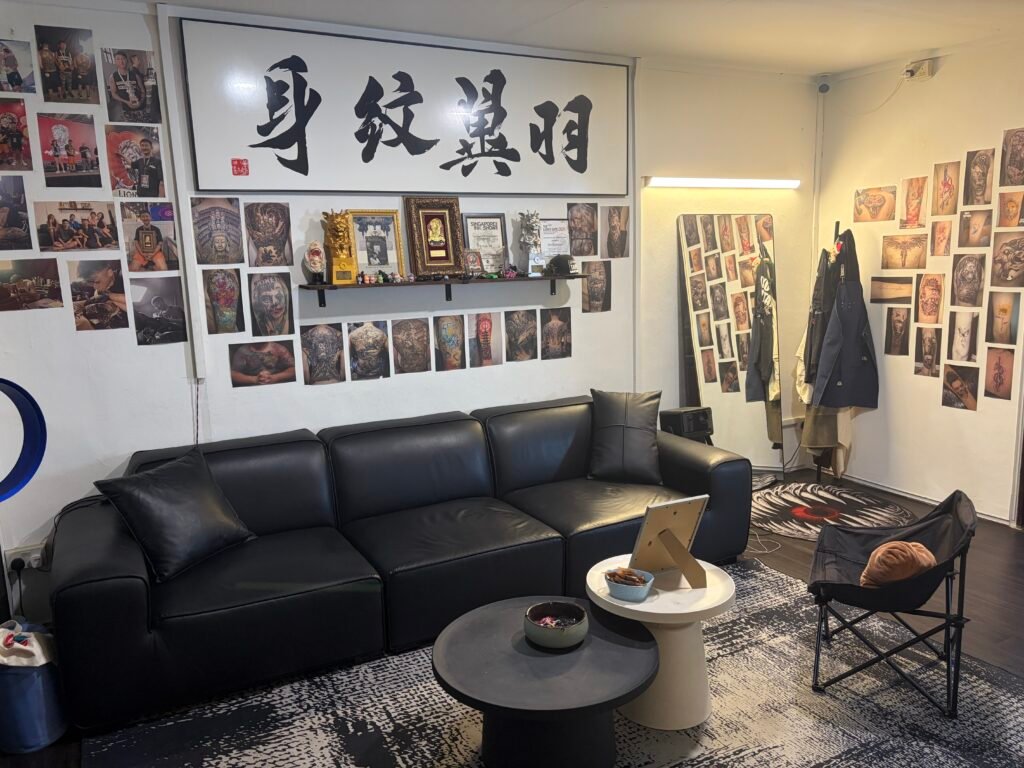
If you are deciding how early to book a tattoo artist in Singapore, make contact as soon as you have a clear subject, placement, approximate size, useful references and a realistic date range. A small, well-defined idea may need less planning than a portrait, a large Japanese composition or a project that crosses several body areas. No single number of days or weeks is honest for every tattoo.
Your first message should begin a planning conversation, not assume that a date is being held. Availability, the artist, the scope of the appointment and what counts as a confirmed booking all need to be stated in writing by the studio. Starting early gives you room to improve the brief and consider alternatives without inventing a promise about the live calendar.
Lead time is more than waiting for an empty slot
People often treat tattoo lead time as a queue: ask for the next opening, choose it and arrive. Custom work has more moving parts. The artist first needs enough information to decide whether the idea fits their work. Placement and scale may need discussion. References may point in conflicting directions. A large composition may require a consultation before anyone can discuss how appointments could be staged.
There is also your own calendar. Work clothes, sport, travel, swimming and other plans can make an otherwise available date impractical. A tattoo creates a lasting change to the skin and requires aftercare, so the days following the appointment deserve attention too. The U.S. Food and Drug Administration tattoo fact sheet describes tattooing as the insertion of ink into skin and lists risks that clients should understand before deciding. The American Academy of Dermatology also advises ongoing care for tattooed skin. Those are good reasons to leave time for an informed decision rather than treating the appointment as an impulse purchase.
An enquiry is therefore only the first step. It does not by itself confirm that the artist has accepted the project, reserve a time or guarantee that the exact idea can be completed on your preferred day.
Let project complexity decide when you start
The most useful way to judge lead time is to identify how many decisions must be settled before the appointment.
A defined, compact idea
A compact tattoo can still need careful placement and scale, but the brief is easier to assess when the subject is specific and the references agree. State exactly what the image is, where it should sit, roughly how large it should be and which elements matter most. If you are flexible about dates, say so.
Starting with a complete message is more useful than contacting a studio very early with only “I want a tattoo.” The calendar cannot solve an undefined brief. Use the tattoo enquiry guide to prepare the essential details before asking about availability.
A custom piece with several decisions
Allow more planning room when you are still choosing between motifs, styles, orientations or placements. A portrait needs a suitable source photograph. A design that wraps an arm or leg needs clear body photos and boundaries. An Asian-inspired composition may need foreground and background choices that work together rather than a pile of unrelated images.
The extra lead time is not a fixed waiting period. It is decision space. You may need to replace a weak reference, take better placement photos, clarify what may be changed from the source or reconsider a size that cannot carry the requested detail. Those steps are easier when your preferred date is not immediately approaching.
A large or multi-session project
Begin the conversation earlier for a sleeve, back piece, leg project or composition that crosses joints and body planes. The artist may need to understand the whole area before discussing the first stage. Existing tattoos, scars, future expansion, travel and work leave can all affect planning, but none of them provides a reliable session count from a message alone.
Do not ask the calendar to answer a design question. First establish the project boundary and the visual hierarchy. Then discuss possible appointment windows. The multi-session project preparation guide explains how to organise placement photos, availability and questions without guessing a fixed number of sessions or a completion date.
Work backwards from a real constraint
Sometimes you do have a hard date: a trip to Singapore, a work cycle, an event or a period when you cannot manage aftercare comfortably. Tell the studio the constraint, but do not turn it into a demand for a guaranteed opening.
Start with four questions:
- What is the last practical date for the appointment, considering the activities that follow it?
- Which dates can you genuinely attend without rushing from work or travel?
- Is your concept ready to assess, or does it still need a consultation?
- If the preferred window is unavailable, can you change the date, scale, placement or project stage without damaging the idea?
This creates a useful range instead of one fragile option. For example, “I am in Singapore from 10 to 16 November and can attend on the 11th, 12th or 14th” gives more information than “Can you fit me in on the 12th?” It still does not reserve any of those dates. A written reply must confirm what is actually possible.
If an event requires the tattoo to be concealed, exposed to sun, immersed in water or pressed by tight clothing soon afterwards, reconsider the timing rather than trying to force the appointment before it. Your artist’s aftercare instructions and relevant healthcare advice should guide health questions.
Check whether your brief is ready before asking for a date
You do not need to draw the tattoo. You do need to make the request assessable. Before sending it, check that you can answer the following:
- Subject: What is the main image or idea in one sentence?
- Priority: Which feature must remain, and which details are optional?
- Style direction: Which completed work or references show the finish you want?
- Placement: Which side and surface of the body, with clear upper and lower boundaries?
- Size: What approximate dimensions or body coverage do you imagine?
- Reference rights: Are personal photos yours to share, and are online images being used as direction rather than a request to copy another tattoo?
- Existing features: Are there tattoos, scars, moles or skin concerns in the proposed area that the artist needs to know about?
- Timing: What date range works, and which later activities could affect aftercare?
- Flexibility: Could you consider another date or a consultation first?
If several answers are missing, spend your early lead time improving them. If the answers are clear, send the enquiry even if your preferred month feels far away. The studio can tell you whether it is appropriate to discuss the date now.
Keep the brief aligned with the work shown by Yuyi Tattoo in Singapore rather than a date alone.
Ask planning questions without asking for promises
A useful consultation separates what can be decided now from what depends on further review. The tattoo consultation questions checklist covers portfolio fit, reference use, placement, payment questions, safety and the exact status of the booking. For lead-time planning, add these questions:
- Is the brief detailed enough for the studio to assess the project?
- Does the artist need placement photos or an in-person discussion before dates are considered?
- Can the studio check a range of dates rather than one date?
- What information or action would turn the enquiry into a confirmed appointment?
- Which artist and project scope are named in the written confirmation?
- Are any later appointments being discussed as possibilities or actually confirmed?
These questions do not assume a hold policy, walk-in policy, same-day service or artist assignment. They ask the studio to state its current process for your project.
What to confirm before arranging the rest of your day
Do not book transport, take leave or build a trip around an unconfirmed message. Before treating the tattoo appointment as fixed, look for a written reply that identifies the practical details that apply to you.
At minimum, confirm the date and time, studio location, artist, agreed project scope and what the studio requires before arrival. If money is requested, ask for the current amount, purpose, payment method and all relevant terms before paying. Confirm current booking, deposit, cancellation and rescheduling terms directly for your enquiry. Those details must come from the studio for the specific enquiry.
For a large project, also distinguish the first appointment from the whole project. A confirmed first stage is not automatically a confirmed final schedule. Later timing may depend on design development, the artist’s assessment and how the work progresses.
If your preferred date is close
Send the complete brief rather than a vague urgency message. State the dates you can attend and ask the studio to check current availability. Do not assume that published opening hours mean a particular artist or tattoo slot is available. Do not arrive expecting that a message has held a place unless the studio has said so.
If the answer is no, you still have useful options. Ask whether a consultation can happen during that period, whether a later appointment is more realistic, or whether the brief needs work before dates can be discussed. Do not shrink a detailed design simply to force it into a presumed short opening. Scale should serve readability and placement, not impatience.
Send a lead-time-ready enquiry
When your subject, references, placement, approximate size and date range are ready, send them together. Include the one decision you most need help with, such as choosing between two placements or understanding whether the requested coverage needs a larger planning conversation.
Use the Yuyi Tattoo contact page to send a WhatsApp brief. The reply can address the live calendar and the next planning step. Until those details are confirmed in writing, treat every date as a preference, not an appointment.
Sources and review date
- U.S. Food and Drug Administration — Tattoos & Permanent Makeup: Fact Sheet — reviewed 24 August 2026.
- American Academy of Dermatology — Caring for tattooed skin — reviewed 24 August 2026.
Frequently asked questions
How far ahead should I book a tattoo in Singapore?
There is no universal booking window. Contact the studio when you can provide the subject, references, placement, approximate size and a realistic date range. Begin earlier when the project is large, wraps around the body, needs custom reference work or may involve several appointments. Only the studio’s current written reply can confirm availability.
Does sending a tattoo enquiry reserve a slot?
No. A message is an enquiry unless the studio explicitly states that an appointment or hold has been confirmed and explains the terms that apply. Do not arrange leave or travel around an assumed reservation.
Should I contact an artist before my idea is fully finished?
Yes, if you can describe the main subject, placement, approximate size and visual direction. You do not need a finished drawing. If the concept is still broad, say which decision you need help with instead of asking for a date first.
Do large tattoos need more booking lead time?
They usually need more planning input, but that does not create a fixed lead-time rule. Large projects can require body-area photos, composition discussion and a distinction between the first appointment and later stages. Ask for a project-specific planning process.
Can I ask for the earliest available tattoo appointment?
You can ask the studio to check live availability, but include a complete brief and several dates you can genuinely attend. The earliest opening is useful only if the artist, scale, placement and preparation are right for the project.
Does open 24 hours mean I can book Yuyi at any time?
No. Opening hours do not guarantee a specific artist, a walk-in service or an available tattoo slot. Artist and appointment details need written confirmation for the individual enquiry.

