
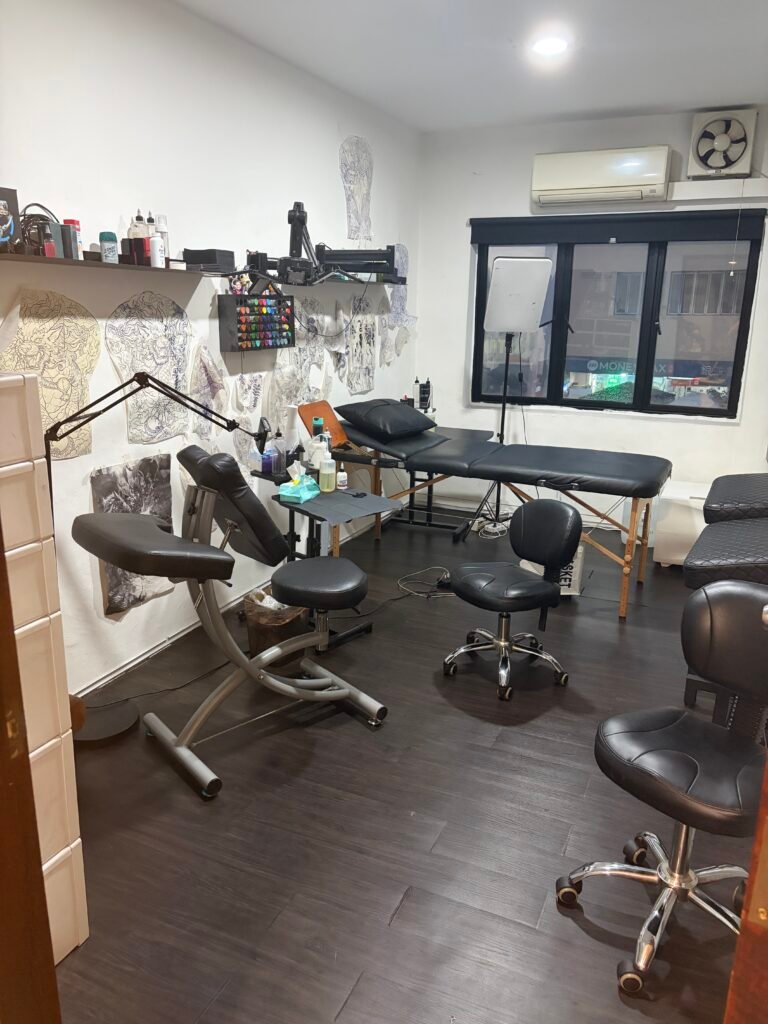
What to bring to a tattoo appointment is simpler than most online checklists suggest: take the written appointment details, the reference material the artist requested, a charged phone, comfortable clothing that gives access to the placement, and any food or drink the studio has approved. Eat a familiar meal, drink water normally and aim to arrive rested, clean and able to make clear decisions.
The day before, confirm the studio’s actual instructions instead of borrowing a rule from another artist. Do not change medication, shave the area, use a numbing product, bring a guest or assume a fixed alcohol cut-off without asking. If you feel unwell or the skin has changed, contact the studio before travelling and use a qualified healthcare professional for medical advice.
The day before: confirm the appointment you actually have
Start with the written message, not your packing list. Check the date, time, location, artist and agreed subject, placement and approximate size. If any of those details look different from what you discussed, ask before the appointment day. A reference folder cannot fix a misunderstanding at the door.
Read any preparation message sent by the studio. Studios can differ on when to arrive, what identification they request, whether a guest may attend, what food is allowed in the work area, how payment is handled and whether the artist wants the client to remove body hair. Yuyi Tattoo does not replace those live details with generic promises. If no instruction has been provided, ask a short, specific question.
Keep the booking confirmation somewhere easy to open. Screenshots can help if reception is poor, but retain the original chat so the surrounding details are visible. If your idea, placement or health circumstances have changed since the booking, tell the studio rather than waiting until stencil placement.
What to eat before a tattoo
Choose a normal meal that you already know sits well. This is not the morning to try a restrictive diet, skip food because you are nervous or copy a dramatic “tattoo meal” from social media. A balanced breakfast or lunch can be ordinary: a source of carbohydrate, a source of protein and fruit or vegetables in portions that suit you.
Singapore’s Health Promotion Board uses My Healthy Plate as a general guide to balanced meals, with wholegrains, protein, fruit and vegetables. That is general nutrition guidance, not a prescription for tattooing. If you have diabetes, allergies, a medically required diet or another health concern, follow your clinician’s advice rather than a tattoo checklist.
Do not force a heavy meal immediately before leaving if it makes you uncomfortable. The practical goal is to avoid arriving hungry while also avoiding unfamiliar food that may upset your stomach. If the appointment may overlap your usual mealtime, ask whether you may bring a simple snack and where it can be eaten. Choose something tidy and familiar. Do not assume food can enter the tattooing area.
Bring water if the studio permits it, and drink in your usual way. There is no benefit in overloading on water just before the appointment. A reusable bottle with a secure lid is easier to manage than an open cup.
Sleep: aim for your normal rested state
People searching “how much sleep before tattoo” often want an exact number. An online article cannot set one that fits every person. Keep your normal sleep routine and give yourself enough time to wake, eat, travel and arrive without a sprint. If you sleep badly, do not hide it. Tell the artist how you feel when you arrive, especially if you are light-headed, unwell or unable to concentrate.
HealthHub’s guidance on the importance of sleep recommends consistent sleep habits and notes that caffeine and alcohol can interfere with sleep. Use that advice as general health preparation, not as a guarantee that a certain number of hours will change tattoo pain.
Set out your clothes and bag before bed. Check the route and allow for ordinary transport delays. A calmer morning often comes from removing small decisions, not from finding a special supplement or ritual.
Can you drink alcohol before a tattoo?
Do not arrive intoxicated. You need to understand the design, discuss placement, review the stencil and communicate throughout the appointment. HealthHub notes that alcohol can reduce sleep quality, which is another reason it is a poor preparation tool for nerves.
This article does not invent a universal number of alcohol-free hours. Ask the studio for its current rule before the appointment. If alcohol use, withdrawal or an interaction with medication is a health concern, speak with a doctor or pharmacist. Do not stop prescribed medication or alter a dose because of advice from an artist, friend or blog.
The same clear-headed rule applies to recreational drugs. If you are not in a condition to understand and agree to the procedure, contact the studio rather than trying to push through the appointment.
What to wear to a tattoo appointment
Wear clean, loose clothing that exposes the planned area without requiring you to undress more than necessary. The right outfit depends on placement:
- Upper arm or shoulder: a loose sleeveless top or a top with a sleeve that moves well clear of the area.
- Forearm: a short sleeve or a loose sleeve that can remain rolled up without pressure.
- Thigh: loose shorts may work better than tight trousers, provided they expose the correct surface.
- Calf or lower leg: shorts or wide trousers that can move above the area without gripping it.
- Back, ribs, chest or hip: ask the studio what garment provides access and suitable coverage for the exact placement.
Dark or easily washable clothing is practical because tattooing and cleaning products may mark fabric. Avoid tight cuffs, waistbands, bra bands, seams or shoes that press directly over the planned spot. Remember the trip home too. An outfit that exposes the area for tattooing may still rub it once you dress again.
For a private placement, ask how access and coverage are managed before the day. Do not assume a private room, a particular draping method or that a companion may stay. Clear questions protect your comfort better than turning up with an outfit that cannot work.
The first tattoo guide for Singapore covers the broader decisions around design, artist, placement and booking. This checklist stays with the final preparation after those decisions have been made.
Should you shave before a tattoo?
Ask the artist. Do not shave automatically because another studio told someone else to do it. The artist may prefer to prepare the area, or may give you a specific instruction based on the body site and project.
Shaving can leave nicks or irritation, especially if the tool is unfamiliar or the area is difficult to reach. If you have already shaved and the skin is cut, inflamed or uncomfortable, send a clear description to the studio. Do not cover the change with makeup or edit it out of a photo.
Do not apply a new exfoliant, strong fragrance, self-tanner, topical anaesthetic or other unfamiliar skin product as a last-minute experiment. If a numbing product has been discussed, confirm the exact product and timing with the studio and a healthcare professional where appropriate. Never assume that numbing is suitable, accepted or guaranteed to work.
Inspect the placement without diagnosing it
Look at the area in good light the day before and again in the morning. Note any sunburn, rash, broken skin, swelling, new wound or other visible change. A tattoo penetrates the skin, and the U.S. Food and Drug Administration lists infection, allergic reactions and other complications among the risks clients should understand.
Your job is to report a change, not to diagnose it or decide that it is safe to tattoo. Send the studio a current photo if requested and ask what the next step should be. For a medical concern, seek advice from a qualified healthcare professional. The artist cannot provide medical clearance through a casual message.
Also point out moles or other marks in the planned area. The American Academy of Dermatology advises considering skin free of moles for new tattoos because ink can make skin changes harder to monitor. If a clinician has told you to observe an area, disclose that before the appointment.
A practical bag for the appointment
Pack lightly. A large bag creates clutter and does not make you more prepared. Depending on the studio’s instructions, your bag may include:
- the booking confirmation and contact details;
- identification, if the studio has requested it;
- the reference images or personal photographs the artist asked you to bring;
- a charged phone and a quiet charging cable or power bank;
- water in a sealed bottle, if permitted;
- a simple snack, if permitted and useful for the appointment length;
- an extra clean garment that will not press on the tattooed area;
- a hair tie for long hair, when it helps keep the placement clear;
- required glasses, hearing aids or other everyday items you need to communicate and review details;
- the confirmed payment method, without assuming which methods the studio accepts.
Do not bring your full medicine cabinet, alcohol, open food, strong perfume or equipment for shaving the area. Do not bring a large group. Ask before bringing one support person, a child or anyone who would need to wait in the studio.
The morning-of sequence
Keep the order simple:
- Re-read the studio’s preparation message and check for a new reply.
- Look at the placement and report any change.
- Shower as usual and put on the clean, access-friendly clothing you selected.
- Eat a familiar meal and drink normally.
- Pack the confirmation, requested references and small practical items.
- Leave enough time to arrive at the agreed time, not an assumed earlier time.
- On arrival, speak up if you feel unwell, confused about the design or uncertain about any instruction.
Do not use the checklist to silence a concern. If you need a question answered, ask it before tattooing begins. The tattoo enquiry guide can help you send a concise update with the placement, timing and relevant photos.
Plan for the journey home
Preparation continues after you leave the chair. Ask what clothing or transport issue might affect the fresh area, and make sure you can follow the artist’s written aftercare instructions. The Singapore humidity aftercare guide discusses sweat, friction, commuting and clothing after the appointment without replacing personalised guidance.
If the appointment details or final preparation instructions are still unclear, use the Yuyi Tattoo contact page before travelling. A short confirmation now is more useful than a bag full of items the studio did not request.
Sources and review date
- Health Promotion Board, Singapore — Plan Your Meals with My Healthy Plate — reviewed 24 August 2026.
- Health Promotion Board, Singapore — The Importance of Sleep — reviewed 24 August 2026.
- U.S. Food and Drug Administration — Tattoos & Permanent Makeup: Fact Sheet — reviewed 24 August 2026.
- American Academy of Dermatology — Do tattoos cause skin cancer? — reviewed 24 August 2026.
Frequently asked questions
What should I bring to a tattoo appointment?
Bring the written confirmation, requested references, a charged phone, access-friendly clothing and only the food, water, identification and payment method the studio has confirmed. Pack lightly and ask before bringing a guest.
What should I eat before a tattoo?
Eat a familiar, balanced meal in a portion that suits you. Avoid skipping food because of nerves or trying an unfamiliar heavy meal. If you have a medical condition or special diet, follow advice from your healthcare professional.
How much sleep should I get before a tattoo?
There is no tattoo-specific number that suits everyone. Keep your normal sleep routine and aim to arrive rested and able to concentrate. Tell the artist if poor sleep has left you feeling unwell or light-headed.
Can I drink alcohol before a tattoo?
Do not arrive intoxicated, and ask the studio for its current alcohol rule. This article does not set a universal cut-off. Speak with a doctor or pharmacist about alcohol and medication rather than changing treatment yourself.
Should I shave before a tattoo appointment?
Only if the studio tells you to. The artist may prefer to prepare the area. Report any shaving cut, irritation or skin change before travelling instead of assuming it will be acceptable.
What if I feel sick on the appointment day?
Contact the studio before leaving home and describe how you feel without self-diagnosing. The studio can address the appointment, while a qualified healthcare professional should answer medical questions.

