
A wolf-and-forest tattoo can use a simple outer profile to hold a more detailed landscape. On a forearm or calf, the key question is what a viewer sees before the limb turns.
Choose the main silhouette
A wolf’s head offers a compact boundary, while a full-body wolf creates a longer shape. Keep ears, muzzle and posture clear. Dense trees near those edges can interrupt the features that make the animal recognisable.
Build the wrap in layers
- Place the clearest wolf view on the main presentation side.
- Let simpler tree or mist shapes continue around the curve.
- Leave open gaps between tree groups instead of filling the whole interior.
- Check the design with the limb relaxed and from several angles.
A highly detailed forest compressed into a small wolf silhouette can become a dark patch. Consider fewer trees or a larger boundary rather than shrinking every element equally.
A useful simplification test
First view the wolf boundary without the forest. Then view only the largest tree groups inside it. If neither reads clearly on its own, adding mist or extra branches is unlikely to help. Choose the strongest few shapes and let the remaining space suggest distance.
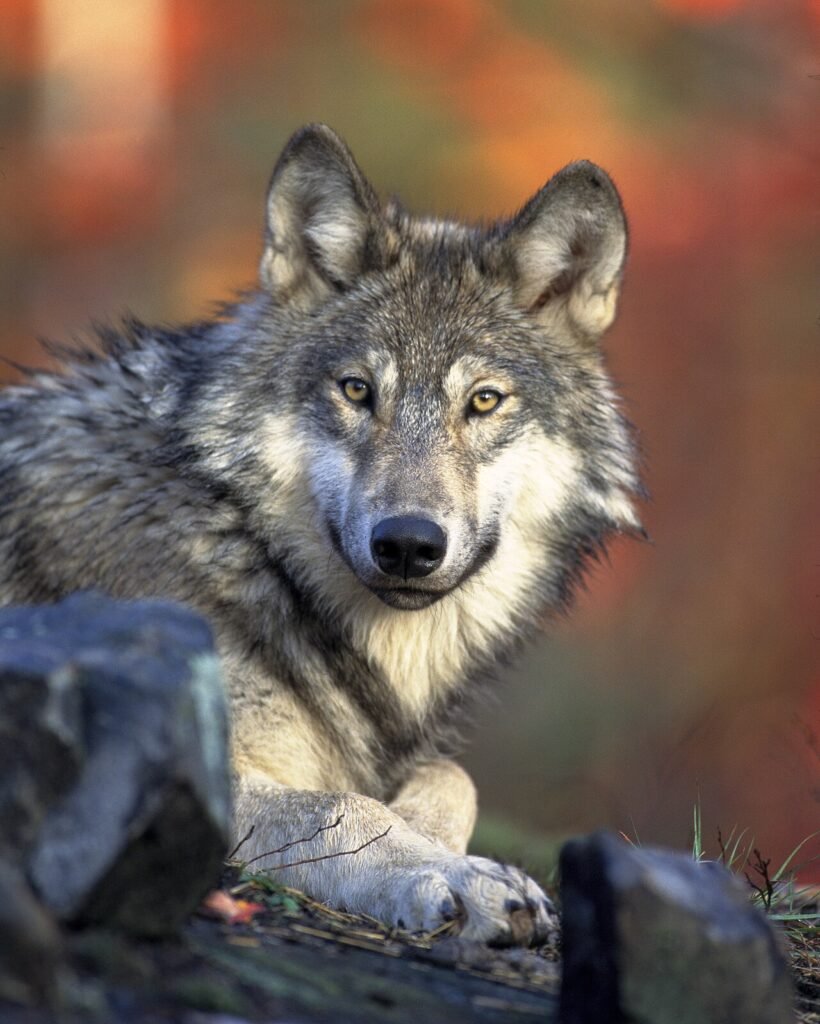
The photograph here is an authorised wolf reference, not a Yuyi tattoo. Bring it as an anatomy or mood reference when discussing a custom wolf-and-forest composition; the final drawing should be adapted to your placement.


