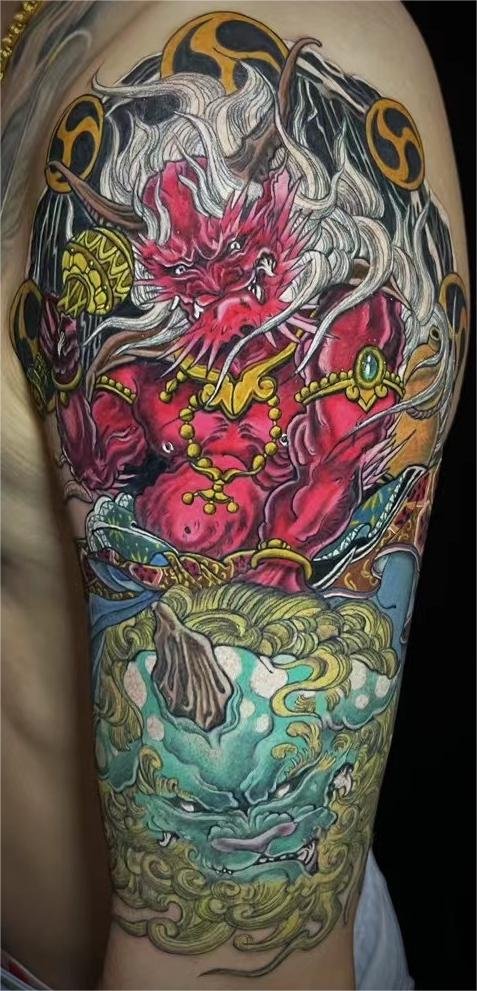
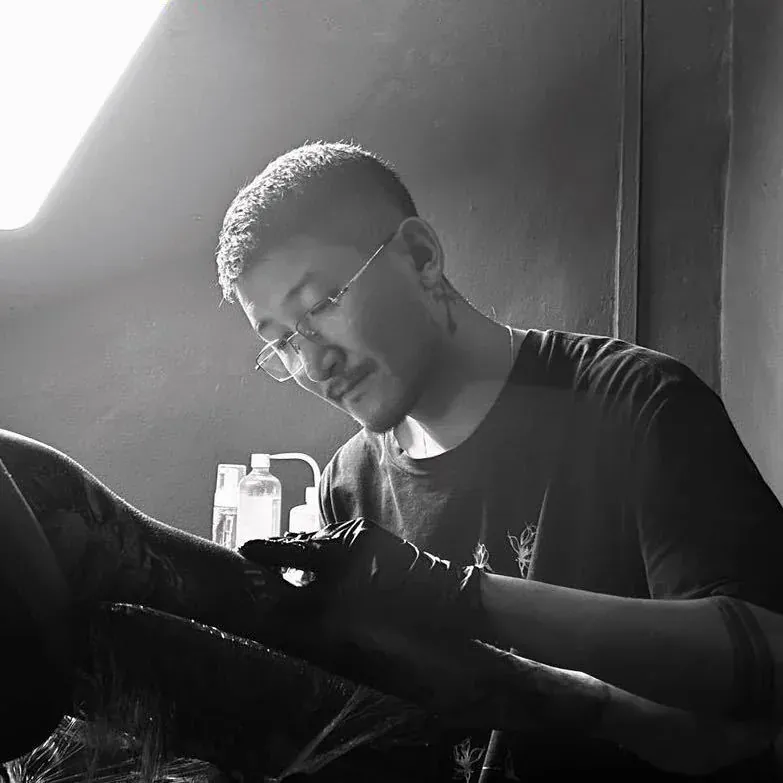
If you are deciding how to choose a tattoo artist in Singapore, start with style fit, not popularity. Match your design to the work they already do well, then judge them by healed photographs, line quality and how they plan a piece on the body. Ignore self-declared “best” lists and walk away if the portfolio does not already contain your style.
A shortlist built this way is slower than tapping the nearest shop in a mall, and it is more reliable. The aim is not to find a famous name. It is to find the person whose published work already looks like the tattoo you want to wear.
What style fit actually means
Style fit means the artist already produces the same family of work you want, at a similar scale, on similar body areas, in a visual language you would accept if it healed on you tomorrow. It is not a mood, a Pinterest board, or a promise that they are “happy to try”.
A portraitist who can hold a likeness is not automatically the right person for a Japanese back piece. Someone who draws clean decorative flowers may still flatten a face. Large work asks for a different kind of planning from a small emblem on the wrist. When an artist has a clear tattoo artist style specialisation, you can usually see it in five minutes: the same problems keep getting solved well.
Fit also includes taste. Two artists can both work in black and grey and still disagree about contrast, skin texture, background noise and how much empty skin a design should keep. If you would not want their existing pieces on your body, do not hire them to invent a new version of the same idea.
If you want one local example of a published direction rather than a ranking, you can meet Yuyi, a Singapore tattoo artist. His public work sits in black-and-grey realism, portrait realism, large-scale back pieces and sleeves, and Japanese or Asian-inspired compositions. That is a statement about focus. It is not a claim that one studio sits at the top of Singapore.
How to choose a tattoo artist in Singapore by reading the portfolio
Read a portfolio as evidence of craft, not as a highlight reel. Look at composition, line quality, contrast, scale and body flow before you look at filters, follower counts or a “best tattoo artist Singapore” caption.
Start with finished tattoos, not drawings. Sketches show intention. Skin shows what survives swelling, movement and time. Open several pieces in the same style, including older work, so you can see whether the standard is consistent or whether one strong photograph is doing all the selling.
Composition
Ask whether the design has a clear centre of interest and a path for the eye. In a portrait, that is usually the eyes, the light on the face and the crop around the head. In Japanese or Asian-inspired work, it is the main figure plus the wind, water, cloud or foliage that carries the design around the body. Weak composition looks like a poster stuck onto a limb: square, crowded, and cut off by the elbow or collarbone.
Line quality
Zoom in until you can see edges. Lines should have a planned weight, join cleanly and hold their shape through curves. Look for wobble on long strokes, patched outlines, blown edges and letters that collapse when the skin stretches. In realism, “line quality” also means the edge of a shadow: soft where the form turns, sharper where bone or metal needs a hard stop.
Contrast
A tattoo has to read in ordinary room light, not only under a ring light. Check whether the darkest darks and the lightest lights are doing real work. Muddy mid-tones make a face look tired after healing. Over-blacked backgrounds can swallow a figure. In colour or Japanese work, contrast is also about separation: the main motif should still be readable if you squint.
Scale
Compare the tattoo’s size with the body and with your own idea. A five-centimetre study does not prove a full back. A massive back piece does not prove a tight portrait on a bicep. Look for pieces in the same size range as yours, and notice whether small work is fussy or whether large work still has a simple silhouette from a few metres away.
Body flow
The best evidence is a photograph that shows the tattoo turning with the body. Shoulders, ribs, elbows, knees and the side of the torso all bend the design. Good flow uses those turns. Poor flow ignores them and leaves a broken image when the person lifts an arm or twists. Ask for side angles, not only the flattering flat shot.
Use this sequence when you compare artists:
- Collect five to eight finished pieces in your exact style, not a mix of everything they have ever done.
- Open them at full size and look at edges, joins and faces before you look at the caption.
- Step back from the screen and ask whether the design still reads as one image.
- Check placement: similar body area, similar size, similar amount of skin shown.
- Separate fresh, shiny photographs from healed ones, then judge the healed set first.
When you view Yuyi’s tattoo work, use the same test. Do not look for a winner. Look for repeated answers to the same design problem you are about to set.
How to compare relevant experience for portraits, Japanese work and large pieces
Relevant experience is a stack of finished tattoos in the same problem set, not years in the industry or a long list of styles on a menu. Compare artists by the jobs they have already completed, then ignore the rest of the grid.
Portraits live or die on structure. You want healed faces with a stable likeness, clear eye sockets, believable mouths and a value range that still separates cheek, jaw and hair after the shine is gone. Ask for more than one age group and more than one angle. A single celebrity study, heavily filtered, tells you almost nothing.
Japanese and Asian-inspired work is a composition problem as much as a drawing problem. Look for full backgrounds, directional movement and motifs that can travel around a shoulder or ribcage without being cropped into a rectangle. Isolated flowers, random kanji or a dragon dropped onto empty skin are not the same skill. If that is your direction, explore Japanese and Asian-inspired tattoos and compare how the background actually moves.
Large back pieces and sleeves need planning you can see. The design should read from across a room, then still make sense at the joints. Ask how the artist maps sessions, where they place the strongest darks, and how they will leave room for later flow. Cropped details of armour or waves are not enough. You need photographs of the whole back, the underarm, or the wrap past the elbow.
Yuyi has drawn from a fine-art background at the LuXun Academy of Fine Arts and has been tattooing since 2010, with published work in black-and-grey realism and large compositions. Use that the same way you would use any other artist’s history: as context, then go back to the photographs. If black and grey is your lane, explore black-and-grey tattoo work in Singapore and check whether the contrast and skin rendering match what you want.
| Project type | Strong evidence | Weak evidence | Better question |
|---|---|---|---|
| Portrait realism | Healed faces with likeness, bone structure and controlled greys | One filtered study, or only animal or statue work | Can I see two healed portraits of different ages, in ordinary light? |
| Japanese or Asian-inspired work | Full compositions with background, movement and readable motifs | A single flower, mixed-style mash-ups, or lettering with no design system | How will wind, water or negative space travel around this limb? |
| Large back pieces and sleeves | Multi-angle photos of mapped designs that still read from a few metres | Tiny fillers, cropped details, or a stencil with no finished body | How will you stage the piece so the silhouette still works when I move? |
Consultation questions that reveal communication quality
A useful consultation is a working conversation about limits, placement and process, not a sales chat. The artist should be able to tell you what they will not do, what the body will do to the design, and what they need from you before anyone picks up a machine.
Bring a short brief: the idea, reference images, body area, rough size in centimetres, and whether the tattoo must sit under clothing. Then listen for specifics. Vague enthusiasm is a warning. So is pressure to decide on the spot.
Ask questions that force a concrete answer:
- Which of your healed pieces is closest to this idea, and what would you change for my body?
- Where will this design break if we place it on this joint, and how would you rebuild the flow?
- What is too small, too crowded or too mixed-style for you to take on?
- How do you decide what happens in the first sitting versus later sittings?
- What aftercare do you give, and what do you want me to avoid while the skin is still a wound?
- If the healed result needs adjustment, how do you review that, and what is not included?
Hygiene belongs in the same conversation. Getting a tattoo breaks the skin, so infection is a real risk when equipment or ink is handled poorly. Mayo Clinic advises asking whether the artist wears a fresh pair of disposable gloves, opens needles and tubes from sealed packages, puts ink into new single-use cups, and heat-sterilises any reusable equipment. Health New Zealand likewise expects new gloves, sterile needles, new ink for each person, a clean work area and clear aftercare instructions.
You are not being rude when you watch this happen. You are checking that the person who will puncture your skin can explain their process without getting defensive.
How to verify awards without treating them as a guarantee
An award is a judged opinion of one piece, on one day, under contest conditions. It can support a claim of skill in a category. It cannot guarantee that your tattoo will look the same, finish on a set timetable, or suit your body.
Verify the wording before you attach any weight to it. Ask for the event name, the year, the exact category and the placing. Then look for an official result list, a certificate, or a contemporaneous post from the organiser. A badge on a highlight reel is not enough, especially when the caption upgrades a day prize into a championship.
Read category names literally. “Best of Day” is a day result. A realism pattern award is not a portrait guarantee. A back-pattern placing is not proof of small-lettering skill. If the artist cannot keep the title accurate, treat the rest of the marketing with more caution.
Yuyi’s recorded results are narrow on purpose: The Lion’s Gate Singapore Tattoo Convention 2024, Best of Day (Saturday); Tattoo Show Taipei 2017, Best Big Realism Pattern, 1st Place; and Tattoo Show Taipei 2017, Best Big New Traditional Back Pattern, 2nd Place. Those titles describe specific contests. They do not make him, or anyone else, the best tattoo artist in Singapore, and they should not be rewritten into a grand or overall championship.
Use awards as a tie-break after style fit and healed work already agree. If the portfolio does not contain your project, the trophy case is beside the point.
A final artist-comparison checklist
Use one sheet for every artist on your shortlist and fill it from evidence, not from charm. If two columns stay empty, you do not have a decision yet. You have a gap.
| Check | Pass | Pause |
|---|---|---|
| Style fit | Several finished pieces already sit in your family of work | The artist says they can try it, or the closest piece is a different style |
| Healed tattoo portfolio | Clear, ordinary-light healed photos in the same style | Only fresh, wet, cropped or heavily edited images |
| Scale and body flow | Similar size and placement, with photos that show the tattoo turning | Only tiny studies, or only flat shots of a much larger piece |
| Relevant experience | Portraits, Japanese compositions or large pieces match the actual job | Years tattooing, but not at this scale or in this system |
| Communication | Direct answers on limits, placement, sittings and aftercare | Flattery, rush, or no interest in your references |
| Hygiene | Sealed needles, new gloves, single-use ink, clean field, written aftercare | Dismissive answers, or a setup you are not allowed to look at |
| Awards | Exact event, year, category and placing, used as one data point | Inflated titles, missing categories, or “best in Singapore” with no source |
If one artist passes on style, healed work and communication, you have enough to send a brief. If nobody passes, keep looking. A delayed tattoo is cheaper than a permanent mismatch.
Sources and review date
- Mayo Clinic — Tattoos: Understand risks and precautions — reviewed 20 August 2026.
Frequently asked questions
How do I find a tattoo artist in Singapore that matches my style?
Search by the finished style you want, then open healed photographs before you open reviews. Shortlist only people who already tattoo similar subjects at a similar size. Visit or message two or three of them with the same brief and compare how specifically they talk about placement. The right match is the portfolio you would accept unchanged, not the shop that replies fastest.
Are healed tattoo photos more important than fresh ones?
Yes, if you are trying to judge the tattoo you will actually wear. Fresh work is swollen and still holding surface ink, so it often looks darker and sharper than the settled result. Healed photos show contrast, likeness and line quality after the wound has closed. Ask for both if you can, then make the decision on the healed set.
Should I book the artist with the most awards?
No. Awards can confirm that a piece was competitive in a named category, but they do not rank every artist in the city and they do not describe your body. Read the exact title and year, then go back to healed work in your style. A well-documented day prize is useful context. It is not a reason to ignore a weak portfolio.
What should I send in a first message to a tattoo artist?
Send the idea in a few sentences, two or three reference images, the body area, and a rough size in centimetres. Say whether you want black and grey, colour, portrait, Japanese composition or a large piece. Ask which healed works they consider closest. Keep it factual. A clear brief gets a clearer yes, no, or suggested change.
Can I walk into a Geylang studio the same day?
Do not count on it. Yuyi Tattoo is at 388A Geylang Road, #02, Singapore 389387, and the studio may display 24 hours, but that does not guarantee the artist you want or a same-day sitting. Message on WhatsApp first, share the brief, and confirm the visit. Turning up unannounced is a poor way to start a permanent project.
If the portfolios you have studied already point in Yuyi’s direction, send a project brief on WhatsApp and ask whether the idea fits his work. There is no quote, slot or result attached to a first message. The next useful step is a straight conversation about the design.