If you want to know how to compare tattoo shops in Singapore without ranking posts, judge the named artist, matching work, consultation, visible hygiene, review patterns and booking terms. A ‘best’ list cannot do that. The right studio changes with style, scale and how clearly you need to talk through the piece.
Why ‘best’ depends on the project
‘Best’ is not a studio trait. It is a fit between your design, your skin, the artist’s range and the way you both make decisions.
A small script, a portrait, a Japanese-inspired back piece and a full sleeve ask for different drawing habits, different sitting plans and different aftercare conversations. The shop that photographs well for tiny symbols may be the wrong room for a large black-and-grey composition. A visitor who needs a confirmed slot before a flight is not shopping for the same thing as a resident who can plan several sittings around work.
Use ‘best tattoo shop in Singapore’ articles as a discovery list only. Then test each room against your brief. If a page cannot tell you who would tattoo you, in what style, and how the first conversation works, it is advertising, not a comparison.
How to compare tattoo shops in Singapore by artist and evidence
Start with identity, not décor. You are booking a person who will puncture skin and make permanent marks, so the studio should name the artist, show that person’s work, and explain how a new design is discussed.
Studio identity and the named artist
A usable studio page states the address, the artist’s name and the kind of work that person actually takes. Vague branding such as ‘custom tattoos for everyone’ is weaker than a clear range.
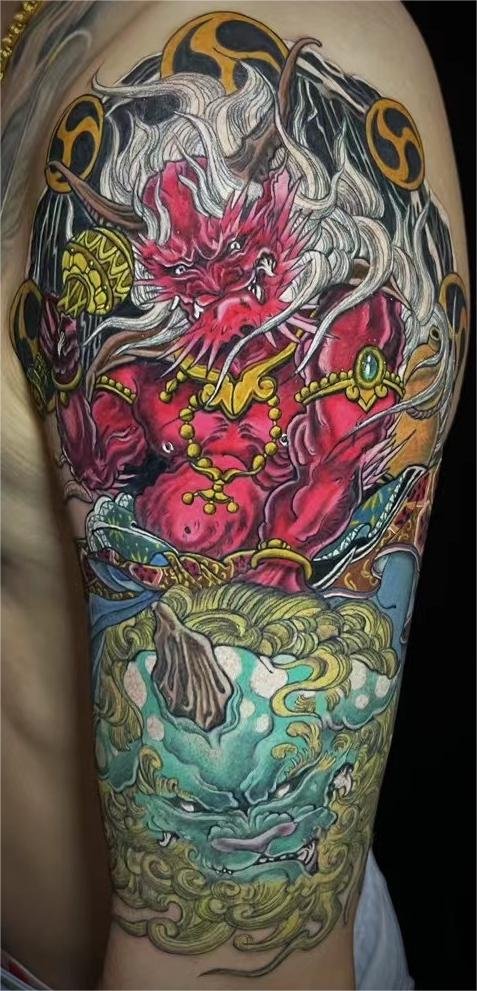
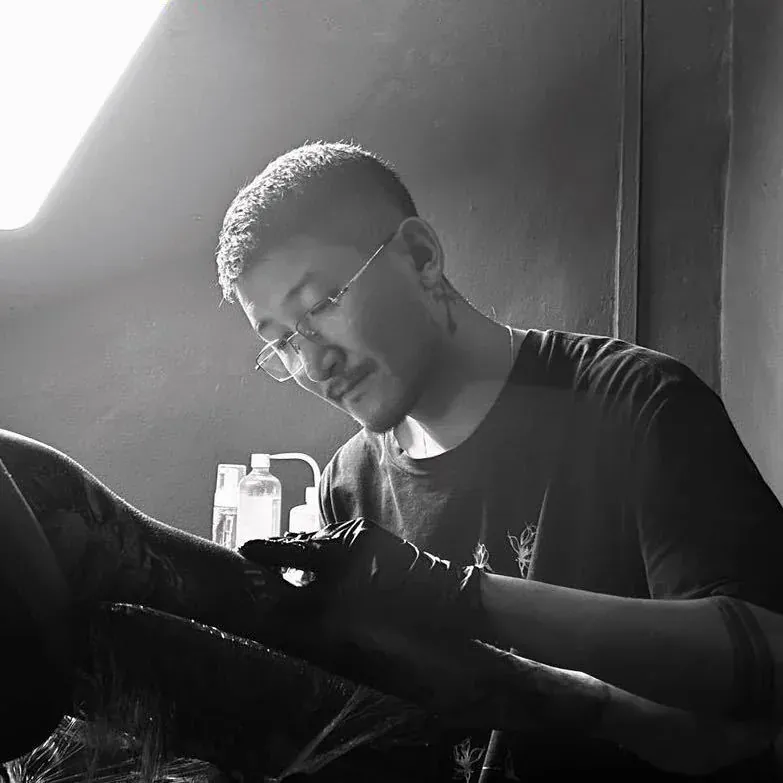
At Yuyi Tattoo, that range is black-and-grey realism, portrait realism, large back pieces and sleeves, and Japanese or Asian-inspired compositions. Yuyi trained in fine art at LuXun Academy of Fine Arts and has tattooed since 2010. Convention results can sit beside that record, not above it: Best of Day (Saturday) at The Lion’s Gate Singapore Tattoo Convention 2024, plus Tattoo Show Taipei 2017 awards for Best Big Realism Pattern, 1st Place, and Best Big New Traditional Back Pattern, 2nd Place. Those titles describe judged pieces on given days. They do not replace a consultation or a hygiene check.
If two rooms share a name, ask who holds the machine for your appointment. A shop with several artists is not automatically stronger. It is only clearer when each portfolio is labelled.
Portfolio evidence you can check
Ask to view Yuyi’s tattoo work, or any other artist’s page, with your idea in mind. Look for repeatable skill, not one heroic photo.
- Find several pieces in the same family as yours, not one similar image.
- Check scale. A tight portrait on a forearm does not prove a back piece.
- Look for lighting that shows edges, not only filters. Ask for uncropped photos if the subject is large.
- Separate drawing from photography. A strong photo of a weak design is still a weak design.
- Ask what is healed, what is fresh, and what is another artist’s work on the same wall.
Fresh ink always looks wet and dark. Healed work shows whether contrast and faces survive. If a studio cannot show healed examples in your style, treat that as missing evidence, not as a secret.
The consultation process
A useful first talk is specific. You should leave knowing whether the artist wants the project, what must be redrawn, and what still depends on your skin, placement and schedule.
Bring a short brief: subject, size in centimetres, body placement, reference images, and anything you refuse. Notice whether the artist restates the idea in their own words. If they only say ‘yes, can do’ without asking about scarring, existing tattoos, sun exposure or how visible you want the piece to be, you do not yet have a plan.
You can send Yuyi your tattoo idea before you travel across town. Written references reduce the chance that a verbal description turns into the wrong silhouette. Do not expect a finished design, a fee or a date from a first message. The point is to see whether the conversation is careful.
| Signal | Weak | Stronger |
|---|---|---|
| Studio identity | Logo only, no address | Named studio, named artist, Singapore address |
| Artist credit | ‘Our team’ on every photo | Each image tagged to the person who tattooed it |
| Portfolio | Mixed styles with no healed shots | Several comparable pieces, including healed work |
| Consultation | Instant yes, no questions | Restates your brief, flags limits, explains next step |
A hygiene checklist you can see
You cannot audit a studio like a clinic, and a tidy room is not a medical certificate. You can still watch how skin, ink and needles are handled.
Public health agencies treat tattooing as a skin-penetration procedure. Health New Zealand notes that any break in the skin can admit bacteria or blood-borne viruses, and that risk falls when the tattooist uses new disposable gloves, new ink and sterile needles for each person, works in a clean area, and gives aftercare advice. NSW Health asks body-art businesses to use single-use needles, pour ink into single-use caps, dilute only with sterile water if dilution is needed, discard leftover ink, cover equipment to limit contamination, and wash hands before and after a procedure.
The U.S. Food and Drug Administration warns that unsterile equipment can transmit infections, and that contaminated ink has caused infections even when the artist followed hygienic steps. The U.S. Centers for Disease Control and Prevention has documented nontuberculous mycobacterial skin infections linked to contaminated tattoo ink and to dilution with nonsterile water. CDC advice includes using products meant for tattooing, diluting only with sterile water if dilution is required, and using disposable gloves with ordinary hand hygiene. Distilled or reverse-osmosis water is not the same as sterile water.
Use this as a visible check, not as a claim that any shop is certified:
- The workstation is wiped and reset between clients, with a clear surface rather than a cluttered desk of used caps.
- Needles or cartridges come from sealed packaging opened for you.
- Ink is dispensed into fresh caps. Bottles are not dipped. Leftover ink is not poured back.
- If grey wash or dilution is mixed in the room, the artist can say they use sterile water, not tap water or water assumed to be sterile because it was bottled.
- Gloves go on after handwashing, and come off if the artist handles a phone, till or door, then are replaced.
- Razors, wipes and barrier film look single-use. A sharps container is in reach.
- You receive aftercare in plain language.
Health New Zealand describes a new tattoo as a skin wound that typically takes about two to six weeks to heal, and says increasing redness, pus or fever needs a healthcare provider. Ask the question out loud: will you open the needle pack in front of me, and is ink single-use for my session? A professional answer is ordinary, not defensive.
If you donate blood in Singapore, keep a record of the date and whether sterile, single-use needles and single-use ink were used. The Singapore Red Cross states that tattoos and piercings done with sterile, single-use or disposable needles and single-use ink do not affect eligibility, and that donors who are unsure can wait three months. The Health Sciences Authority still makes the final assessment at the Bloodbank.
How to read tattoo studio reviews in Singapore
Tattoo studio reviews in Singapore are useful for patterns, not for crowning a winner. Do not copy a stranger’s praise into your decision, and do not treat one angry paragraph as a full report.
Read for process. Comments that mention punctuality, whether the stencil was adjusted, whether the artist slowed down on a difficult passage, or whether aftercare was explained, tell you more than stars. Be wary of reviews that only say ‘best tattoo places in Singapore’ with no photo of the actual piece, no artist name and no date. The same applies to polished captions that could sit under any shop.
Watch for mismatch. A studio that markets large realism should not be judged mainly on tiny symbols. A review of a walk-in name in a different style is not evidence about your artist. Photos in reviews help only if they show the work in ordinary light.
Ignore volume as a quality score. A busy booking page can attract more reviews and more arguments. Look at the last six to twelve months, not a highlight from years ago. If staff replies exist, read the tone. A short factual reply is stronger than a public quarrel.
Pricing, deposits and cancellation questions
Price is part of the comparison, but a number without terms is not a quote. Ask how the studio charges (session time, project fee, or a mix), what the figure includes, and what would raise it: extra size, cover-up density, colour, or a difficult placement.
Ask these questions in writing:
- What is included besides the tattooing time: stencil, aftercare film, GST if any?
- When is a deposit taken, how much, and what does it reserve: the artist, the date, or only a consultation?
- Is the deposit deducted from the final fee?
- What happens if you cancel, arrive late, or need to move a sitting because of illness?
- What happens if the studio must reschedule?
- How are later sessions priced if a large piece needs more days than first discussed?
Do not accept ‘we will see on the day’ as a full answer for a large back piece or sleeve. A studio can still refuse a fixed total before seeing your skin. That is reasonable. What you need is the rule, not a guess. If a deposit is non-refundable, get that sentence in the same chat as the appointment time.
This article does not publish studio fees. Rates move with design, and an outdated number is worse than a clear question.
Location, access and appointment confirmation
For Singapore customers, a studio that is hard to reach only matters if the appointment itself is vague. Compare the address, how you will get there, and whether the named artist is actually booked.
Yuyi Tattoo is at 388A Geylang Road, #02, Singapore 389387. You can see the Geylang tattoo studio before you decide whether the room, the light and the wait feel right for a long sitting. Geylang Road is served by buses and sits in the Aljunied area on the East-West Line. Confirm the route, parking and building access for your own day, especially if you are travelling with a companion or leaving with a fresh wrap.
Hours on a map pin are not a booking. The studio may show 24 hours, but that does not mean a named artist or a same-day slot is free. Message first. Ask for the date, the artist’s name, the arrival window and what to bring. If you are flying in, ask how much buffer you need after the sitting before a flight, a workout or a day in the sun. Do not treat an unanswered story reply as a confirmed appointment.
A weighted worksheet you can use
Give each studio the same brief and score only what you can evidence. Use a 1 to 5 scale, then multiply by the weight. The weights below favour fit and proof over convenience. Change them if your constraint is a short trip rather than a large piece.
| Criterion | What you are scoring | Weight |
|---|---|---|
| Style fit | Comparable pieces exist for your subject and scale | 25% |
| Named artist and portfolio | The person is identified; healed work is visible | 20% |
| Consultation quality | Your brief is restated; limits are named | 15% |
| Visible hygiene | Needle, ink, gloves and reset match the checklist | 15% |
| Review quality | Recent, specific comments about process | 10% |
| Price terms | Fee basis, deposit and cancellation are written down | 10% |
| Access and confirmation | Address, route and booked artist are confirmed | 5% |
If Studio A scores 5 for style fit, 4 for artist evidence, 4 for consultation, 5 for hygiene, 3 for reviews, 4 for price terms and 4 for access, the weighted total is 4.30 out of 5. A prettier grid with no named artist and a verbal-only deposit will drop, even if the shop looks busier online.
Keep the sheet to two or three studios. More than that usually means you have not chosen a style yet. If one room is clearly stronger on style and hygiene, stop shopping for a slightly cheaper hour. A permanent mark is not a voucher hunt.
Sources and review date
- NSW Health — Tattooing — reviewed 20 August 2026.
- U.S. FDA — Tattoos and permanent makeup fact sheet — reviewed 20 August 2026.
Frequently asked questions
How do I choose a tattoo artist in Singapore if two shops look similar?
Send both the same brief and compare who answers, who asks about placement and scars, and who can show several pieces at your scale. Visit the room if the work is large. The better choice is the named artist who can explain the next step in writing, not the page with the louder headline.
Are Google ratings enough to pick a tattoo studio?
No. Stars compress very different jobs into one number. Read recent comments for process: stencil changes, punctuality, aftercare, and whether the reviewer names the artist. Ignore generic ‘best shop’ lines with no photo. A quiet page with clear healed work can still be a stronger match than a high rating in the wrong style.
What should I watch for in tattoo shop hygiene?
Watch the reset, not the décor. Needles should come from a sealed pack opened for you. Ink should go into fresh caps. Gloves should change after the artist touches a phone or till. If ink is diluted, ask whether sterile water is used. A tidy sofa does not prove any of that. Ask the questions before you sit down.
Do I need a deposit to book a tattoo in Singapore?
Many studios take a deposit to hold a named artist and a date, but the rule is not uniform. Ask what the deposit reserves, whether it comes off the final fee, and what happens if you or the studio cancel. Get the answer in the same chat as the appointment. Do not treat a verbal ‘we will hold it’ as a booking.
Can I walk in for a tattoo without an appointment?
Some shops accept walk-ins for small work, but a named artist on a large piece is rarely waiting idle. Hours on a map, including a 24-hour display, do not mean a same-day slot exists. Message first with your idea, size and travel dates. Arrive only after the artist, time and address are confirmed.
Talk through your idea first
If you already have a subject in mind, message Yuyi on WhatsApp at +65 9128 0501. You can start with: Hi Yuyi, I’d like to discuss a tattoo project. Include references, size in centimetres and placement. A reply is a conversation, not a booked date, a quoted fee or a promised result.