There is no universal Singapore tattoo price because a quote is built around one project, not a menu item. Size, placement, detail, colour, style, cover-up work and the hours an artist needs at the chair all change the figure. Two designs that look similar in a photo can still take very different amounts of time once the skin, references and composition are assessed.
This page is the price hub for Yuyi Tattoo. It explains how a quote is formed so you can budget with clearer questions, not invented averages. If you want a project-specific discussion, send the subject, references, placement, approximate size and preferred timing on WhatsApp.
Why there is no single Singapore tattoo price
A Singapore tattoo price cannot sit in one public band because tattooing is timed, skilled work on a living surface. The same motif on a flat outer arm is a different job from the same motif wrapped around a shoulder, packed with portrait detail, or laid over older ink.
Studios also do not sell identical products. One artist may spend most of the session on drawing, stencil placement and slow shading. Another may work faster on simpler graphic shapes. Neither approach produces a fair city-wide rate.
Search results that promise a typical tattoo cost in Singapore usually flatten those differences. They cannot see your skin, your references, or how large the design must grow to look finished. A useful quote starts after that information exists.
What changes a tattoo quote
The quote follows the work: how large the design is, where it sits, how much information it contains, whether it uses colour, which style it needs, whether it covers older ink, and how long the artist must concentrate. Those variables matter more than a generic small, medium or large label.
Size and the limits of tattoo price by size
Tattoo price by size is a starting clue, not a tariff. A compact design with a simple silhouette can be quicker than a slightly smaller piece packed with faces, fabric or background atmosphere. Measure the area in centimetres, then describe what has to live inside that area.
Large work also changes the shape of the booking. A sleeve or back piece is rarely one unbroken sitting. The artist has to plan sections that can heal, then return to add depth, so the quote is often a project plan rather than a single-session fee.
Placement
Placement changes posture, access and how the design must be drawn. Outer arms, calves and much of the back give a broader, more stable canvas. Ribs, armpits, hands, feet, inner biceps and areas that bend constantly ask for more stops, more stencil checks and a more careful composition.
Placement also affects how much the design can hide or show. Tell the artist if the piece must stay easy to cover for work, and discuss any expected body changes that could affect the composition.
Detail
Detail is time. Soft black-and-grey realism, portrait likeness, hair, jewellery, smoke and background texture all need more passes than a bold graphic. A blurry phone crop forces extra drawing before the machine starts, and that drawing is part of the job.
If the idea depends on a real person or a specific object, send the clearest source photos you have. Weak references do not make the tattoo cheaper. They usually make the first conversation longer.
Colour
Colour adds mixing, layering and decisions about saturation. A black-and-grey portrait and a colour version of the same face are not the same sitting. Colour can also change how a later session is planned, because the artist may want to see how the first layer has settled before pushing brightness.
Say whether you want full colour, a limited palette, or black-and-grey with one accent. That single choice helps the artist judge both design and chair time.
Style
Style decides the toolkit. Black-and-grey realism and portrait work ask for slow value control. Large Japanese or Asian-inspired compositions ask for flow across the body, not a sticker placed in the middle of a limb. Simpler ornamental or lettering jobs, when they are even a fit, do not carry the same drawing load.
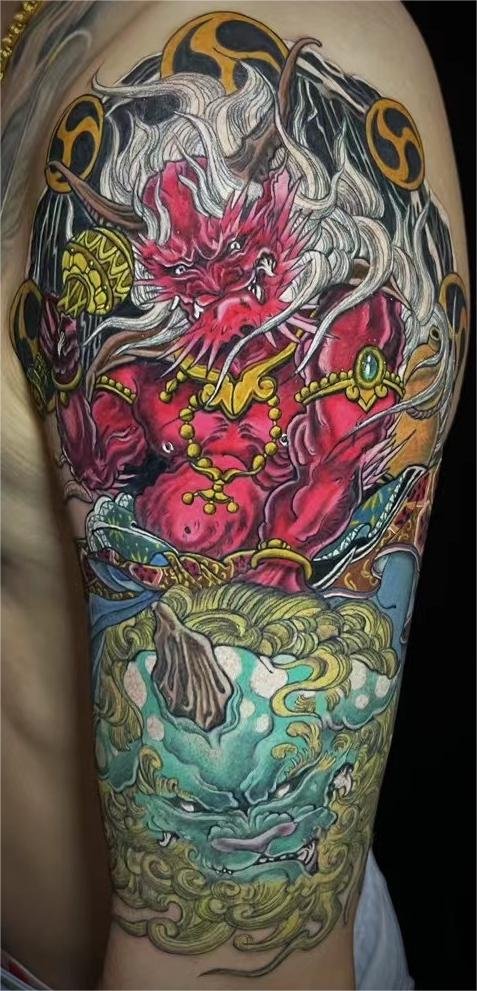
Yuyi’s published body of work sits in black-and-grey realism, portrait realism, large-scale back pieces and sleeves, and Japanese or Asian-inspired compositions. If that is the direction you want, view Yuyi’s tattoo work before you write. A reference that matches the artist’s actual range produces a clearer conversation than a style the studio does not centre.
Cover-up complexity
A cover-up is a design problem and a density problem. Dark lettering, old colour, blowout and scarred skin all limit what can sit on top. The new piece often has to grow larger, darker or more occupied than the original idea so the old tattoo disappears into the composition.
Do not assume laser fading is part of the quote. Yuyi Tattoo does not offer laser tattoo removal. If existing ink is still very loud, the honest options are a stronger cover design, a larger canvas, or living with some of the old work still readable. Send sharp photos of the current tattoo in daylight, from a few angles, without filters.
Artist time
Artist time is the core of the quote. It includes reading your references, drawing, stencil placement, setup, the tattoo itself and the pauses a long sitting needs. Faster is not automatically better. Rushed realism shows.
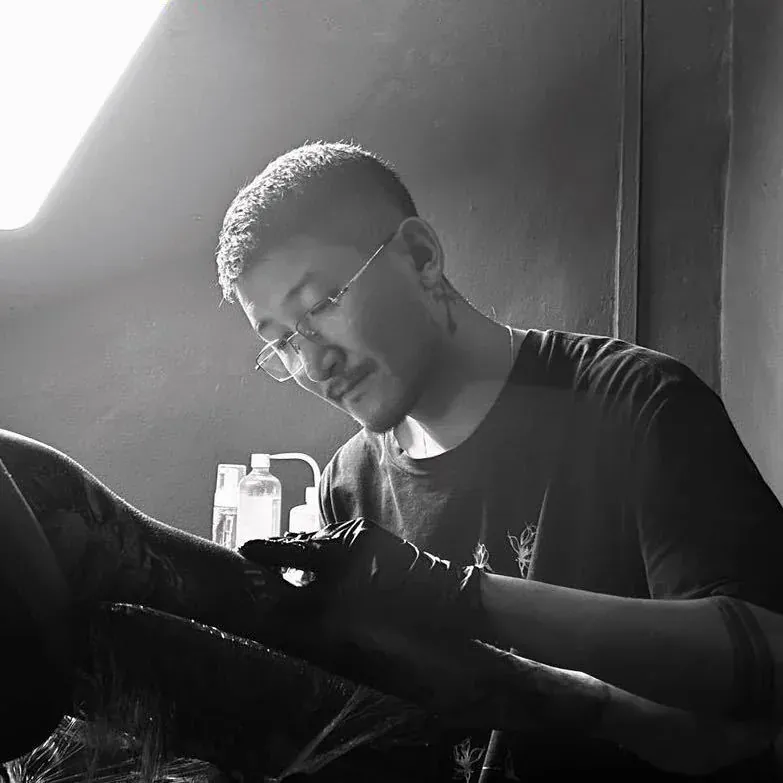
Time also reflects who is holding the machine. If you meet Yuyi, a Singapore tattoo artist, you are looking at someone with fine-art training at the LuXun Academy of Fine Arts and tattooing practice since 2010, with recorded results in large realism and large back work at Tattoo Show Taipei 2017 and Best of Day (Saturday) at The Lion’s Gate Singapore Tattoo Convention 2024. That background does not produce a public rate card. It does explain why a large, likeness-driven piece is priced as concentrated studio time rather than as a sticker.
How studios price time
Singapore studios generally talk about three market concepts: an hourly rate, a day session, and a by-piece fee. These are ways of packaging time. They are not a statement of how Yuyi Tattoo bills every project.
| Pricing idea | What it usually means | Where it tends to fit | What you should still ask |
|---|---|---|---|
| Hourly | You pay for the hours used at the chair, sometimes with a booked minimum sitting. | Work whose finish line is hard to predict, such as dense realism or a first cover-up pass. | How unused time is handled if you sit shorter than booked, and whether drawing time sits inside the hours. |
| Day session | A longer reserved block, often discussed as a half day or full day. | Sleeves, backs, and any piece that needs an unbroken run of focus. | How long that studio’s “day” actually is, and whether a large project is quoted as several reserved days. |
| By-piece | One figure for a defined design, size and placement. | Smaller, clearly bounded images where the artist can see the finish before starting. | What happens if you change the design after the figure is given, and whether later strengthening sits outside that figure. |
None of these models is automatically cheaper. An hourly booking can stay modest if the design is simple. A by-piece figure can run higher if the artist has already built extra time into a difficult portrait. A day session is a reservation of attention, not a promise that a sleeve will be finished before you leave.
When you compare studios, compare the same thing. Ask what is included in the figure, how long the sitting is expected to last, and whether the number is for one session or for the whole project. Do not treat another shop’s published range as Yuyi’s rate.
How to prepare a useful quote request
A useful request lets the artist see the job. Subject, references, placement, size and timing are enough to start. Mood boards with twenty conflicting styles are not.
- Write the subject in one sentence. “Black-and-grey portrait of my father on the outer upper arm” is clearer than “something realistic and meaningful”.
- Attach the best source images you have. For a person, use sharp photos in ordinary light. For a Japanese or Asian-inspired sleeve, show the flow you like and say which parts are essential.
- Name the placement and which side of the body. Add a photo of the bare area if the site is already busy with other tattoos.
- Give an approximate size in centimetres, height by width. If you are unsure, compare it with your hand or a card and say so.
- State black-and-grey, colour, or a limited palette.
- Say whether this is new skin, an addition to existing work, or a cover-up.
- Give preferred timing and any hard limits, such as travel dates or a period when you cannot sit.
- Mention any practical constraint that affects sitting or healing after you have discussed medical questions with your own clinician.
You can send Yuyi your tattoo idea through the studio contact page, or use WhatsApp if you already have the photos on your phone. A complete first message prevents a long chain of follow-up questions.
Deposits, revisions and rescheduling
Deposits, redraws and date changes are studio-by-studio rules. Treat them as questions to confirm before you book, not as a published Yuyi policy and not as a city standard.
Ask what the deposit holds: a date, a drawing, or both. Ask whether the deposit is credited to the project, and what happens if you cancel, arrive late, or need to move the sitting. Ask how far in advance a change can be made without losing the reservation.
Revisions need the same clarity. Confirm whether a first-round drawing is included, how many adjustment rounds are reasonable, and what counts as a new brief. A small shift in flowers on a sleeve is not the same as changing a portrait subject after the stencil is ready.
Also ask how later strengthening is handled. Skin heals. Some areas hold pigment more evenly than others. A later pass, if the artist recommends one, may be a separate sitting. Do not assume it is included, complimentary, or unlimited.
If you plan to visit 388A Geylang Road, #02, Singapore 389387, message first. The studio listing shows 24 hours. That is not a promise of a same-day chair or that a particular artist is free when you walk in.
Three project examples
These examples show how variables move a quote. They are not packages, they are not Yuyi price points, and they do not come with invented dollar figures.
1. A black-and-grey portrait on the upper arm
The brief is a memorial portrait, roughly the height of a palm, on the outer upper arm. One sharp, well-lit photograph, a calm background and a placement with little existing ink keep the job contained. The artist can judge likeness, crop and contrast before drawing.
The same portrait becomes a larger project if the only photo is dim or taken from far away, if you want a full scene behind the face, or if the portrait must turn onto the inner arm. Colour likeness adds another layer of matching. None of that is “extra decoration”. It is more drawing and more time in the skin.
2. A Japanese or Asian-inspired sleeve
A half sleeve on mostly empty skin can be planned as a single composition: a main figure, supporting wind or water, and a stop point at the elbow or shoulder. Clear references for the main motif, plus a note on whether you want the piece to read from the front or the back of the arm, help the artist map the flow.
The quote changes if the arm already holds small unrelated tattoos, if you want the design to continue onto the chest or back, or if the references mix several eras and moods. A sleeve is priced as coverage and movement, not as a list of separate stickers.
3. A large back piece, with or without older work
A full-back or large upper-back composition is usually discussed as a staged project because of its scale. The exact session spacing belongs in the project discussion rather than in a generic price guide.
If the back already carries lettering, faded colour or a previous attempt at a large image, the first task is reading what can be absorbed. The new design may have to become darker, wider or more occupied. A back piece on fresh skin and a back piece that must swallow older work are different quotes, even when both are “a big tattoo”.
Quote-request checklist
Use this list before you write. If a line is blank, the artist still has to guess.
- One-sentence subject, including style if you already know it.
- Two to six strong reference images, not a folder of mixed genres.
- Placement, left or right, and a photo of the skin if anything is already there.
- Approximate size in centimetres.
- Black-and-grey, colour, or limited colour.
- New work, extension, or cover-up.
- Preferred month or travel window, plus any dates you cannot sit.
- Health or healing constraints your doctor has already flagged.
- The questions you still need answered: deposit, redraws, date changes, and whether the figure is for one sitting or the whole piece.
Frequently asked questions
How much does a tattoo cost in Singapore?
There is no city-wide figure that fits every studio and every design. The cost follows the hours, the difficulty and the artist’s way of working. A small, simple graphic and a dense portrait of similar physical size are different jobs. Ask for a discussion of your actual references instead of relying on a range you saw under another shop’s name.
Is tattoo price by size enough to budget?
Size tells the artist how much skin is involved. It does not tell them how crowded that skin will be. A short word and a compact realistic eye can occupy a similar patch and still need very different sittings. Give centimetres and the content. Budget after both are on the table.
Do Singapore tattoo shops charge by the hour or by the piece?
Both exist, and some bookings are reserved as half-day or full-day sessions. Hourly language suits work that is hard to time. A single piece fee suits a design with a clear edge. A day booking reserves a long block of attention. Confirm which model a studio is using for your project before you compare one number with another.
What do I send if I want a tattoo quote in Singapore?
Send the idea, the best photos, the body site, a size in centimetres, colour or black-and-grey, and when you hope to sit. Add photos of any tattoo that will sit beside or under the new work. The clearer the first message, the less the artist has to reconstruct your brief from fragments.
Is a tattoo deposit standard, and can I change the date?
Many studios use a deposit to hold a date or a drawing, but the rules are local to that studio. Ask what the payment reserves, whether it is credited to the work, and what happens if you reschedule, cancel or arrive late. Do not treat another client’s arrangement, or a policy you read elsewhere, as the rule for your booking.
How long will a sleeve or back tattoo take?
Large work is usually planned across more than one sitting because of scale and healing, not because the artist wants to stretch the calendar. Surface healing commonly takes a few weeks, and the next session should wait until the skin has settled. The number of sittings depends on coverage, detail and whether older ink must be absorbed. Nobody can give an honest finish date from a one-line message.
If you are ready to talk about a specific piece, message Yuyi on WhatsApp with the subject, references, placement, approximate size and preferred timing. That is enough to open a project discussion. It is not a booking, a promised slot or a finished quote.