
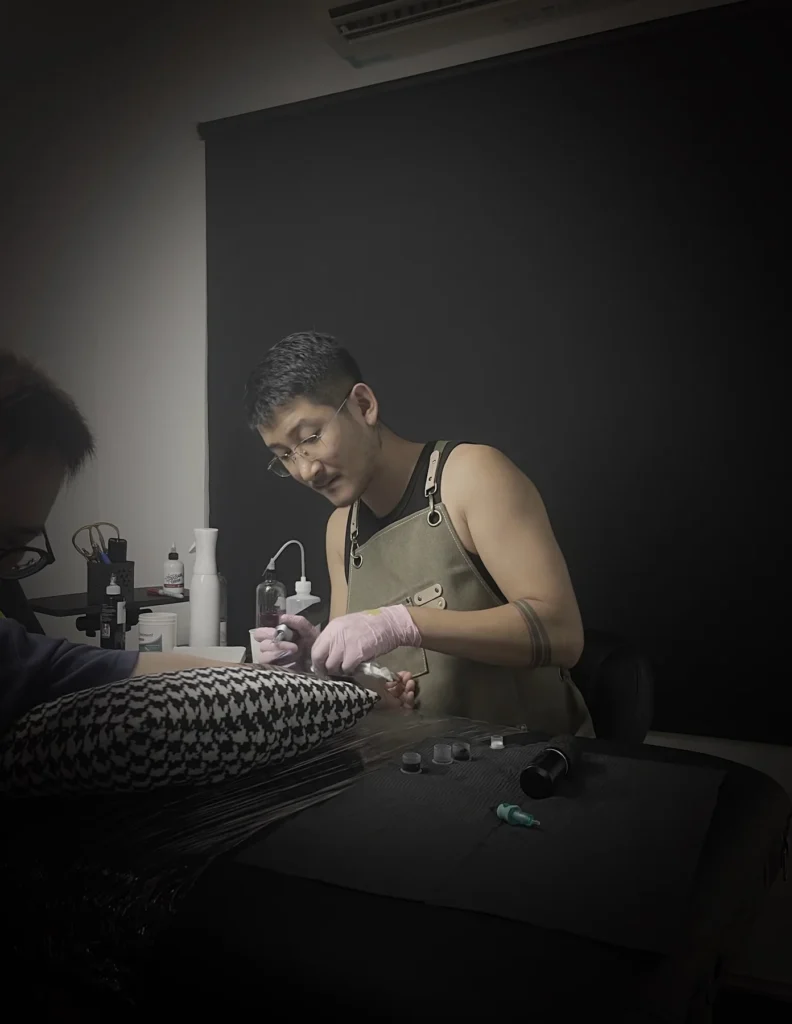
Tattoo touch-up questions should cover timing, scope, cost, healed photos and whether the issue is artistic, normal settling or medical. Do not assume a touch-up is free, automatic, or ready on a fixed date. Ask the artist how they review healed work and what their policy includes.
A touch-up is not the same as infection care, a redesign, a cover-up or changing your mind about the original concept. It is usually a focused adjustment after the tattoo has settled enough to judge. If the skin is red, hot, painful, leaking pus, spreading a rash or accompanied by fever, seek medical care before asking for more tattooing.
What a tattoo touch-up can mean
People use “touch-up” loosely. That creates confusion.
A small technical touch-up may mean strengthening a line, filling a tiny light patch, restoring a small edge or adjusting contrast after healing. A larger rework may mean changing the design, adding background, covering an old area, expanding the tattoo or correcting work done elsewhere. Those are different jobs.
Before you discuss cost or timing, define what you are asking for. Is one section lighter than expected? Did a scab pull ink from a small area? Did the design settle normally but you now want it darker? Did you change your mind about the composition? The answer affects whether this is a touch-up, a new session or a redesign.
Ask Yuyi Tattoo which touch-up terms apply; do not assume that a touch-up is free or available on a fixed date.
Wait until the tattoo can be judged
A tattoo changes during healing. Early redness, swelling, peeling, dryness and cloudiness can make the result look uneven before it has actually settled. A tattoo may look too dark on day one, too dull during peeling, and more balanced once the surface is smooth.
That is why touch-up discussions usually happen after healing, not during the first few days. The exact timing should come from the artist who did the tattoo and the condition of your skin. Do not pick a date from the internet and treat it as a rule.
Use the tattoo healing stages and your artist’s instructions to track surface healing. If you are not sure whether what you see is normal settling, send a clear photo in natural light and ask whether the artist wants to review it now or later.
Questions about timing
Ask timing questions in a way that lets the artist account for your skin and the tattoo type.
Use these:
- When do you prefer to review a healed photo for this tattoo?
- Should I send photos first, come in person, or wait until the surface is smoother?
- Is the area healed enough to tattoo again, or would more time reduce irritation risk?
- Does the placement need extra time because of friction, movement or scabbing?
- If I am travelling, what is the latest date you can review before I leave Singapore?
The answer may be different for a small line tattoo, a heavy black section, a large shaded piece or skin that peeled aggressively. That is normal. The useful answer is specific to the tattoo in front of the artist.
Questions about scope
Scope is where many touch-up conversations go wrong. A client asks for “just a touch-up” and the artist sees a different project.
Be precise. Point to the area in a photo. Describe what you see without diagnosing it: “this small section looks lighter,” “this edge looks broken,” “this shade healed softer than the surrounding area.” Avoid sending ten emotional messages. One clear image and one clear sentence are easier to assess.
Ask:
- Which parts, if any, need adjustment?
- Is the lighter area normal settling, or does it need more ink?
- Would adding more black improve the design, or make it heavier than planned?
- Is this still a touch-up, or is it a redesign or extra work?
- Will the adjustment change the balance of the whole tattoo?
A good touch-up protects the design. It should not keep adding ink simply because more feels safer. Sometimes the right answer is to leave the tattoo alone.
Questions about cost
Tattoo touch-up cost depends on policy, cause, timing, scope and whether the original artist did the work. Studios handle these questions differently. Ask Yuyi Tattoo what is included, what is excluded and how any additional work is quoted before you plan the session.
Ask before booking the touch-up session:
- Is any part of this adjustment included under your policy?
- If not, how is the touch-up priced?
- Is there a setup or minimum fee?
- Does the policy change if the tattoo was done by another artist?
- Does the policy exclude certain placements or aftercare-related damage?
- What happens if the artist decides no touch-up is needed?
Get the answer in writing. A short message is enough. Do not rely on what a friend received at a different studio.
What photos to send
Photos decide whether the artist can assess the tattoo remotely. Poor photos create bad conversations.
Send:
- One wider photo showing the tattoo on the body.
- One closer photo of the area you are asking about.
- Natural or bright room light, without filters.
- Clean skin, no ointment shine, no heavy moisturiser.
- The date of the tattoo and the date the photo was taken.
- A short note about any scabbing, picking, friction or sun exposure.
If the tattoo is large, include an angle photo. If the issue appears only when the body moves, show the resting position and the moved position. Do not send only a cropped patch; the artist needs context.
You can browse Yuyi Tattoo portfolio work to understand how finished work is framed, but do not use portfolio images to decide your own touch-up policy. Your healed tattoo and the artist’s review matter more.
Normal settling, aftercare issue or medical problem?
Not every uneven area is a touch-up issue. Some changes are common during healing: dullness, peeling, light scabbing, temporary shine and dry texture. Some issues relate to aftercare or placement: heavy friction, picking, prolonged soaking, sun exposure or tight clothing. Some symptoms may be medical.
Medical warning signs need a clinician, not more tattooing. Seek care for spreading redness, worsening pain or heat, pus, fever, chills, red streaks, swollen lymph nodes, hives or a rash that spreads beyond the tattoo. Allergic reactions can also appear as bumps, itching or swelling and may need medical assessment.
If the skin is not healthy, a touch-up can wait. Tattooing irritated or infected skin can worsen the problem and make the final result harder to assess.
Touch-up versus rework versus cover-up
A touch-up keeps the original design and corrects small settled areas. A rework changes or improves the existing tattoo more substantially. A cover-up uses a new design to hide older work. These are not pricing synonyms.
Examples:
| Request | Likely category | Why it matters |
|---|---|---|
| One small pale patch in a healed shaded area | Touch-up question | Focused adjustment may be possible |
| Make the whole tattoo darker than originally planned | Possible rework | Changes design balance and time |
| Add a background around an old tattoo | New work or rework | More drawing and planning needed |
| Hide an old name or symbol | Cover-up assessment | Needs density, shape and colour evaluation |
| Fix infected or inflamed skin | Medical care first | Tattooing should not continue on unhealthy skin |
Use the right word when you message. It helps the artist give a useful answer instead of guessing what you mean.
What to ask if the original artist is not available
If another artist did the tattoo, be clear. Many artists treat this as new work, not a touch-up under policy. They may need to assess whether the original design can be adjusted without becoming heavier or less readable.
Ask:
- Do you review or adjust tattoos done by another artist?
- Would this be quoted as new work?
- Is the existing tattoo suitable for a small adjustment, or does it need rework planning?
- Are there areas you would refuse to touch because of healing, scarring or design limits?
Do not pressure a new artist to “just fix it” quickly. A careful refusal can be a sign of good judgment.
How to message Yuyi Tattoo about a touch-up
If your tattoo was done by Yuyi Tattoo, send one clear message to contact Yuyi Tattoo. Include the tattoo date, body area, current photo, close-up of the concern and one sentence about what you are seeing. Ask whether Yuyi wants to review now or after more healing.
Yuyi Tattoo is in Geylang, Singapore. The public phone or WhatsApp number is +65 9128 0501. The studio may be listed as open 24 hours, but that does not guarantee Yuyi is present, that a walk-in review is available, or that a touch-up can be done the same day. Confirm before coming in.
Keep the message factual. A touch-up conversation works best when both sides can see the same evidence.
Sources and review date
- HealthEd New Zealand — Body piercing and tattooing: protecting your health — reviewed 24 August 2026.
- Cleveland Clinic — Tattoo infection — reviewed 24 August 2026.
- American Academy of Dermatology — Tattoos: 7 unexpected skin reactions and what to do about them — reviewed 24 August 2026.
- Dudley Group NHS — Medical tattooing aftercare advice — reviewed 24 August 2026.
Frequently asked questions
When should I ask about a tattoo touch-up?
Ask after the tattoo has healed enough to judge, or earlier if you see symptoms that worry you. For ordinary unevenness, send a clear photo and ask when the artist prefers to review it. Do not rely on a fixed waiting period unless your artist gives one.
Are tattoo touch-ups always free?
No. Touch-up cost depends on the studio’s policy, the reason for the adjustment, timing, placement, scope and whether the original artist did the tattoo. Ask Yuyi Tattoo which touch-up terms apply before booking; do not assume that it is free.
What should I send for a touch-up review?
Send the tattoo date, body area, one wider photo, one close-up, natural light, and a short description of the concern. Avoid filters, ointment shine and extreme close crops with no context.
Is a touch-up the same as a redesign?
No. A touch-up usually adjusts small healed areas while keeping the original design. A redesign, rework or cover-up changes the design and may need a new quote, new planning and more time.
What symptoms mean I should see a doctor before a touch-up?
Seek medical care for spreading redness, worsening pain or heat, pus, fever, chills, red streaks, swollen lymph nodes, hives or a spreading rash. Do not tattoo over irritated or infected skin.

