
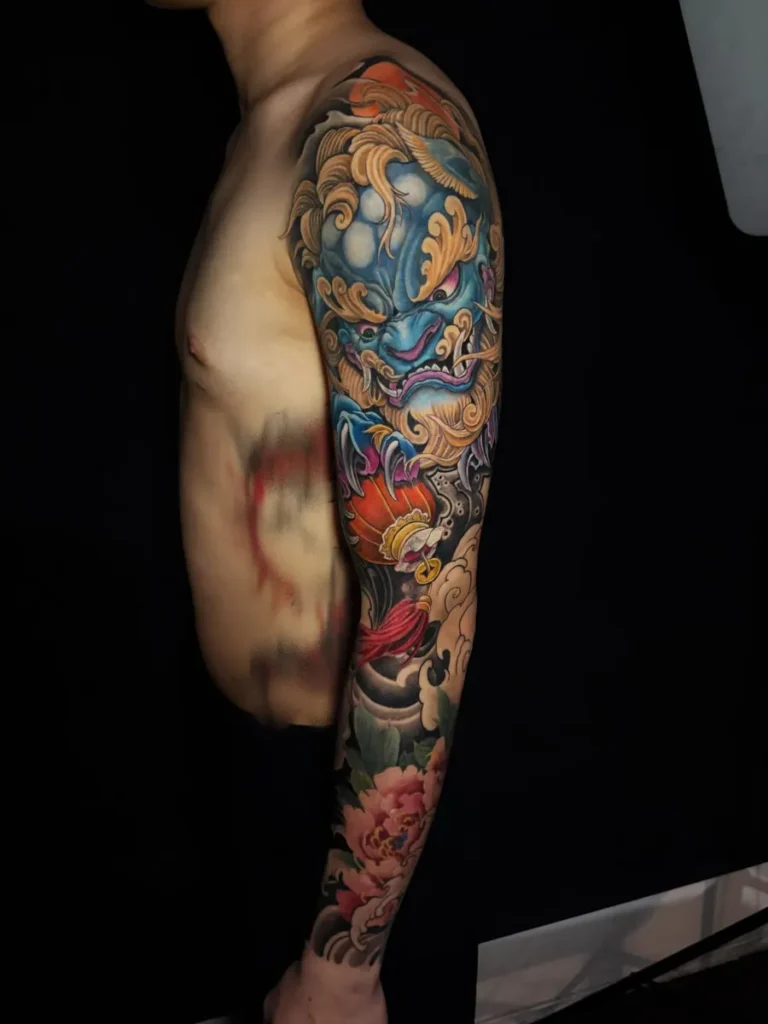
Avoid direct sun exposure after tattooing while the skin is still healing. Use shade and clean, loose clothing as the first line of protection, and do not assume sunscreen belongs on a fresh or peeling surface. Sunscreen becomes part of long-term tattooed-skin care after the area is fully healed and able to tolerate the product.
A beach visit adds more than ultraviolet light. Reflected sun, heat, sweat, sand, towels, wet clothing and the temptation to swim all arrive together. If beach time is a main part of a Singapore or regional holiday, place those days before the tattoo or schedule the appointment for a different part of the trip. A waterproof dressing or high-SPF product does not turn an unhealed tattoo into a beach-ready one.
Use three different plans: healing skin, healed skin and the itinerary
Questions about sunscreen after a tattoo often mix three decisions that need separate answers.
- Healing skin: keep it out of direct sun and follow the covering and aftercare instructions supplied for the tattoo.
- Healed tattooed skin: use ordinary sun-protection measures, including a suitable broad-spectrum sunscreen, clothing and shade.
- Appointment timing: position the session where outdoor and beach commitments will not force you to compromise either of the first two plans.
This separation prevents a common planning error. Sunscreen guidance for intact skin is not permission to apply a product to a surface that is still open, tender, scabbed or peeling. Likewise, staying dry at the beach does not remove reflected UV, sweat or sand contact.
While the tattoo heals, clothing and shade come before sunscreen
Cleveland Clinic advises avoiding sunscreen on a tattoo until it is fully healed. The European Academy of Dermatology and Venereology also describes clothing as the best protection from sun during tattoo aftercare. This is why the early plan should be physical: stay out of direct sun, choose an indoor or shaded route, and cover the placement with a clean garment that does not rub.
The garment needs enough room to move. A tight UV sleeve, swim shirt or compression layer can create friction and trap sweat even if its fabric blocks sunlight. Inspect the seam position and test the outfit while sitting, reaching and walking. If the tattoo is on the shoulder or upper back, check bag straps as well. If it is on the thigh or calf, consider whether the fabric swings across it with every step.
Do not invent an airtight sun shield from plastic wrap or an extra adhesive film. Use only the covering method and duration specified for the tattoo. If the route to work or a hotel cannot be kept shaded, discuss that practical constraint before the session.
Singapore’s heat and moisture can make a covered area damp. The Singapore humidity aftercare guide deals with sweat, rain and air-conditioned spaces in detail. The sun-specific task is to keep the tattoo physically protected without creating a new pressure or moisture problem.
Once the skin is healed, use sunscreen as ordinary skin protection
After the surface has fully healed, the American Academy of Dermatology recommends protecting tattooed skin with a broad-spectrum, water-resistant sunscreen rated SPF 30 or higher. Singapore’s HealthHub gives the same minimum SPF and broad-spectrum guidance, with application before sun exposure and reapplication after swimming or sweating and at regular intervals.
Those recommendations describe sunscreen use on intact skin. They do not establish the day on which your tattoo is healed. Size, placement, skin response and aftercare differ, so a universal answer to “how long after a tattoo can I use sunscreen?” would be misleading. No active weeping, open areas, scabs or peeling is a more useful starting condition, followed by the individual advice supplied for the tattoo.
When you do reintroduce sunscreen:
- choose a broad-spectrum, water-resistant SPF 30 or higher product that suits your skin;
- test it according to the product directions if you have sensitive or reactive skin;
- apply it to dry, intact skin before exposure;
- reapply according to the label and after swimming or heavy sweating;
- keep clothing and shade in the plan rather than treating sunscreen as unlimited exposure time.
HealthHub notes that sunscreens can cause stinging, irritation or a local rash in some users. Stop using a product and seek advice if a reaction develops. A reaction over tattooed skin cannot be diagnosed from its appearance in a message or article.
Shade at the beach is useful, but it is not complete isolation from UV
The beach is a poor place to test whether a healing tattoo can handle exposure. Singapore HealthHub specifically notes that sunlight can reflect from sand even when a person is under shade. A beach umbrella therefore reduces some direct exposure but does not create an indoor environment.
The Meteorological Service Singapore UV page advises protective measures when outdoors, especially between 11am and 3pm, when UV Index levels are generally highest. That window is not a promise that early morning or late afternoon is harmless. Cloud, rain and location change readings, and UV protection remains relevant outside the peak period.
For healed skin, combine the tools:
- a shaded base away from direct midday sun;
- clothing that covers the tattoo where practical;
- sunscreen on exposed intact skin;
- a plan for reapplication after sweat or water;
- a clean, dry place to change out of wet or sandy clothing.
For a fresh tattoo, the better decision is usually to move the beach day or the appointment. Trying to engineer a beach setup around healing skin creates several avoidable contact points at once.
Keep swimming in its own decision
Immersion in a pool or the sea is a separate decision from UV exposure, sunscreen and beach scheduling. Read the swimming-after-a-tattoo guide for the condition-based return to pools, sea and hot tubs.
Two distinctions are still useful here. First, water-resistant sunscreen is not a waterproof barrier for a healing tattoo. Second, remaining on shore does not remove sand, reflected light, sweat or towel friction. “I will not swim” may solve one part of the day while leaving the sun problem unchanged.
Plan a tattoo before a beach holiday
Start with the fixed activities, not with a guessed healing interval. Mark every beach, boat, pool and long outdoor day, including regional travel after Singapore. Then look for a part of the itinerary that remains genuinely compatible with aftercare.
If the beach days cannot move, placing the tattoo after them is simpler than depending on a countdown. The final day of a trip is not automatically ideal, however. Packing, luggage straps, airport queues, flights and limited access to familiar care supplies may create their own friction. The Singapore trip appointment guide helps compare those travel pressures without pretending one position always wins.
If you want the tattoo before travelling, share the departure date, destination, planned outdoor hours and water activities before confirming the appointment. The useful output is a realistic schedule discussion, not a guarantee that every person will be beach-ready after the same number of days.
Plan a tattoo after a beach holiday
“After the beach” can mean the same evening, the next morning or after the skin has returned to its normal condition. Check the actual skin rather than the calendar. Sunburn, tenderness, peeling, abrasion or a rash makes the proposed tattoo area a different canvas from the healthy skin originally discussed.
Do not hide recent sun exposure from the artist. Send a clear, current photograph if the area looks changed and be prepared for the appointment plan to be reassessed. Accurate information matters before anyone assumes the skin is ready.
Also account for residual holiday logistics. Sandy luggage, damp swimwear and an overnight return flight can crowd the first care period even if the beach activity itself has ended. Washing travel clothes and resetting clean bedding before the appointment creates a cleaner handover from holiday mode to aftercare.
Match the plan to placement
An exposed forearm or calf needs a different route from a back tattoo covered by a shirt. A shoulder can be shaded by clothing but pressed by a tote strap. A rib tattoo may sit under a swimsuit edge even when the material has UV protection. A thigh can remain covered outdoors yet meet a sandy chair or towel.
Before booking, describe:
- the exact body side and surface;
- what you normally wear at the beach;
- whether the garment edge crosses the proposed tattoo;
- how much walking and outdoor time is fixed;
- all swimming, boat and water-sport plans;
- the date of onward travel.
Use the Yuyi Tattoo contact page to send that short itinerary with the design and placement. Appointment suitability, specific aftercare and live availability are confirmed from the individual brief. No beach timeline or sunscreen product is promised in advance.
Long-term sun care still matters after the holiday
A healed tattoo remains part of your skin. The AAD notes that UV light can fade some tattoo inks and advises ongoing sun protection. That means the useful habit is not a one-week beach rule but a repeatable routine for Singapore commutes, outdoor meals, sport and future holidays.
Keep a sunscreen you will actually apply, use clothing where it fits the activity, and check the live UV Index rather than relying on cloud cover. If tattooed skin develops a persistent change or reacts unexpectedly in sunlight, a dermatologist can assess it. An artist can clarify care instructions, but a skin reaction requires medical evaluation.
Sources and review date
- American Academy of Dermatology: Caring for Tattooed Skin; reviewed 24 August 2026.
- Cleveland Clinic: Tattoo Aftercare Tips From a Dermatologist; reviewed 24 August 2026.
- European Academy of Dermatology and Venereology: Tattoo Aftercare; reviewed 24 August 2026.
- HealthHub Singapore: Sunscreens; reviewed 24 August 2026.
- Meteorological Service Singapore: UV Index; reviewed 24 August 2026.
Frequently asked questions
Can I use sunscreen after a tattoo?
Do not put sunscreen on a fresh, open, scabbed or peeling tattoo. Keep it out of direct sun with shade and suitable loose clothing. Once the skin is fully healed, use a broad-spectrum, water-resistant SPF 30 or higher sunscreen and follow its directions.
How long after a tattoo can I use sunscreen?
There is no universal number of days. Wait until the surface is fully healed rather than treating a date as permission. If open areas, scabs, peeling, tenderness or a reaction remain, continue physical sun protection and ask the artist or a clinician which question belongs to them.
Can I go to the beach after a tattoo if I do not swim?
A dry beach visit still brings direct and reflected UV, heat, sweat, sand and towel friction. Avoid using the beach as a recovery setting for a fresh tattoo. Moving either the beach plan or the appointment is usually more workable than relying on shade alone.
Should I get a tattoo before or after a beach holiday?
If beach and water activities are fixed, scheduling the tattoo after them avoids forcing healing skin into those plans. Check that the post-beach skin is not sunburned, peeling or irritated, and consider flights and packing. Share the complete itinerary before confirming a date.
Does a waterproof dressing make sun or swimming safe?
No. A dressing has a specific aftercare purpose and wear period; it does not create unlimited UV protection or make immersion suitable. Follow the instructions for that covering, keep the area out of direct sun and handle swimming as a separate decision.
What sunscreen is suitable for a healed tattoo in Singapore?
AAD and HealthHub guidance supports a broad-spectrum, water-resistant sunscreen with SPF 30 or higher on healed skin. Choose a product your skin tolerates, apply it as directed and reapply after swimming or sweating. Clothing and shade remain useful alongside it.

